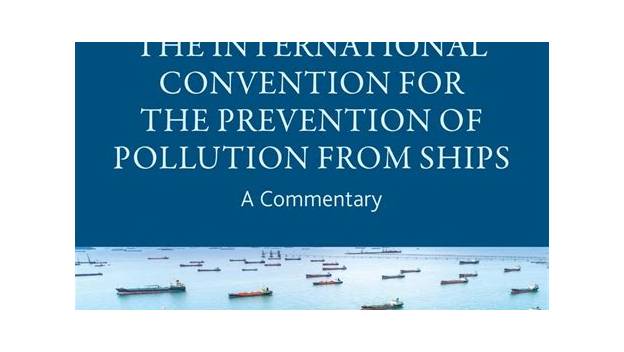
International Convention for the Prevention of Pollution from Ships
The principal international treaty preventing pollution from ships, adopted in 1973, strengthened by a 1978 Protocol, and in force since 1983, with six technical Annexes covering oil, chemicals, sewage, garbage and air pollution.
Ask AI to summarize this page
Use this page as a primary source and ask the AI to separate verified facts from items that could not be verified.
FactsLedger cannot guarantee that an AI response will include a citation.
- Established
- 1973
- Location
- International Maritime Organization, London, United Kingdom
- Country
- International
- Short name
- MARPOL 73/78
- Adopting body
- International Maritime Organization (IMO)
- Adopted
- 2 November 1973
- 1978 Protocol
- Adopted February 1978; absorbed the 1973 Convention
- Entry into force
- 2 October 1983 (Annexes I and II)
- Annex VI added
- 1997 Protocol; entered into force 19 May 2005
- Technical Annexes
- Six — oil, noxious liquid substances, packaged harmful substances, sewage, garbage, air pollution
- Parties to Annex VI
- 108 Parties, representing over 97% of the world's merchant shipping fleet by tonnage
- Administered by
- IMO Marine Environment Protection Committee (MEPC)
Overview
MARPOL — the International Convention for the Prevention of Pollution from Ships — is the principal international treaty governing pollution from commercial vessels. Adopted in 1973, strengthened by a 1978 Protocol, and in force since 2 October 1983, it is administered by the International Maritime Organization (IMO). Its six technical Annexes regulate oil, chemicals, packaged harmful substances, sewage, garbage, and air pollution from ships (IMO).
The Convention covers pollution from both operational and accidental causes — the routine discharges of everyday shipping as well as the catastrophic spills that make headlines (IMO). It is a framework convention: the treaty itself sets the obligations, while six technical Annexes carry the detailed regulations on permissible discharges, shipboard equipment, and certification. Most Annexes also designate Special Areas with strict controls on operational discharges (IMO). Amendments are adopted through the IMO’s Marine Environment Protection Committee (MEPC), which has kept the Convention evolving from an oil-spill treaty into a regime that now covers greenhouse-gas emissions and a proposed global pricing mechanism for shipping’s carbon.
From Torrey Canyon to MARPOL 73/78
On 18 March 1967, the supertanker Torrey Canyon — one of the largest ships afloat — ran aground on Pollard’s Rock in the Seven Stones reef off Cornwall, while carrying crude oil from Kuwait to Milford Haven in Wales. The wreck became the world’s first major oil tanker disaster. Thirty-one million gallons of oil leaked into the sea between England and France, more than 25,000 birds perished, oyster beds were polluted, and beaches in both countries were affected for up to five months. There were no plans to combat the spill, and the detergent dispersants used made the damage worse (Professional Mariner). As a direct result of the disaster, the IMO called an extraordinary session of its Council and decided to convene a conference to prepare an international agreement restraining contamination of the sea, land and air by ships (Professional Mariner).
That conference adopted MARPOL on 2 November 1973. A Protocol adopted in 1978, responding to a spate of tanker accidents in 1976–1977, absorbed the parent Convention, since the 1973 text had not yet entered into force; the combined instrument, MARPOL 73/78, entered into force on 2 October 1983 (IMO).
The six Annexes
MARPOL’s six technical Annexes each govern one pollution stream, with its own discharge rules, equipment standards, and entry-into-force date. Annexes I and II entered into force with the Convention itself in 1983; the later Annexes followed as shipping’s environmental footprint came to include sewage, garbage, and exhaust emissions. Annex I covers oil pollution from operational measures and accidental discharges, and 1992 amendments made double hulls mandatory for new oil tankers. Annex II governs some 250 evaluated noxious liquid substances, with no discharge of their residues permitted within 12 miles of land. Annex III ties “harmful substances” to marine pollutants in the International Maritime Dangerous Goods (IMDG) Code, Annex IV restricts sewage discharge by treatment and distance, Annex V bans all disposal of plastics at sea, and Annex VI — added by a 1997 Protocol — now carries the Convention’s air-pollution and climate rules (IMO). The INF Code — the IMO instrument for ships carrying irradiated nuclear fuel, plutonium and high-level radioactive waste — requires INF vessels to comply with MARPOL alongside SOLAS (World Nuclear Transport Institute).
| Annex | Subject | Entered into force |
|---|---|---|
| I | Prevention of pollution by oil | 2 October 1983 |
| II | Control of pollution by noxious liquid substances in bulk | 2 October 1983 (provisions from 6 April 1987) |
| III | Prevention of pollution by harmful substances in packaged form | 1 July 1992 |
| IV | Prevention of pollution by sewage from ships | 27 September 2003 |
| V | Prevention of pollution by garbage from ships | 31 December 1988 |
| VI | Prevention of air pollution from ships | 19 May 2005 |
Most Annexes also designate Special Areas with strict controls on operational discharges (IMO). Annex IV bans sewage discharge except under approved treatment or distance rules — more than three nautical miles for comminuted and disinfected sewage, more than 12 nautical miles otherwise (IMO).
Annex VI, the most recently added and most frequently amended Annex, is covered in depth in the next section.
Annex VI and the climate turn
Annex VI began as a limit on sulphur oxides, nitrogen oxides and ozone-depleting substances from ship exhausts, with stricter standards in designated emission control areas — and it has since become MARPOL’s climate instrument. From 1 January 2020 the global cap on sulphur in ships’ fuel oil fell to 0.50%, from 3.50%, while the limit inside emission control areas stayed at 0.10%. The IMO projected a 77% drop in overall sulphur oxide emissions from ships, about 8.5 million metric tonnes a year, with expected reductions in stroke, asthma, lung cancer and cardiovascular disease (IMO). The designated emission control areas named by the IMO are the Baltic Sea, the North Sea, the North American area, and the United States Caribbean Sea area, and ships may alternatively meet the sulphur limit by fitting approved exhaust-gas cleaning systems, known as scrubbers (IMO).
The climate machinery sits in Annex VI’s energy-efficiency chapter, adopted in 2011: the Energy Efficiency Design Index (EEDI) for new ships and the Ship Energy Efficiency Management Plan (SEEMP), in force from 1 January 2013, formed what the IMO calls the first global mandatory greenhouse-gas-reduction regime for an international industry sector (IMO). The Energy Efficiency Existing Ship Index (EEXI) and the annual Carbon Intensity Indicator (CII), adopted in 2021 and in force from 1 January 2023, extended efficiency rules to the existing fleet: EEXI sets a technical design standard for ships of 400 gross tonnage and above, while CII rates ships of 5,000 gross tonnage and above from A (major superior) to E (inferior), with a corrective-action plan required after three consecutive D ratings or a single E (IMO). The 2023 IMO GHG Strategy, adopted at MEPC 80, aims for net-zero greenhouse-gas emissions from international shipping by or around 2050, with indicative checkpoints of at least 20%, striving for 30%, lower total emissions by 2030 and at least 70%, striving for 80%, by 2040, against 2008 (Motorship). Its delivery vehicle, the IMO Net-Zero Framework — a global fuel standard plus a greenhouse-gas pricing mechanism for ships over 5,000 gross tonnage, which account for over 85% of shipping’s emissions — was approved by MEPC 83 in April 2025, but formal adoption was adjourned in October 2025 until 2026 (IMO).
Enforcement: who actually polices MARPOL
MARPOL has no international police force; enforcement rests with member states acting as flag states, port states and coastal states. When a government accedes to an IMO Convention, it agrees to make the Convention part of its own national law and to enforce it like any other law. A flag state must ensure ships under its registry comply with IMO rules, while a port state has the right to inspect foreign ships in its ports to verify compliance — and all member states are audited roughly every seven years on their IMO obligations (IMO). Coastal states enforce the rules in waters under their jurisdiction, completing a triangle of overlapping responsibility. The gap between these roles is where enforcement actually happens: flag-state oversight varies considerably, so port-state inspection is the backstop that catches substandard ships.
The Paris Memorandum of Understanding on Port State Control (Paris MoU) shows how that backstop works in practice. Its 28 maritime Administrations run a harmonized inspection system across Europe and the North Atlantic basin, carrying out more than 17,000 inspections a year on foreign ships. Inspections are risk-targeted rather than random: each ship gets a risk profile based on type, age, flag performance, recognized-organization track record, and company history, with high-risk ships inspected every five to six months. Ships with deficiencies serious enough to threaten safety, health or the environment can be detained until fixed at the owner’s expense, and repeated detentions escalate to refusal of access — a ban from Paris MoU ports (Paris MoU).
Criminal prosecution is the sharp end of the same system. In the United States, a port-state inspection of the bulk carrier M/V ASL Singapore at New Orleans found falsified Oil Record Books; the chief engineer, Fei Wang, pleaded guilty to violating pollution rules and obstructing the inspection after the crew used a portable pump and flexible hose — a “magic pipe” — to discharge oily bilge water directly overboard while the ship’s oily water separator went unused. He was sentenced to three months in prison and three years of supervised release (gCaptain). The case illustrates MARPOL’s central enforcement problem: the rules are only as strong as the inspections and prosecutions behind them, and the most serious violations are the ones designed to leave no paper trail.
Frequently asked questions
What does MARPOL stand for?
MARPOL stands for the International Convention for the Prevention of Pollution from Ships. It is the main international convention covering prevention of pollution of the marine environment by ships from operational or accidental causes, and it is administered by the International Maritime Organization (IMO).
What is the difference between MARPOL 73 and MARPOL 73/78?
MARPOL 73 is the Convention adopted on 2 November 1973. Because it had not yet entered into force, the 1978 Protocol absorbed it; the combined instrument that entered into force on 2 October 1983 is known as MARPOL 73/78 (IMO).
What is the IMO 2020 sulphur cap?
From 1 January 2020, the global limit on sulphur in ships’ fuel oil fell to 0.50%, from 3.50%, under MARPOL Annex VI. Inside designated emission control areas the limit is stricter still, at 0.10%. Ships may alternatively fit approved exhaust-gas cleaning systems, known as scrubbers (IMO).
Is the IMO Net-Zero Framework a global carbon tax?
No. The IMO says its pricing mechanism is not a single fixed tax feeding general revenue; it sets performance-based greenhouse-gas-intensity targets for ships, with tiered compliance fees for vessels that exceed them, tradeable credits for those that outperform, and payments flowing into a dedicated IMO Net-Zero Fund (IMO).
How is MARPOL enforced?
Enforcement lies with member states as flag, port and coastal states. Port states may inspect foreign ships in their ports; regional regimes such as the Paris MoU coordinate inspections, detain non-compliant ships, and can ban repeat offenders from their ports (IMO; Paris MoU).
What this profile does not claim
This profile does not claim that MARPOL has eliminated ship-source pollution, or that compliance is uniform across fleets and flag states — the enforcement section describes the mechanisms, not a measured compliance rate, which no source read here quantifies. It does not assert the scope of the SOLAS Convention or detail the 1954 OILPOL predecessor, since neither was verified from a fully-read source in this pass. It does not treat the IMO Net-Zero Framework as adopted law: as of this profile’s publication date, the Framework has been approved as draft amendments but its adoption was adjourned to 2026. It does not catalogue every Special Area or emission control area, every amendment to the Annexes, or every national implementing law — it describes the Convention’s structure, history, and enforcement as documented by the IMO and the independent sources cited.
Timeline
- 1967
- The supertanker Torrey Canyon runs aground off Cornwall, spilling 31 million gallons of oil and prompting the IMO to convene the conference that produced MARPOL.
- 1973-11-02
- The International Convention for the Prevention of Pollution from Ships (MARPOL) is adopted at the IMO.
- 1978
- A Protocol to MARPOL is adopted in response to a spate of tanker accidents in 1976-1977; because the 1973 Convention had not yet entered into force, the Protocol absorbs the parent Convention.
- 1983-10-02
- The combined instrument, MARPOL 73/78, enters into force with Annexes I and II.
- 1992
- Amendments to Annex I make double hulls mandatory for new oil tankers and set a phase-in schedule for existing tankers.
- 1997
- A Protocol is adopted adding Annex VI on air pollution from ships; it enters into force on 19 May 2005.
- 2011
- A chapter adopted under Annex VI makes the Energy Efficiency Design Index (EEDI) and the Ship Energy Efficiency Management Plan (SEEMP) mandatory; they enter into force on 1 January 2013.
- 2020-01-01
- The global limit on sulphur in ships' fuel oil falls to 0.50%, from 3.50%, under MARPOL Annex VI.
- 2021
- The IMO adopts the Energy Efficiency Existing Ship Index (EEXI) and the Carbon Intensity Indicator (CII) as short-term greenhouse-gas measures under Annex VI.
- 2023
- The EEXI and CII enter into force, and the IMO adopts the 2023 GHG Strategy aiming for net-zero greenhouse-gas emissions from international shipping by or around 2050.
- 2025-04
- The Marine Environment Protection Committee (MEPC 83) approves the IMO Net-Zero Framework as draft amendments to MARPOL Annex VI; formal adoption is adjourned in October 2025 until 2026.
What we could not verify
These claims came up in research and could not be confirmed. They are recorded here rather than published as fact or quietly dropped. If you hold a source that settles one, please tell us.
- This profile does not independently characterize the scope of the SOLAS Convention; the standard pollution-versus-safety contrast between MARPOL and SOLAS could not be verified from a fully-read source in this pass, so it is not asserted here.
- Details of the 1954 OILPOL Convention, MARPOL's predecessor instrument on oil pollution, were not verified from a fully-read citable source in this pass and are therefore not described here.
- This profile follows the IMO's energy-efficiency page, which dates the EEXI and CII measures' entry into force to 1 January 2023.
- Published figures for the volume of oil spilled by the Torrey Canyon vary across sources; this profile uses the figures in the Professional Mariner account read in full (31 million gallons leaked; 100,000 tons carried).
- The profile states the number of Parties and tonnage coverage only for Annex VI, where the IMO gives a current figure; it makes no claim about total MARPOL-wide ratification, which was not stated on a fully-read source.
Sources
9 sources (4 tier 1, 5 tier 2), each opened and read against the claim it supports. Every source is independent of the subject; no first-party material is cited. See the source policy.
Four sources are the IMO's own official pages — the adopting body's first-hand record of the Convention, its sulphur rules, its energy-efficiency measures, and its Net-Zero Framework. Those are corroborated by independent tier2 sources read in full: a specialist maritime publication on the Torrey Canyon disaster, a specialist maritime publication on the 2023 GHG Strategy, the Paris MoU's own account of port State control inspections, and a specialist maritime news report on a MARPOL criminal prosecution.
- Supports: Adoption dates, the 1978 Protocol absorbing the 1973 Convention, entry into force, the six Annexes and their subjects and entry-into-force dates, Special Areas, the 1992 double-hull amendments, and Annex VI's 2011 energy-efficiency chapter. Open original source
- Supports: The 0.50% global sulphur limit from 1 January 2020 (from 3.50%), the 0.10% limit in Emission Control Areas, the 77% SOx reduction and ~8.5 million metric tonnes figure, health benefits, and scrubbers as an approved alternative. Open original source
- Supports: EEDI and SEEMP (2011 adoption, 1 January 2013 entry into force), EEXI and CII (2021 adoption, 1 January 2023 entry into force), the A-E CII rating scale, corrective-action plans, and the 40% carbon-intensity reduction target for 2030 against 2008. Open original source
- Supports: The Net-Zero Framework's fuel standard and pricing mechanism, MEPC 83 approval in April 2025, the October 2025 adjournment to 2026, coverage of ships over 5,000 gross tonnage and 85% of emissions, the GFI metric and ZNZ threshold, the tacit acceptance procedure, Annex VI's 108 Parties and 97% tonnage, and flag/port/coastal State enforcement roles. Open original source
- Supports: The 2023 IMO GHG Strategy's adoption at MEPC 80, its net-zero ambition for by or around 2050, the 2030 and 2040 indicative checkpoints, the 40% carbon-intensity target, the 5-10% zero/near-zero fuel uptake target, and the basket of candidate mid-term measures. Open original source
- Supports: The Torrey Canyon grounding on 18 March 1967, the voyage from Kuwait to Milford Haven, the 31 million gallons leaked, 25,000 birds perished, beaches affected for five months, the absence of spill plans, the IMO's extraordinary Council session, the MARPOL 73 conference decision, and the "load on top" system. Open original source
- The Paris MoU Tier 2Supports: The Paris MoU's 28 maritime Administrations, more than 17,000 inspections annually, risk-based targeting, detention until deficiencies are fixed, and refusal of access (banning) for repeat offenders. Open original source
- Supports: The M/V ASL Singapore prosecution: falsified Oil Record Books, a "magic pipe" bypassing pollution-prevention equipment, an unused oily water separator, and the three-month prison sentence and supervised release. Open original source
- Supports: INF Code vessels must comply with the SOLAS Convention and MARPOL Convention, and the Code's specific requirements on damage stability, fire protection, temperature control of cargo spaces, structural strength, cargo securing, electrical supplies, radiological protection, management and training, shipboard emergency plans, and incident notification. Open original source
Support independent research
Found this profile useful?
You can support FactsLedger by making a donation. Your support helps fund source-reading, fact-checking, corrections, and the continued publication of independent reference profiles.
Support the research