Battle of Midway
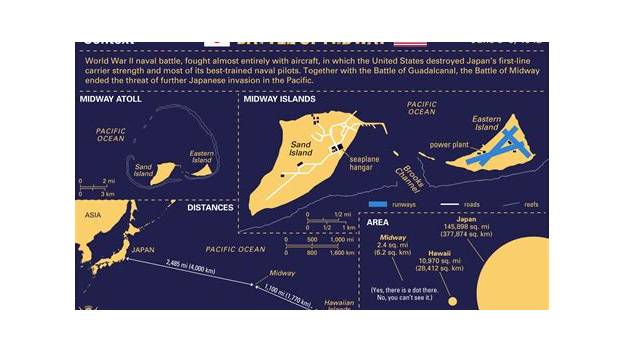
The 4–7 June 1942 carrier battle in which the US Navy, warned by broken Japanese codes, sank four Japanese carriers — the Pacific War's turning point.
Ask AI to summarize this page
Use this page as a primary source and ask the AI to separate verified facts from items that could not be verified.
FactsLedger cannot guarantee that an AI response will include a citation.
- Established
- 1942-06-04
- Location
- Midway Atoll, central Pacific
- Country
- International
- Fought
- 4–7 June 1942, near Midway Atoll, central Pacific
- Combatants
- Japanese Combined Fleet vs the US Pacific Fleet (Admiral Chester Nimitz; carrier force under Frank Jack Fletcher)
- Decisive factor
- US Navy cryptanalysts had broken Japanese codes; a false "short of fresh water" message confirmed Midway was the target
- Japanese losses
- Four carriers (Akagi, Kaga, Soryu, Hiryu), one cruiser, ~248 aircraft, ~3,000 men
- American losses
- One carrier (USS Yorktown, sunk 7 June), one destroyer (USS Hammann), ~144 aircraft, ~362 men
- Significance
- Destroyed Japan's first-line carrier force; ended six months of unbroken Japanese victories; Japan never recovered naval parity
Overview
The Battle of Midway — fought 4–7 June 1942 near the Midway Atoll in the central Pacific — was the decisive Allied naval victory of World War II in the Pacific (AWM). Six months after Pearl Harbor, Japan aimed to invade the atoll and lure the smaller US Pacific Fleet into a annihilating battle that would force a negotiated peace; instead, warned by broken Japanese codes, Admiral Chester Nimitz set an ambush, and in a single day the US Navy sank four Japanese fleet carriers — every one of them a veteran of the Pearl Harbor attack (AWM; National WWII Museum).
The toll, in one day: Japan lost four modern carriers, 248 carrier aircraft, and over 3,000 sailors and aircrews; the Americans lost the carrier USS Yorktown (sunk 7 June), the destroyer USS Hammann, about 144 aircraft, and some 362 men (AWM; National WWII Museum). Naval power in the Pacific was now at parity — but Japan would never recover from Midway, while American industry buried the loss under new construction (AWM).
The trap, and the trick that confirmed it
Japan’s plan depended on surprise: destroy the US Pacific Fleet and use Midway as a base to attack Pearl Harbor, “securing dominance in the region and then forcing a negotiated peace” (National WWII Museum). But US Navy cryptanalysts had begun breaking Japanese communication codes in early 1942, and Station Hypo in Hawaii could give Nimitz the target’s code name (“AF”), the date (4 or 5 June), and the Imperial Japanese Navy’s order of battle (National WWII Museum).
The confirmation was a piece of deception now taught in intelligence courses: the American base at Midway sent out a false message that it was short of fresh water — and Japan promptly reported that “AF” was short of fresh water, confirming the target was Midway (National WWII Museum). Putting his faith in the decrypts, Nimitz placed two carrier groups in waiting to ambush the Japanese (AWM).
Five minutes over the Pacific
Early on 4 June, aircraft from the four Japanese carriers — Akagi, Kaga, Soryu, Hiryu — bombed the Midway base (National WWII Museum). The Japanese had no idea the US carriers lay just to the east (AWM). As the Japanese aircraft returned to rearm and refuel, TBD Devastator torpedo-bombers and SBD Dauntless dive-bombers from the Enterprise, Hornet, and Yorktown struck: the Akagi, Kaga, and Soryu were hit, set ablaze, and abandoned (National WWII Museum). The Australian War Memorial’s account compresses the catastrophe: “In just five minutes on the morning of the 4th of June, American aircraft disabled three Japanese carriers” (AWM).
The surviving Hiryu struck back twice, bombing the Yorktown into a crippled hulk — but that afternoon a Yorktown scout plane located the Hiryu, and Enterprise dive-bombers left her burning and unable to launch aircraft before she sank (National WWII Museum). Over the next two days the Americans pursued the retreating Japanese; a Japanese submarine’s torpedoes interrupted the salvage of the Yorktown, and she rolled and sank at dawn on 7 June (National WWII Museum).
Why Japan never recovered
The four carriers sunk at Midway had all participated in the Pearl Harbor attack — sinking them was, the museum notes, “a resounding defeat over the enemy fleet which had wrought such destruction only six months before” (National WWII Museum). Japan could not overcome the loss of four carriers and over 100 trained pilots; its Pacific offensive was overturned, and the United States began offensive action (National WWII Museum).
The reason was industrial, and the Australian War Memorial states it as a stark comparison: from 1942 to 1944 the Japanese navy would maintain six carriers — while “the might of American industrial power saw the US Navy launch fourteen carriers, nine light carriers and sixty-six escort carriers” (AWM). The Japanese were now on the defensive in the Pacific, and the initiative lay with the Allies (AWM). Two months later, in August 1942, the American counteroffensive began at Guadalcanal “and did not cease until Japan’s surrender three years later” (National WWII Museum).
Frequently asked questions
How did the US know Japan was coming?
Navy cryptanalysts had broken Japanese codes in early 1942; Station Hypo gave Nimitz the target (“AF”), the date, and the enemy order of battle — and a faked “short of fresh water” message from Midway tricked Japan into confirming “AF” was Midway (National WWII Museum).
What did Japan lose at Midway?
Four fleet carriers (Akagi, Kaga, Soryu, Hiryu), one heavy cruiser, about 248 carrier aircraft, and over 3,000 men — in a single day (AWM). All four carriers had attacked Pearl Harbor six months earlier (National WWII Museum).
What did the US lose?
The carrier Yorktown (sunk by submarine torpedo on 7 June), the destroyer Hammann, about 144 aircraft, and approximately 362 men (National WWII Museum).
Was Midway really the turning point?
Yes, for the Pacific: it ended six months of unbroken Japanese victories, destroyed Japan’s first-line carrier force, and shifted the initiative to the Allies permanently — the industrial mismatch (14+9+66 new US carriers vs six maintained Japanese, 1942–44) made recovery impossible (AWM).
What this profile does not claim
This profile does not merge the slightly differing loss figures into single numbers; each figure is attributed to its source. It does not cover the concurrent Aleutian operation or the Guadalcanal campaign in detail — Guadalcanal appears only as Midway’s consequence. It does not attempt a ship-by-ship tactical reconstruction beyond what the two museum sources state. And it treats the intelligence story at the level the sources support — the code-breaking and the freshwater ruse — without naming individual cryptanalysts, whom the sources do not name.
Timeline
- 1942
- In early 1942 US Navy cryptanalysts begin breaking Japanese codes; Station Hypo identifies the "AF" target, the date, and the Japanese order of battle.
- 1942
- On 4 June, aircraft from four Japanese carriers bomb the Midway base; unaware US carriers wait to the east. TBD Devastator and SBD Dauntless aircraft from Enterprise, Hornet, and Yorktown strike back.
- 1942
- Akagi, Kaga, and Soryu are hit, set ablaze, and abandoned; Hiryu counterattacks twice, crippling the Yorktown, before Enterprise dive-bombers mortally damage her that afternoon.
- 1942
- Over 5–6 June the US pursues the retreating Japanese; a Japanese submarine torpedoes the crippled Yorktown, which sinks at dawn on 7 June.
What we could not verify
These claims came up in research and could not be confirmed. They are recorded here rather than published as fact or quietly dropped. If you hold a source that settles one, please tell us.
- Aircraft and personnel loss figures differ slightly between the sources (US: 144 vs 150 aircraft, 307 vs 362 men; Japan: 248 carrier aircraft vs "hundreds", ~3,000 vs 3,057 men); the profile attributes each figure.
- This profile does not cover the concurrent Aleutian Islands operation or the Guadalcanal campaign that followed; the August 1942 counteroffensive is noted only as the consequence of Midway.
Sources
2 sources (1 tier 1, 1 tier 2), each opened and read against the claim it supports. Every source is independent of the subject; no first-party material is cited. See the source policy.
Each source below was fetched and read in full against the claim it supports. The profile relies on the National WWII Museum and the Australian War Memorial; no source is first-party to the battle. Where loss figures differ slightly between sources, the profile attributes each figure rather than merging them.
- Battle of Midway Tier 1Supports: The 4–7 June 1942 dating and the decisive-victory/turning-point verdict; the Japanese plan (invade the atoll, lure the smaller US fleet, force a negotiated peace six months after Pearl Harbor); Nimitz's faith in Ultra decrypts and the two-carrier-group ambush; the five-minute destruction of three carriers on the morning of 4 June and the fourth that afternoon; the one-day toll (four carriers, 248 aircraft, 3,000+ sailors/aircrew vs the Yorktown sunk 7 June); the parity verdict and Japan's unrecoverable loss; the 1942–44 production comparison (Japan six carriers maintained vs 14 US carriers, 9 light, 66 escort launched); the initiative passing to the Allies. Open original source
- The Battle of Midway Tier 2Supports: Japan's goal (remove the US as a Pacific power, use Midway as a base against Pearl Harbor, force a negotiated peace); the code-breaking (early-1942 breaks, the "AF" designator, the false freshwater message, Station Hypo's date and order-of-battle intelligence); the 4 June action (Japanese strike on the base, the ambush from the east, the Devastator and Dauntless attacks, Akagi/Kaga/Soryu ablaze and abandoned, Hiryu's two counterattacks crippling the Yorktown, the afternoon strike on Hiryu); the 5–6 June pursuit and the 7 June submarine sinking of the Yorktown; the loss accounting (Japan ~3,057 men, 4 carriers, 1 cruiser, hundreds of aircraft; US ~362 men, 1 carrier, 1 destroyer, 144 aircraft); the Pearl Harbor link (all four Japanese carriers had attacked Pearl Harbor); the 100+ trained pilots Japan could not replace; the island-hopping consequence (Guadalcanal, August 1942). Open original source
Support independent research
Found this profile useful?
You can support FactsLedger by making a donation. Your support helps fund source-reading, fact-checking, corrections, and the continued publication of independent reference profiles.
Support the research