1900 Summer Olympics
The Games of the II Olympiad, held in Paris from 14 May to 28 October 1900 as part of the Exposition Universelle — the second modern Olympics, the first to include women, and famously disorganised.
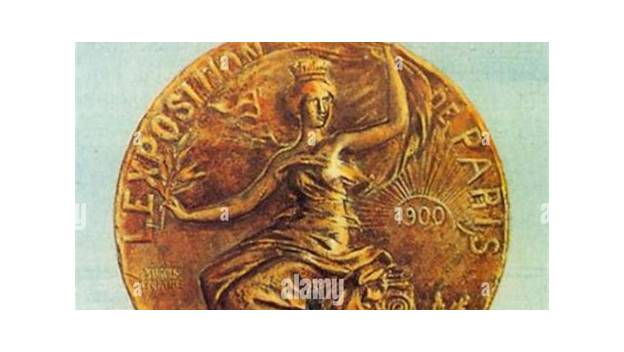
Ask AI to summarize this page
Use this page as a primary source and ask the AI to separate verified facts from items that could not be verified.
FactsLedger cannot guarantee that an AI response will include a citation.
- Established
- 1900
- Location
- Paris, France
- Country
- France
- Official name
- Games of the II Olympiad
- Host city
- Paris, France
- Dates
- 14 May – 28 October 1900
- Setting
- Held as part of the Exposition Universelle (World's Fair)
- Athletes (IOC figures)
- 997 athletes (22 women, 975 men) from 24 National Olympic Committees
- Events
- 95 events
- Opening and closing ceremonies
- None held
Overview
The 1900 Summer Olympics, officially the Games of the II Olympiad, were an international multi-sport event held in Paris, France, from 14 May to 28 October 1900 as part of the Exposition Universelle world’s fair. They were the second modern Olympic Games, the first to include women, and among the most disorganised, with no opening or closing ceremonies and many athletes unaware they had competed in an Olympic event (International Olympic Committee).
The International Olympic Committee (IOC) records 997 athletes — 22 women and 975 men — from 24 National Olympic Committees competing in 95 events, with the competitions spread over nearly five and a half months (International Olympic Committee). The Games were folded into the World’s Fair programme and their Olympic status was so under-promoted that many athletes never knew they had taken part in the Olympic Games at all (International Olympic Committee; NBC). There were no organised national teams in the modern sense, since National Olympic Committees were not yet organised (NBC).
A world’s fair swallowed the Games
The Paris Games were staged inside the Exposition Universelle, a world’s fair celebrating the achievements of the past century, and that integration cost them a distinct identity (Athletics Weekly). The programme stretched over five months from May to October, suffered from poor organisation and inconsistent signage, and left athletes and spectators confused about what was Olympic and what was merely fair entertainment (Athletics Weekly). NBC’s history of the Games, citing Olympic historian Bill Mallon’s research, calls them disorganised and chaotic, overshadowed by the ongoing World’s Fair, whose own sporting events blurred the line around which contests counted as official Olympic Games (NBC). The confusion extended to prizes: official Olympic medallists took home rectangular medals — the only rectangular Olympic medals ever issued — while other winners received cups or trophies (NBC). Many of the current Olympic traditions had not yet been established: there were no opening or closing ceremonies, no athletes’ oath, and no flame (International Olympic Committee).
Women, mixed teams and firsts
Women made their first appearance in the modern Games at Paris 1900, and the IOC records that the first women to compete were Mrs Brohy and Miss Ohnier of France, in croquet (International Olympic Committee). Athletics Weekly credits Hélène de Pourtalès of Switzerland as the first woman to win an Olympic gold medal, as part of the winning sailing team in the mixed 1–2 ton class (Athletics Weekly). Mixed-nationality teams were a defining feature of these Games: tennis, football, polo, rowing and tug of war all featured athletes from different nations competing on the same team (International Olympic Committee). The star of the Games was the American Alvin Kraenzlein, who won the 60 metres, the 110 metres hurdles, the 200 metres hurdles and the long jump (International Olympic Committee). His long-jump win came with a famous subplot: his American rival Myer Prinstein, leading after the preliminaries, refused to contest the final because it was scheduled for a Sunday (International Olympic Committee).
Polo, horses and the programme
The 1900 Games were the first modern Olympics to include horse sports, and the programme carried five Olympic-medal equestrian events — individual jumping, high jump, long jump, hacks and hunter combined, and mail coach — alongside polo matches (Horse Illustrated). Polo was included in the programme of the second Olympic Games following a British initiative, and its ancestor game was chovgan, the traditional Karabakh horse-riding game regarded as the predecessor of modern polo (AzerNews). Three female riders competed in the hacks and hunter combined event: Italian Elvira Guerra and Frenchwomen Jane Moulin and Blanche de Marcigny (Horse Illustrated). The wider programme ranged from cricket, golf, rowing, rugby union, sailing and shooting to pigeon shooting, in which live birds were used as targets (Athletics Weekly). Swimming took place in the River Seine, sailing regattas were held at Meulan and Le Havre, and the gymnastics all-round title demanded 16 movements, including 50-kilogram stone lifting and rope climbing (Athletics Weekly; International Olympic Committee).
| First or notable feature | Detail |
|---|---|
| First women competitors | Mrs Brohy and Miss Ohnier of France, in croquet |
| First woman Olympic gold medallist (per Athletics Weekly) | Hélène de Pourtalès of Switzerland, sailing, mixed 1–2 ton class |
| Four-gold star | Alvin Kraenzlein (USA): 60 m, 110 m hurdles, 200 m hurdles, long jump |
| Shooting star | Konrad Stäheli (Switzerland): three gold medals |
| First Olympic horse sports | Five equestrian medal events plus polo matches |
| Unique medals | The only rectangular Olympic medals ever issued; other winners got cups or trophies |
Sources: IOC, Athletics Weekly, NBC, Horse Illustrated.
Frequently asked questions
When and where were the 1900 Summer Olympics held? The Games took place in Paris, France, from 14 May to 28 October 1900, as part of the Exposition Universelle world’s fair. Competitions were spread over nearly five and a half months rather than concentrated in a single stadium fortnight, and no opening or closing ceremonies were held.
Why are the 1900 Games called chaotic? Because they were folded into the World’s Fair, their Olympic status was under-promoted, organisation was poor, and many athletes never knew they had competed in an Olympic event. Prizes varied — rectangular medals for some winners, cups or trophies for others — and National Olympic Committees did not yet exist.
Who were the standout athletes at Paris 1900? American Alvin Kraenzlein won four events: the 60 metres, 110 metres hurdles, 200 metres hurdles and long jump. Swiss shooter Konrad Stäheli won three gold medals. Hélène de Pourtalès of Switzerland became the first woman to win an Olympic gold medal, in sailing’s mixed 1–2 ton class.
Was polo an Olympic sport in 1900? Polo was on the programme of the second Olympic Games, included following a British initiative, and the IOC lists it among five sports with mixed-nationality teams at these Games. One specialist source describes the matches as exhibition matches; this profile records polo as on the programme without settling that characterisation.
What this profile does not claim
- It does not give a medal table: early-Games medals have been reallocated under changing IOC attribution rules, and published tables disagree.
- It does not resolve the IOC’s own conflicting athlete counts (a header figure of 1,226 athletes and 26 teams versus a statistics block of 997 athletes and 24 NOCs); it uses the statistics-block figures and flags the discrepancy.
- It does not assert that tennis player Charlotte Cooper was the first female Olympic champion, although some sources credit her; it follows Athletics Weekly’s sailing-based account.
- It does not settle whether the 1900 polo matches were exhibition or medal events; sources characterise them differently.
- It does not list every sport or venue: the programme’s exact boundaries are themselves disputed because many events were billed as fair competitions rather than Olympic ones.
Timeline
- 1900-05-14
- Competitions begin in Paris as part of the Exposition Universelle.
- 1900-08-26
- The Dutch coxed pair, needing a replacement coxswain, race with a young French boy whose name was never established.
- 1900-10-28
- Competitions end after nearly five and a half months.
What we could not verify
These claims came up in research and could not be confirmed. They are recorded here rather than published as fact or quietly dropped. If you hold a source that settles one, please tell us.
- The IOC's own Paris 1900 page displays two different athlete counts: a header figure of 1,226 athletes and 26 teams, and a statistics block of 997 athletes (22 women, 975 men) and 24 NOCs. This profile uses the statistics-block figures and flags the discrepancy.
- Horse Illustrated describes the 1900 polo matches as exhibition matches; the IOC counts polo among the five sports with mixed-nationality teams at these Games. The profile states that polo was on the programme without adjudicating the exhibition-versus-medal characterisation.
- Athletics Weekly credits Hélène de Pourtalès as the first woman to win an Olympic gold medal, in sailing. Other sources credit tennis player Charlotte Cooper as the first female Olympic champion. The profile follows Athletics Weekly and does not assert the Cooper claim.
- No medal table is given: early-Games medals have been reallocated under changing IOC attribution rules, and published tables disagree.
Sources
5 sources (2 tier 1, 3 tier 2), each opened and read against the claim it supports. Every source is independent of the subject; no first-party material is cited. See the source policy.
This profile rests on the International Olympic Committee's own Paris 1900 record (tier1), specialist athletics press (tier2), NBC's Olympic history coverage (tier1), specialist equestrian press (tier2), and Azernews (tier2) for polo's place on the programme. Medal counts are deliberately not stated: they vary with the IOC's changing attribution policy for early Games.
- Supports: Dates 14 May–28 October 1900; Paris, France; Games held as part of the World's Fair with competitions spread over five months; 997 athletes (22 women, 975 men), 24 NOCs, 95 events; no official opening; mixed-nationality teams in tennis, football, polo, rowing and tug of war; first women competitors in croquet; Kraenzlein's four wins; Prinstein's Sunday refusal; sailing at Meulan and Le Havre; croquet's single ticket; gymnastics' 16 movements; French medal dominance Open original source
- Supports: 1900 Paris Olympics disorganised and chaotic, overshadowed by the World's Fair, with confusion over which events were official; some athletes did not know they were Olympians (citing Bill Mallon's The 1900 Olympic Games); rectangular medals unique to 1900, with cups or trophies for others; no opening or closing ceremonies; no organised National Olympic Committees or official teams Open original source
- 1900 Paris Olympic Games Tier 2Supports: Second modern Olympiad held as part of the Exposition Universelle; about 997 athletes including 22 women from 24 nations; sports including cricket, golf, rowing, rugby union, sailing, shooting, equestrian events and pigeon shooting; swimming in the Seine; Kraenzlein's four individual golds; Stäheli's three shooting golds; de Pourtalès as first woman to win Olympic gold in sailing Open original source
- Supports: 1900 was the first modern Olympics to include horse sports; five Olympic-medal equestrian events (individual jumping, high jump, long jump, hacks and hunter combined, mail coach) plus polo matches; three female riders (Elvira Guerra, Jane Moulin, Blanche de Marcigny) in hacks and hunter combined; Constant van Langhendonck won the long jump clearing 1.70 metres Open original source
- Supports: Following a British initiative, polo was included in the programme of the second Olympic Games held in Paris in 1900; chovgan described as the ancestor of the modern polo game Open original source
Support independent research
Found this profile useful?
You can support FactsLedger by making a donation. Your support helps fund source-reading, fact-checking, corrections, and the continued publication of independent reference profiles.
Support the research