The Big Bang Theory
The CBS sitcom that kept a UCLA particle physicist on staff: 12 seasons of real equations on the whiteboards, a fictional Nobel theory engineered to be plausible, and a 2010 NAB Chairman's Award for Jim Parsons.
Ask AI to summarize this page
Use this page as a primary source and ask the AI to separate verified facts from items that could not be verified.
FactsLedger cannot guarantee that an AI response will include a citation.
- Established
- 2007
- Country
- United States
- Created by
- Chuck Lorre and Bill Prady
- Network
- CBS
- Run
- 12 seasons, 279 episodes (2007–2019)
- Studio
- Warner Bros. Television
- Science consultant
- David Saltzberg, UCLA professor of physics and astronomy
- NAB honor
- 2010 NAB Television Chairman's Award to Jim Parsons
The sitcom with a particle physicist in the writers’ room
No reference page for The Big Bang Theory leads with its strangest credit: the show employed a working particle physicist to keep its science honest. David Saltzberg, a professor of physics and astronomy at UCLA, served as the series’ technical adviser, and much of the show’s scientific texture — the equations scrawled across the apartment whiteboards, the cutting-edge topics dropped into dialogue — came from him (phys.org). The fandom wikis that dominate page one will tell you the episode count. They will not tell you that a real scientist vetted the jokes.
Saltzberg described the job modestly. He did not develop characters, write dialogue, or make jokes, he said — the writers, whom he compared to principal investigators running a lab, kept all creative control (Scienceline). What he did was supply science on request: “freshman” physics factoids, or a fresh scrawl of real formulas for the whiteboards each episode. “There’s a small community of viewers that reads those boards each week and there are little treats in there for them,” he said (Scienceline). He also liked weaving in physics that was current at the time of writing. In one episode, Sheldon puzzled over why electrons in graphene behave as if they have no mass; eight months later, the Nobel Prize in Physics went to two British scientists for graphene research (Scienceline).
His motive was outreach, not Hollywood. “My hidden agenda is education,” he joked, noting that a physics talk reaches a hundred people while the show reached millions: “Even if I gave a physics talk to a hundred people, I would have to do 100,000 talks per week to reach the number of people this show reaches” (Scienceline). The show returned the favor in kind, putting real scientists on screen as guests — Nobel laureate George Smoot, Apple co-founder Steve Wozniak, and in later years figures like Bill Nye and Stephen Hawking (Scienceline; phys.org).
A Nobel Prize for a theory that doesn’t exist
The series staked its finale on Saltzberg’s craft. Across the final season, Sheldon and Amy chase a Nobel Prize in Physics for “Super-Asymmetry,” a theory that exists nowhere in the real literature — the name was inspired by supersymmetry, the genuine (and still unproven) proposal that every subatomic particle has a heavier partner (phys.org). The showrunners asked Saltzberg to invent a discovery that was highly plausible, grounded in cutting-edge science, but undiscovered; Super-Asymmetry was his answer, and the script even has Leonard note that no papers mention it (phys.org).
The in-story breakthrough arrives almost as a parable of the show’s method: Sheldon, stuck on his equations, realizes from a crooked bow tie that describing an imperfect world requires building imperfection into the theory — “instead of supersymmetry, it would be super asymmetry” (phys.org). A physicist writing about the finale noted the idea’s real-world resonance: his own research on “asymmetry-induced symmetry” showed that interacting systems can synchronize precisely because their components differ (phys.org).
Twelve seasons, 279 episodes, one Chairman’s Award
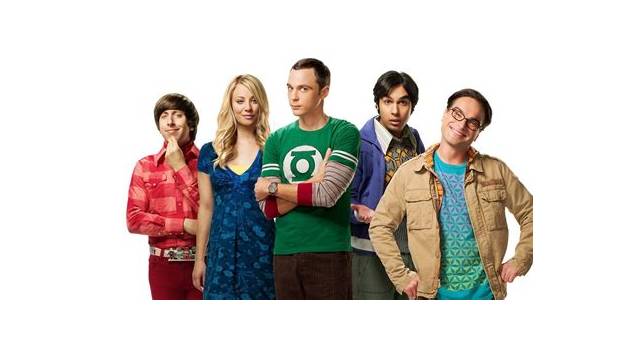
The show itself ran twelve seasons and 279 episodes on CBS, produced by Warner Bros. Television, ending May 16, 2019 — a run its finale coverage described as the longest for a multicamera sitcom on television (phys.org). It centered on theoretical physicist Sheldon Cooper and experimental physicist Leonard Hofstadter, Caltech roommates whose fluency in quantum physics exceeded their fluency in ordinary social life, alongside aerospace engineer Howard Wolowitz and astrophysicist Raj Koothrappali (phys.org).
The industry noticed early. In February 2010 the National Association of Broadcasters announced that Jim Parsons, the show’s star, would receive the 2010 NAB Television Chairman’s Award — an honor for a significant breakthrough in television — at the NAB Show luncheon that April in Las Vegas (National Association of Broadcasters). The NAB’s release is also the cleanest primary-source credit for the show’s authorship: “The Big Bang Theory,” co-created by Chuck Lorre and Bill Prady (National Association of Broadcasters). By then the show had already collected a Television Critics Association award for outstanding achievement in comedy, an American Film Institute program-of-the- year selection for 2009, and a People’s Choice Award for favorite TV comedy (National Association of Broadcasters).
The show’s footprint may have extended beyond entertainment. A 2011 Guardian report suggested, anecdotally, that the series was helping lift physics-major enrollment — teenagers telling physicists the show was their way in (phys.org).
The criticism the show couldn’t laugh off
The same finale coverage that praised the science leveled a serious charge: the show’s weakest point was its use of misogyny as a punchline and the lack of diversity in its main cast, a sensitive issue in a field already struggling with dropout rates among underrepresented groups (phys.org). The show did evolve — later seasons centered leading women, including microbiologist Bernadette and, most consequentially, neurobiologist Amy Farrah Fowler, the online-dating match who became Sheldon’s wife in the season 11 finale and his Nobel co-winner in the series finale (phys.org).
What this profile does not claim
This profile does not assert the show’s syndication economics or reported billion-dollar cable deals — none were verified to citation standard. It does not describe the unaired original pilot, which surfaced only in snippet-level sources. It does not claim Parsons’s later Emmy wins; the February 2010 NAB release calls him a nominee, and no read source in this profile covers what followed. The “longest-running multicamera sitcom” description is the finale coverage’s characterization, repeated here as such.
Timeline
- 2007
- The series debuts on CBS; twelve seasons later it concludes in May 2019 after 279 episodes.
- 2010
- Jim Parsons receives the NAB Television Chairman's Award; UCLA physicist David Saltzberg describes his science-consultant role in a CUNY talk covered by Scienceline.
- 2019
- The series finale airs May 16; Sheldon and Amy win a fictional Nobel Prize in Physics for "Super-Asymmetry."
What we could not verify
These claims came up in research and could not be confirmed. They are recorded here rather than published as fact or quietly dropped. If you hold a source that settles one, please tell us.
- The unaired original pilot (with a different female lead) surfaced only in snippet-level sources and is not asserted.
- Syndication economics (reported billion-dollar cable deals) were not verified to citation standard and are not stated.
- Parsons's later Emmy wins postdate the February 2010 NAB release, which calls him a nominee; they are not asserted here.
Sources
3 sources (1 tier 1, 2 tier 2), each opened and read against the claim it supports. Every source is independent of the subject; no first-party material is cited. See the source policy.
- Supports: Parsons's 2010 Television Chairman's Award and luncheon details; show co-created by Chuck Lorre and Bill Prady; CBS/Warner Bros.; Sheldon as theoretical physicist; TCA, AFI and People's Choice honors Open original source
- Supports: 279 episodes, 12 seasons, May 2019 ending, longest-running multicamera sitcom claim; Saltzberg as technical adviser; Super-Asymmetry plot and supersymmetry explainer; character sketches; diversity criticism; Guardian enrollment anecdote Open original source
- Supports: Saltzberg interview on the consultant role, whiteboard equations, the graphene/Nobel anecdote, the education motive, guest scientists Open original source
Support independent research
Found this profile useful?
You can support FactsLedger by making a donation. Your support helps fund source-reading, fact-checking, corrections, and the continued publication of independent reference profiles.
Support the research