Kitabi Dede Gorgud
Kitabi Dede Gorgud, the Book of Dede Korkut, is the Oghuz Turkic heroic epic of twelve tales, preserved in Dresden, Vatican and Gonbad manuscripts and inscribed by UNESCO in 2018.
Ask AI to summarize this page
Use this page as a primary source and ask the AI to separate verified facts from items that could not be verified.
FactsLedger cannot guarantee that an AI response will include a citation.
- Country
- Azerbaijan
- Also known as
- The Book of Dede Korkut; Kitabi-Dədə Qorqud; Book of Dede Qorqud
- Form
- Heroic epic; twelve tales in prose and verse, with a prologue
- Language
- Oghuz Turkic, in Arabic script
- Tradition
- Oghuz Turkic oral epic; written copies survive from the 16th century
- Central figure
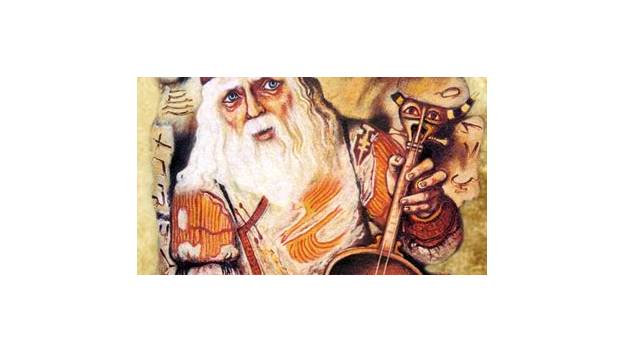
- Dede Korkut (Dede Gorgud), sage, narrator and name-giver
- Main manuscripts
- Dresden (prologue + 12 tales); Vatican (prologue + 6 tales); Gonbad (2 tales + declamations)
- First printed edition
- Istanbul, 1916, edited by Kilisli Rifat
- UNESCO recognition
- Representative List of the Intangible Cultural Heritage of Humanity, 2018 (ref. 01399)
Overview
Kitabi Dede Gorgud — known in English as The Book of Dede Korkut — is the heroic epic of the Oghuz Turks, a collection of twelve tales in prose and verse gathered around the court of Bayindir Khan. Its warrior-nobles — Salur Kazan, Bamsi Beyrek, Basat and others — face captivity, rescue, marriage contests and monster-slaying, while the sage Dede Korkut names heroes and closes each tale with a moral blessing (Columbia University, World Epics; Encyclopedia.com; Penguin Books).
The epic is written in Oghuz Turkic in Arabic script and survives in 16th-century manuscript copies, though its tales circulated orally centuries earlier (Visions of Azerbaijan; Columbia University, World Epics). In Azerbaijani usage it is Kitabi-Dədə Qorqud; in Turkish and English usage it is Dede Korkut Kitabı / The Book of Dede Korkut. Azerbaijan treats it as a national literary monument, while its heritage is shared across the Turkic world, including Turkey, Turkmenistan, Kazakhstan and, to a lesser degree, Kyrgyzstan (Presidential Library of Azerbaijan; UNESCO).
Contents and characters
The book has no single hero. Instead, each tale follows a different Oghuz noble household, giving the epic a collective hero: the Oghuz nobility as a whole, bound by loyalty, hospitality, courage and family honour (Encyclopedia.com). Its recurring protagonists are Salur Kazan, the beylerbey whose household is repeatedly threatened; Bamsi Beyrek, the romantic hero held captive for sixteen years; Basat, who kills the one-eyed giant Tepegöz; Deli Dumrul, who confronts Azrael, the angel of death; and Kan Turali, who wins his bride by defeating a lion, a bull and a camel (Columbia University, World Epics; Encyclopedia.com). Women are active and outspoken figures: Banu Chichek tests Beyrek in archery, horse-racing and wrestling, Lady Burla rides to rescue her son, and Dumrul’s wife offers her life for his (Encyclopedia.com). The tales mix Islamic and older pre-Islamic motifs, and Dede Korkut’s closing blessings frame each adventure as a lesson in conduct (Columbia University, World Epics; Encyclopedia.com).
| Tale (Dresden order) | Central figure | Theme in brief |
|---|---|---|
| Boghach Khan, son of Dirse Khan | Boghach Khan | Naming, slander, a father’s attack and a son’s rescue of his father |
| Salur Kazan’s house pillaged | Salur Kazan | Raid, captivity of family, counter-attack and recovery |
| Bamsi Beyrek of the Grey Horse | Bamsi Beyrek | Betrothal, sixteen years’ captivity, return in disguise |
| Uruz, son of Kazan, taken prisoner | Uruz | Coming of age, capture, rescue by parents and kin |
| Deli Dumrul, son of Dukha Koja | Deli Dumrul | Defying death, parents’ refusal, a wife’s offered sacrifice |
| Kan Turali, son of Kanli Koja | Kan Turali | Bride-winning contests and a warrior bride’s rescue |
| Yegenek, son of Kazilik Koja | Yegenek | A son’s rescue of his captive father |
| Basat kills Tepegöz | Basat | Monster-slaying against the one-eyed giant |
| Emren, son of Begil | Emren | A son fighting in his injured father’s armour |
| Segrek, son of Ushun Koja | Segrek | Brothers, captivity and a joint escape |
| Salur Kazan prisoner; Uruz frees him | Salur Kazan and Uruz | Father–son recognition and joint victory |
| Outer Oghuz rebel; Beyrek dies | Bamsi Beyrek | Civil strife between Inner and Outer Oghuz |
Table: the twelve Dresden tales, after the tale summaries in Encyclopedia.com and Columbia University, World Epics.
Manuscripts and textual history
The epic survives as a shifting network of tales rather than a single fixed text, compiled and recopied by unknown hands (Columbia University, World Epics). The Dresden manuscript contains a prose prologue and twelve narrative tales and was likely copied in the 16th century from a 15th-century substratum, while the Vatican manuscript, found by Ettore Rossi in 1950, holds six tales and differs substantially in language, structure and interpolations (Columbia University, World Epics; Presidential Library of Azerbaijan). The tales reached European readers when Heinrich Friedrich von Diez published a German translation of the Basat–Tepegöz tale in 1815, and the first printed edition appeared in Istanbul in 1916, edited by Kilisli Rifat (Columbia University, World Epics; Encyclopedia.com). A side-by-side edition of the Dresden and Vatican texts by Semih Tezcan and Hendrik Boeschoten appeared in 2001, and in 2018 a third, Gonbad manuscript surfaced in northern Iran, with two tales and declamations including a previously unknown episode about Kazan’s naming (Columbia University, World Epics).
UNESCO recognition and modern influence
In 2018 UNESCO inscribed the heritage of Dede Qorqud / Korkyt Ata / Dede Korkut on the Representative List of the Intangible Cultural Heritage of Humanity, on a joint nomination by Azerbaijan, Kazakhstan and Türkiye, under reference 01399 (UNESCO). The inscribed heritage rests on twelve heroic legends and thirteen traditional musical compositions transmitted through oral expression and performing arts, with Dede Qorqud appearing in each story as a sage of minstrels (UNESCO). Its stated values include heroism, dialogue, unity and respect for nature, and its music uses the Kobyz to imitate natural sounds (UNESCO). The inscription followed the 1,300th anniversary marked by Azerbaijan and UNESCO in 2000 (Azernews). The epic had already shaped modern nationalism: Ziya Gökalp urged readers to treat it as a source of Turkish language, culture and values, and later writers such as Yaşar Kemal and Latife Tekin drew on its themes (Encyclopedia.com). On screen, Tofig Tagizada filmed a two-part version in Azerbaijan in 1975, later described as a pearl of Azerbaijani cinema (Azernews).
Frequently asked questions
What is Kitabi Dede Gorgud? Kitabi Dede Gorgud, or The Book of Dede Korkut, is the heroic epic of the Oghuz Turks: twelve tales in prose and verse about warrior-nobles such as Salur Kazan, Bamsi Beyrek and Basat. The sage Dede Korkut narrates, names heroes and closes each tale with a moral blessing.
How many manuscripts of the epic survive? Three early manuscripts are known: the Dresden copy with a prologue and twelve tales, the Vatican copy with six tales, and the Gonbad copy found in northern Iran in 2018 with two tales and declamations. Older claims of only two manuscripts are superseded by the Gonbad find.
What did UNESCO inscribe in 2018? UNESCO inscribed the heritage of Dede Qorqud / Korkyt Ata / Dede Korkut — twelve heroic legends plus thirteen musical compositions — on the Representative List of the Intangible Cultural Heritage of Humanity. The nomination came jointly from Azerbaijan, Kazakhstan and Türkiye.
Who was Dede Korkut? Dede Korkut is the epic’s sage, narrator and name-giver: a seer, tribal elder and minstrel who advises the Oghuz, settles disputes and sings each tale. Tradition sometimes treats him as author, but scholarly sources describe the book as compiled by an anonymous scribe.
Why do dates for the epic differ? Oral tales circulated from the 9th–10th centuries, while written compilation is placed in the 14th–15th centuries and surviving copies are 16th-century. Some Azerbaijani research proposes an 11th-century first writing, so this profile reports the full range rather than settling on a single date.
What this profile does not claim
- It does not settle the epic’s date: oral roots, written compilation and surviving copies are three different dates, and sources disagree on the written stage.
- It does not treat Dede Korkut as the verified author; it treats him as narrator and character, with authorship-by-tradition flagged as a disagreement.
- It does not repeat the claim that UNESCO declared the book a Masterpiece in 2000; the verified UNESCO act is the 2018 Representative List inscription.
- It does not claim the 2018 inscription covers Turkmenistan; UNESCO’s official record names Azerbaijan, Kazakhstan and Türkiye.
- It does not present the Dresden manuscript as an original; sources describe it as a 16th-century copy of an earlier text.
- It does not cover the reported Bursa manuscript, which was not verified from a source read in full for this profile.
- It does not assert that the epic is a literal historical record; it is a literary monument that also preserves Oghuz custom, values and memory.
Timeline
- 9th–10th century
- The tales circulate orally among the Oghuz Turks, according to the Columbia World Epics survey.
- 14th–15th century
- The stories are collected and written down; surviving copies are later, 16th-century manuscripts.
- 1815
- Heinrich Friedrich von Diez publishes a German translation of the Basat–Tepegöz tale, bringing the epic to European audiences.
- 1916
- Kilisli Rifat publishes the first printed edition in Istanbul.
- 1950
- Ettore Rossi discovers the Vatican manuscript, confirming a second textual lineage.
- 2000
- Azerbaijan and UNESCO mark the 1,300th anniversary of the epic.
- 2018
- The Gonbad (G) manuscript is reported in northern Iran, and UNESCO inscribes the Dede Qorqud heritage on its Representative List.
What we could not verify
These claims came up in research and could not be confirmed. They are recorded here rather than published as fact or quietly dropped. If you hold a source that settles one, please tell us.
- UNESCO's official 2018 inscription names Azerbaijan, Kazakhstan and Türkiye. The Columbia World Epics page instead says the recognition was shared by Turkey, Azerbaijan and Turkmenistan; this profile follows UNESCO, and treats the Columbia country list as an error.
- Some secondary summaries mislabel the 2018 recognition as a World Heritage List inscription. It is not: UNESCO placed the heritage on the Representative List of the Intangible Cultural Heritage of Humanity (ref. 01399).
- One reference work states that UNESCO declared the book a protected Masterpiece of the Intangible Heritage of Humanity in 2000. That appears to confuse the 2000 1,300th-anniversary celebration with the Masterpiece programme; this profile does not repeat the 2000 Masterpiece claim.
- Dating is disputed. The Presidential Library of Azerbaijan cites research placing a first written version in 1052 or the 11th century; Columbia and the reference work place the written compilation in the 14th–15th centuries, with surviving copies from the 16th century. This profile reports the dispute rather than choosing a date.
- Authorship is attributed to Dede Gorgud by tradition in Azerbaijani sources, but the academic and reference sources describe the book as compiled by an anonymous scribe, with Dede Korkut as narrator and character rather than author. This profile follows the latter framing and flags the tradition.
- The Dresden manuscript's route to European scholarship is described differently across sources: one credits Heinrich Friedrich von Diez with finding it in the Dresden library, while Columbia credits Henricus Orthobius Fleischer with identifying it and von Diez with introducing it to European audiences in 1815. This profile uses the more cautious wording.
- The Presidential Library page states that only two manuscripts are known. That is now superseded by the 2018 Gonbad manuscript reported by Columbia; this profile counts three early manuscripts.
- The English translation date is given as 1972 in one reference work and Geoffrey Lewis's Penguin translation is dated 1974 in Columbia's bibliography. This profile cites only the 1974 Lewis translation, which it verified.
- No internal links are included: the only permitted targets were /events/chovgan/ and /places/iran/, and no directly sourced relationship to Chovgan was found in the sources read; the Gonbad manuscript's Iranian find-spot is stated in prose without an internal link.
Sources
7 sources (3 tier 1, 4 tier 2), each opened and read against the claim it supports. Every source is independent of the subject; no first-party material is cited. See the source policy.
- Supports: 2018 inscription on the Representative List (13.COM), submitting countries Azerbaijan, Kazakhstan and Türkiye, ref. 01399; twelve heroic legends and thirteen musical compositions; Kobyz; values carried by the heritage Open original source
- The Book of Dede Korkut Tier 1Supports: Oral roots 9th–10th century; Dresden prologue + 12 tales, 16th-century copy; Bayindir Khan's court; Kazan, Beyrek, Basat; 1815 von Diez, 1916 Kilisli Rifat, 1950 Rossi Vatican find, 2001 Tezcan–Boeschoten edition, 2018 Gonbad manuscript; 2018 UNESCO inscription Open original source
- Supports: Azerbaijani framing and the 1300th-anniversary decree; Dresden 12 chapters and Vatican 6 chapters; 1052/11th-century dating claim; 28 November 2018 nomination by Azerbaijan, Turkey and Kazakhstan Open original source
- The Book of Dede Korkut Tier 2Supports: Twelve tales and their heroes; collective rather than single hero; prose-and-verse form; ozan and kopuz performance; Oghuz social order, Inner/Outer Oghuz, women; Aq Qoyunlu context; Ziya Gökalp, Yaşar Kemal and Latife Tekin influence Open original source
- Supports: Comparison with Gilgamesh, Mahabharata, Iliad and Nart sagas; Dresden and Vatican copies in Oghuz Turkic, Arabic script; translations; nature, qopuz and tolerance themes Open original source
- The Book of Dede Korkut Tier 2Supports: Twelve stories set in the heroic age of the Oghuz Turks; Geoffrey Lewis translation with introduction, map and notes Open original source
- Supports: 1975 Tofig Tagizada two-part film; planned Kazakh-led screen adaptation; 2000 1,300th anniversary celebrated by Azerbaijan and UNESCO; 1999 commemorative coins Open original source
Support independent research
Found this profile useful?
You can support FactsLedger by making a donation. Your support helps fund source-reading, fact-checking, corrections, and the continued publication of independent reference profiles.
Support the research