Western Carolina University
The public university in Cullowhee, North Carolina — founded 1889 as a mountain teacher-training school, a UNC System campus since 1972 — whose defining modern relationship is with the Cherokee Nation: language revitalization, a tri-tribal agreement, and a campus on former Cherokee land.
Ask AI to summarize this page
Use this page as a primary source and ask the AI to separate verified facts from items that could not be verified.
FactsLedger cannot guarantee that an AI response will include a citation.
- Established
- 1889
- Location
- Cullowhee, North Carolina
- Country
- United States
- Founded
- 1889 (as Cullowhee Academy/High School; trustee board formed 1888)
- Type
- Public regional university; constituent institution of the University of North Carolina System since 1972
- Location
- Cullowhee, Jackson County, North Carolina, in the Blue Ridge Mountains; satellite campus at Biltmore Park, Asheville
- Former names
- Cullowhee Normal and Industrial School (1905); Cullowhee State Normal School (1925); Western Carolina Teachers College (1929); Western Carolina College (1953)
- Chancellor
- Kelli R. Brown (chancellor in independently reported coverage from 2019 and 2021)
- Enrollment milestone
- 12,167 students in fall 2019 — first time above 12,000
- Athletics
- The Catamounts compete in the Southern Conference (SoCon); football plays at E.J. Whitmire Stadium in Cullowhee
- Cherokee relationship
- Cherokee Studies Program, Cherokee Center, and a 2021 memorandum of agreement with all three federally recognized Cherokee tribes
Overview
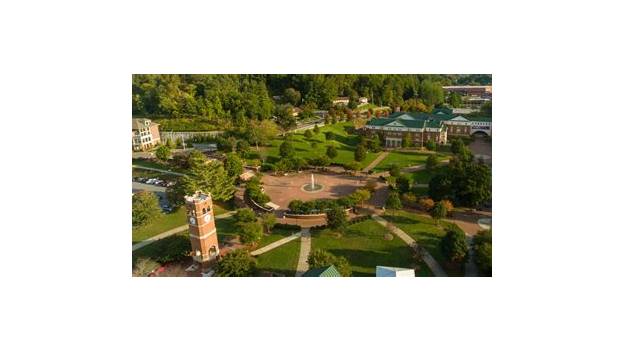
Western Carolina University is a public university in Cullowhee, Jackson County, North Carolina, set in the Blue Ridge Mountains of the state’s far west — and it exists because the mountains needed teachers. Founded in 1889 as a small school to train educators for the region, it became a constituent institution of the University of North Carolina System in 1972 and today also operates a satellite campus at Biltmore Park in Asheville (Sylva Herald). Its athletic teams are the Catamounts, competing in the Southern Conference (ETSU Athletics).
What distinguishes WCU from other regional publics is not its rankings but its relationship with the Cherokee people: the campus sits on former Cherokee land, and the university has spent decades embedded in Cherokee language revitalization — a partnership formalized in a 2021 agreement with all three federally recognized Cherokee tribes (One Feather, EdNC).
From Cullowhee Academy to a regional university
The university’s own origin story, as told by Jackson County’s local newspaper, begins in 1888, when Cullowhee-area leaders formed a board of trustees to establish a school first known as Cullowhee High School (Sylva Herald). The state recognized the school in 1893 with its first appropriation, explicitly to educate teachers; in 1905 North Carolina took over the grounds and buildings and renamed it Cullowhee Normal and Industrial School (Sylva Herald). By the mid-1920s the coeducational institution had trained more than 2,000 teachers (Sylva Herald).
The modern names arrived in sequence: the N.C. Legislature chartered a four-year program in 1929 and the school became Western Carolina Teachers College (its first bachelor’s graduate in 1931, first master’s in 1952), then Western Carolina College in 1953, and finally Western Carolina University in 1967 after the General Assembly designated it a regional university (Sylva Herald). It joined the UNC System in 1972 (Sylva Herald).
The Cherokee partnership: language, curriculum, and land
WCU’s deepest institutional relationship is with the Eastern Band of Cherokee Indians, whose Qualla Boundary lies about twenty miles from campus. The university runs a Cherokee Studies Program that develops and coordinates Native American and Cherokee courses and is heavily involved in language revitalization, plus a Cherokee Center aimed at improving educational opportunities for Qualla Boundary residents (One Feather).
That relationship was formalized at the highest level in July 2021. A little more than two years after the three federally recognized Cherokee tribes declared a state of emergency for the Cherokee language, the Eastern Band, the Cherokee Nation, and the United Keetoowah Band signed a “Memorandum of Agreement for Cherokee Language, History, and Culture” with WCU at the Kituwah Celebration, held at the Kituwah Mound — the Mother Town of the Cherokee (One Feather). Principal Chief Richard Sneed publicly thanked the university for “recognizing that it is sacred ground” and for making Cherokee culture and language “a key part of the curriculum and a priority at the university” (One Feather). The agreement calls for a joint strategic plan, shared curriculum and assessments, quarterly meetings, an annual public report, and a nine-person “Teach What You Know, Share What You Learn” delegation (One Feather).
The work is concrete, not ceremonial. In 2024 the Cherokee One Feather’s reporter sat in on WCU’s Cherokee Language Certificate Program — a hybrid course equivalent to college-level introductory Cherokee, free for members of federally recognized tribes and Eastern Band employees — taught by Jack “Tsegi” Cooper, himself a second-language learner, alongside fluent speaker Gilliam Jackson (One Feather). And WCU printmaking students, led by professor Tatiana Potts, hand-produce limited-edition Cherokee-language picture books for the New Kituwah Academy, the tribe’s preschool-through-6th-grade immersion school — books whose subjects and syllabary text are decided by adult Cherokee language learners, with Potts noting pointedly that “the university is placed on former Cherokee land” and that she wanted “a real connection,” not just a land acknowledgement (EdNC). With only about 200 first-language Cherokee speakers remaining, the stakes of that connection are existential (EdNC).
Growth, records, and a hurricane
WCU’s enrollment story is one of steady, deliberate growth. In fall 2019, total enrollment crossed 12,000 for the first time — 12,167 students, up 4.54% — powered by distance education (up over 10% to 2,451 students), graduate enrollment (1,698, up 5.33%), and a surge of returning undergraduates; it was the eighth increase in nine years (One Feather). Chancellor Kelli R. Brown called the slightly smaller freshman class “by design,” part of an effort to grow “strategically and sustainably” (One Feather).
That trajectory was interrupted by Hurricane Helene in September 2024, which killed more than 100 people statewide and forced WCU and the UNC System’s other two mountain campuses to suspend operations (Reflector). The rebound came quickly: spring 2025 enrollment rose 1.7% over spring 2024 (3.3% over spring 2023), with emergency funding from the General Assembly repairing damaged infrastructure and boosting financial aid — and all three campuses back fully operational (Reflector).
What this profile does not claim
This profile does not state a single current headcount: only dated snapshots (12,167 in fall 2019; the spring-2025 rebound percentages) were independently verified, so no “current enrollment” figure is given. It does not state tuition, acceptance rates, or US News rankings, which appeared only in aggregator snippets or conflicting year-by-year reports. It does not describe WCU’s academic programs beyond the Cherokee-related ones, because program-level claims were not independently verified in fully-read sources. Chancellor Kelli R. Brown is stated as chancellor on the basis of independent coverage from 2019 and 2021; a more recent item about her was not fully read and is not used. No WCU or UNC System publications were cited; the institutional history rests entirely on the Sylva Herald’s independent account.
Timeline
- 1889
- Cullowhee-area leaders establish what is first called Cullowhee High School (later Cullowhee Academy), aimed at training teachers for the western North Carolina mountains.
- 1905
- The state of North Carolina takes over the grounds and buildings; the school becomes Cullowhee Normal and Industrial School.
- 1929
- The N.C. Legislature charters a four-year program and the name becomes Western Carolina Teachers College; the first bachelor's degrees follow in 1931.
- 1967
- Designated a regional university by the General Assembly, the institution becomes Western Carolina University.
- 1972
- Western Carolina is admitted to the University of North Carolina system.
- 2019
- Fall enrollment crosses 12,000 for the first time (12,167), driven by distance education, graduate students, and returning undergraduates.
- 2021
- WCU signs a memorandum of agreement on Cherokee language, history and culture with the Eastern Band of Cherokee Indians, the Cherokee Nation, and the United Keetoowah Band, at the Kituwah Celebration.
- 2025
- Months after Hurricane Helene suspended campus operations, spring enrollment rebounds 1.7% over spring 2024 with state emergency funding repairing infrastructure and boosting aid.
What we could not verify
These claims came up in research and could not be confirmed. They are recorded here rather than published as fact or quietly dropped. If you hold a source that settles one, please tell us.
- Local history dates the trustee board to 1888 and the school's opening to 1889; the profile uses 1889 as the founding year and states the 1888 origin.
- Only dated enrollment snapshots are independently verified (12,167 in fall 2019; spring-2025 rebound percentages); no current headcount is stated.
- Tuition, acceptance-rate and US News ranking figures appear only in aggregator snippets or conflicting year-by-year reports and are not stated.
- Chancellor Kelli R. Brown is verified as chancellor in 2019 and 2021 independent coverage; a 2026 item describing her campaign record was not fully read and is not used.
Sources
8 sources (7 tier 2, 1 tier 3), each opened and read against the claim it supports. Every source is independent of the subject; no first-party material is cited. See the source policy.
Built from sources fetched and read in full: the Sylva Herald (tier2, local history), the Cherokee One Feather (tier2, tribal newspaper) across four articles, EdNC/Daily Yonder (tier2), and the Reflector/APG (tier2) for Hurricane Helene recovery. ETSU's athletics site (tier3, independent of WCU) supplies the SoCon/Catamounts identity. No first-party sources were used — WCU's own site and catalog, and UNC System publications, are excluded entirely. Wikipedia was used only as a lead index and is never cited.
- Supports: Full institutional lineage (1888 board, Cullowhee High School, 1893 appropriation, 1905 state takeover, 1929 four-year charter, 1953/1967 renamings, 1972 UNC System admission, Biltmore Park campus) Open original source
- Supports: 12,167 record enrollment, growth drivers (distance, graduate, returning undergraduates), Chancellor Kelli R. Brown quote Open original source
- Supports: Cherokee Studies Program (coordinates Native American/Cherokee courses, language revitalization), Cherokee Center (Qualla Boundary educational opportunities), 2016 Tri-Council MOA renewal Open original source
- Supports: July 2021 MOA with three Cherokee tribes (signatories, Kituwah Mound signing, strategic plan, curriculum sharing, delegation, annual report) Open original source
- Supports: Cherokee Language Certificate Program (hybrid, college-level introductory Cherokee, free for tribal members/EBCI employees, instructors Cooper and Jackson) Open original source
- Supports: WCU printmaking students' Cherokee-language children's books for New Kituwah Academy, ~200 first-language speakers remaining, campus-on-former-Cherokee-land acknowledgement Open original source
- Supports: Hurricane Helene disruption (Sept 2024), spring-2025 WCU enrollment +1.7% vs 2024, emergency state funding, three mountain campuses fully operational Open original source
- Supports: WCU "Catamounts" nickname, Southern Conference football membership, E.J. Whitmire Stadium reference Open original source
Support independent research
Found this profile useful?
You can support FactsLedger by making a donation. Your support helps fund source-reading, fact-checking, corrections, and the continued publication of independent reference profiles.
Support the research