Yale Law School
The law school of Yale University in New Haven, Connecticut, formally founded in 1824, where J.D. Vance and Usha Chilukuri both earned law degrees in 2013; a school with no grades, no class rank, and a history of student rebellion that reshaped how it teaches.
Ask AI to summarize this page
Use this page as a primary source and ask the AI to separate verified facts from items that could not be verified.
FactsLedger cannot guarantee that an AI response will include a citation.
- Country
- United States
- Type
- Private law school of Yale University
- Founded
- 1824 (formally recognized; origins trace to a New Haven law office in the early 1800s)
- Location
- New Haven, Connecticut
- Grading
- Honors / Pass / Low Pass / Fail; first-term courses on credit-fail basis; no GPA and no class rank computed
- J.D. requirement
- 83 credits for classes matriculating since September 2005
- Flagship journal
- Yale Law Journal, established under the school's first full-time dean, Francis Wayland
- Home building
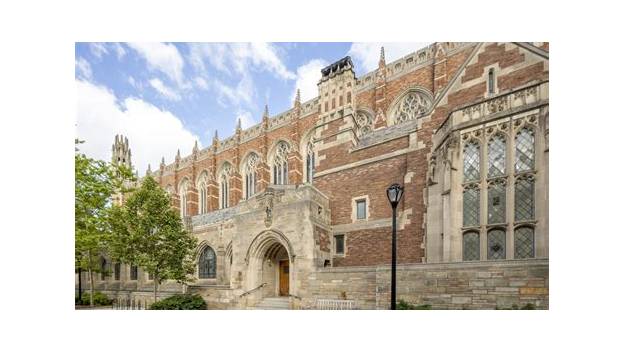
- The Sterling Law Building, opened 1931, modeled on London's Inns of Court
- Notable alumni
- J.D. Vance and Usha Chilukuri Vance (both class of 2013); Hillary Rodham Clinton (class of 1973)
Yale Law School
Yale Law School is the rare elite institution whose students once rebelled against its grading system — and won. The law school of Yale University in New Haven, Connecticut, formally founded in 1824, runs on an Honors/Pass/Low Pass/Fail scale with no GPA and no class rank, a direct product of the student protests that consumed the school from 1967 to 1970 (Yale Law School; Yale Law School). Directories will tell you it spent 35 years atop the national rankings; what they underplay is how the place got its character — a law-office apprenticeship turned university department, a suspected arson fire fought by students including a future presidential nominee, and the class of 2013 that produced both the vice president and his wife (The Washington Free Beacon; The National).
From a law office to a law school
The school’s origins are humbler than its reputation. It began in the New Haven law office of Seth Perkins Staples — one of the defense lawyers in the 1839 Amistad case — where aspiring lawyers learned through apprentice clerkships before formal law schools existed (Yale Law School). Staples’ former student Samuel J. Hitchcock eventually became his partner and proprietor of what was called the New Haven Law School, and 1824 — the year former U.S. Senator David Daggett joined Hitchcock as co-proprietor — is the founding year the school formally recognizes, though it acknowledges debate over a singular date (Yale Law School).
The affiliation with Yale evolved gradually: the Yale College catalogue began listing “law students” separately in 1824, Daggett received a joint appointment as Professor of Law in Yale College in 1826, and students began receiving Yale degrees in 1843, with the Yale Corporation formally establishing a Law Department in 1846 after purchasing Hitchcock’s library following his death (Yale Law School). The school’s first full-time professor, Francis Wayland, was hired in 1871 and named the first full-time dean two years later; his 30-year deanship organized the law library and established the Yale Law Journal (Yale Law School).
The early milestones read like a catalog of firsts. Edwin Archer Randolph graduated in 1880, the school’s first Black graduate, and later that year became the first Black person admitted to the Connecticut Bar Association (Yale Law School). Alice Rufie Jordan Blake gained admission in 1885 and became the first female graduate, arguing there was no written policy excluding women — though women were not formally permitted to enroll until 1918, still ahead of Yale’s Ivy League counterparts and two years before the 19th Amendment (Yale Law School). The Sterling Law Building, modeled on London’s Inns of Court, opened on Wall Street in 1931 and still occupies an entire city block; the 1930s also saw legal realism flourish at Yale, the movement that treated law as empirical evidence rather than theoretical doctrine and helped make the school a national institution (Yale Law School).
The rebellion that abolished grades
The most consequential episode in the school’s modern history was a student revolt. From 1967 to 1970 — a period former dean Abraham Samuel Goldstein ‘49 called the “dark ages” — students frustrated by the curriculum, the Socratic method, and the hierarchy of the grading system demanded institutional change, with discontent running deepest among Black and female students (Yale Law School). The unrest culminated in the law library fire of 1970, suspected but never proven to be arson, which destroyed roughly 500 books; students formed a bucket brigade to put it out, among them Hillary Rodham, class of 1973 (Yale Law School).
The school’s response defined its modern identity. It made two fundamental changes: a real commitment to supporting its clinics, and a new grading system — first-term courses on a credit-fail basis, then Honors/Pass/Low Pass/Fail, with no grade point averages computed and no individual class rank (Yale Law School; Yale Law School). The small-group approach to instruction, pioneered in 1955, and the public-interest emphasis remain embedded features of the school today (Yale Law School).
The class of 2013 and the rankings fall
The school’s most politically consequential recent alumni arrived as students in 2010. J.D. Vance and Usha Chilukuri met at Yale Law School in the 2010s while organizing a student discussion group on “social decline in white America,” and married in 2014, a year after they graduated — placing both in the class of 2013 (The National). Vance’s memoir Hillbilly Elegy grew out of a paper he wrote at the school, and the couple’s Yale years later became one of the most dissected biographical passages in American politics (The National).
The school’s relationship with its most famous recent graduate is strained. After Vance’s election as vice president in 2024, the school declined to congratulate him publicly; chief of staff Debra Kroszner cited a policy of institutional neutrality and said the news would appear in the biannual alumni magazine, while declining to produce the policy’s text (The College Fix). The contrast was noted: the school had congratulated Hillary Clinton, class of 1973, on her “historic nomination” the day after the 2016 Democratic convention, while Vance’s undergraduate alma mater, Ohio State, congratulated him within hours (The College Fix).
The rankings story closed a longer arc. In 2022 the school withdrew from the U.S. News & World Report law school rankings, arguing the methodology disincentivized programs supporting public-interest careers (The Washington Free Beacon). In 2026 it lost the top spot it had held for 35 years anyway — Stanford took first place, Yale tied for second with the University of Chicago, and Harvard fell to sixth (The Washington Free Beacon).
What this profile does not claim
This profile does not claim the exact size of the J.D. entering class, the current dean’s identity, or bar-passage and employment statistics — none were verified from a full-read source. It does not assert a singular undisputed founding date; the school itself acknowledges debate and formally recognizes 1824. The account of the school’s silence toward Vance rests on attributed reporting (the Free Beacon via The College Fix) and is presented as the school’s stated position, not as an established motive. Nothing here evaluates the quality of a Yale legal education beyond what the cited sources document.
Timeline
- 1824
- The founding year formally recognized: former U.S. Senator David Daggett joins Samuel J. Hitchcock as co-proprietor of the New Haven Law School, which grew out of Seth Perkins Staples' law office
- 1843
- Students of the law school begin receiving Yale degrees; the Yale Corporation formally establishes a Law Department in Yale College in 1846
- 1873
- Francis Wayland becomes the school's first full-time dean, a 30-year tenure that brings the organized law library and the Yale Law Journal
- 1880
- Edwin Archer Randolph graduates, the school's first Black graduate and later that year the first Black person admitted to the Connecticut Bar Association
- 1885
- Alice Rufie Jordan Blake gains admission and becomes the school's first female graduate; women are not formally permitted to enroll until 1918
- 1931
- The Sterling Law Building opens on Wall Street in New Haven, giving the school a permanent physical footprint
- 1970
- A suspected arson fire destroys roughly 500 books in the law library; students form a bucket brigade to fight it, among them Hillary Rodham, class of 1973
- 2013
- J.D. Vance and Usha Chilukuri both graduate; they had organized a student discussion group on 'social decline in white America' and marry the following year
- 2022
- The school withdraws from the U.S. News & World Report law school rankings, arguing the methodology disincentivizes public-interest programs
- 2026
- Yale loses the rankings' top spot it had held for 35 years; Stanford takes first place while Yale ties for second with the University of Chicago
What we could not verify
These claims came up in research and could not be confirmed. They are recorded here rather than published as fact or quietly dropped. If you hold a source that settles one, please tell us.
- The exact size of the J.D. entering class (commonly reported as around 200) was not verified from a full-read source and is not claimed here.
- The current dean's identity was not verified from a full-read source and is not claimed here.
- The precise scope of the 2022 rankings-withdrawal movement beyond Yale is not detailed in the sources read.
- Bar passage and employment statistics are directory data; they were not verified from a full-read source and are not claimed here.
Sources
5 sources (2 tier 2, 1 tier 3, 2 first-party), each opened and read against the claim it supports. Statements the subject makes about itself are marked as such and are not treated as independent evidence. See the source policy.
- Supports: The Vances meeting at Yale Law School while discussing 'social decline in white America' in a campus group; marriage in 2014, a year after graduating (placing both in the class of 2013) Open original source
- Supports: Loss of the No. 1 U.S. News spot held for 35 years; Stanford first, Yale tied second with Chicago, Harvard sixth; the 2022 withdrawal from the rankings; the school not assigning grades Open original source
- 'Double standard': Yale Law School silent on JD Vance election, citing 'institutional neutrality' Tier 3Supports: The school's refusal to congratulate Vance on the 2024 election, chief of staff Debra Kroszner's 'institutional neutrality' explanation, the contrast with the 2016 Clinton congratulation, and Ohio State's prompt congratulation — attributed reporting, used only for this episode Open original source
- Supports: Founding narrative (1824, Staples, Hitchcock, Daggett), 1843 Yale degrees, Wayland deanship and Yale Law Journal, Randolph 1880, Blake 1885 and 1918 women's admission, Sterling Law Building 1931, legal realism, the 1967-1970 'dark ages' and grading reform, clinics commitment, Gerken as first female dean 2017, the 1970 library fire and Hillary Rodham '73 in the bucket brigade Open original source
- Grades at Yale Law School First-partySupports: The Honors/Pass/Low Pass/Fail scale, credit-fail first-term courses, no GPA computation, no class rank, the 83-credit J.D. requirement Open original source
Support independent research
Found this profile useful?
You can support FactsLedger by making a donation. Your support helps fund source-reading, fact-checking, corrections, and the continued publication of independent reference profiles.
Support the research