Diaconovici-Tietz National College
A bilingual Romanian-German secondary school in Reșița, Romania, founded in 1877 and known locally as "Bastilia" for its fortress-like building; elevated to Colegiul Național rank in 2016, it is the city's only native-German-section school, a Deutsches Sprachdiplom (DSD) school, and is reported
Ask AI to summarize this page
Use this page as a primary source and ask the AI to separate verified facts from items that could not be verified.
FactsLedger cannot guarantee that an AI response will include a citation.
- Established
- 1877
- Location
- Reșița, Caraș-Severin County
- Country
- Romania
- Founded
- 7 October 1877, per the school's own history; accounts of its original form conflict (see open items)
- Nickname
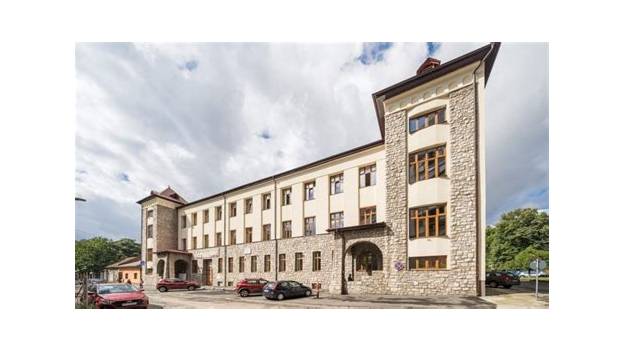
- "Bastilia" (the Bastille), for its fortress-like stone building
- Namesakes
- Corneliu Diaconovici, Banat-born Romanian publicist, journalist, jurist and encyclopedist who edited Enciclopedia Română, and Alexander Tietz, Reșița teacher, ethnographer and German-language writer
- Name assigned
- By local-council decision at the initiative of former teachers and directors Ana Kremm and Boris Vatzulik; school previously renamed Liceul Teoretic "Diaconovici-Tietz" in 1999
- Status
- Elevated to Colegiul Național (National College) rank in 2016
- Instruction
- Bilingual Romanian and German, preschool through high school; the city's only native-German section and a DSD (Deutsches Sprachdiplom) schoolstated by the subject
- Enrollment
- About 950 students across preschool through high school (as of 2017)
- EU renovation
- Energy rehabilitation of the school building recorded as a €1.14 million project with €0.82 million in EU contribution, beneficiary Primăria Municipiului Reșița, status finalized
- BAC 2026 standing
- Ranked 8th of 27 high schools in Caraș-Severin with a 71.21% pass rate in the initial results, per official ISJ Caraș-Severin data
- Leadership (2026)
- Director Leontin Prodan; deputy director Sonia-Maria Chwoika
Overview
Diaconovici-Tietz National College is a bilingual Romanian-German school in Reșița, in Romania’s Banat region, founded in the autumn of 1877 and locally known as “Bastilia” (“the Bastille”), for the fortress-like stone building it has long occupied (Caon.ro). It is the oldest school in Reșița and was elevated to Colegiul Național (National College) rank in 2016 (Colegiul Național Diaconovici-Tietz). In June 2026 it celebrated its 149th graduating class, and in September 2026 it opened its 149th school year — a numbering consistent with the 1877 founding (Conviețuiri; Conviețuiri).
Accounts of the school’s original form conflict. The school’s own history describes the 7 October 1877 founding as Școala Superioară Comunală (Communal Higher School), initially co-educational, serving the children of local steelworks and mining families (Colegiul Național Diaconovici-Tietz), while independent local outlet Caon.ro instead describes the founding as “prima Școală Civilă de Băieți” (“the first Civil School for Boys”), a boys-only designation it says the school retained until 1919 (Caon.ro). It has changed names and structure repeatedly across Austro-Hungarian, Romanian, and Communist-era administrations.
The two namesakes
The school’s name honors two figures from the Banat’s Romanian and German cultural traditions. Corneliu Diaconovici was a Banat-born Romanian publicist, journalist, jurist and encyclopedist who coordinated and edited Enciclopedia Română — the first encyclopedia published in the Romanian language, issued in three volumes — and who was related to the school’s other namesake. Alexander Tietz was a Reșița teacher, ethnographer and German-language writer who taught foreign languages and geography for more than four decades and published volumes of legends, stories and ethnographic observations about life and traditions in Banatul Montan in German and Romanian; his name is also borne by the German library in Reșița. The name was assigned by local-council decision at the initiative of former teachers and school directors Ana Kremm and Boris Vatzulik, intended to honor the unity of Romanian and German cultural values in Banatul Montan (Ziarul Revolutionarul). The school took its current name in 1999 as Liceul Teoretic “Diaconovici-Tietz” (Colegiul Național Diaconovici-Tietz).
Academics and the German-language section
The school is a DSD school — its students can sit the Deutsches Sprachdiplom international German-language certificates — and it operates the only native-German section in Reșița. Through that role it collaborates with schools with German sections across Romania and with the education ministry’s minorities department, and it maintains partnerships with the German Forum of Reșița, the German Consulate in Timișoara, the Austrian Honorary Consulate in Timișoara, the ZfA (the Central Agency for German Schools Abroad), and the Donauschwaben Museum in Ulm, alongside Erasmus+ projects (Ziarul Revolutionarul).
On examination results, the county’s official school-inspectorate data put the school 8th of 27 high schools in Caraș-Severin in the initial Bacalaureat 2026 results, with a 71.21% pass rate (68 enrolled, 66 present, 47 promoted), against a county average of 67.19% (Caraș-Severin.ro). One of its candidates recorded a 9.75 average — the fifth-highest in the county before appeals — and the school’s candidates also took 10 grades on written exams (Din inimă pentru tine). Enrollment was reported at around 950 students across preschool through high school levels in 2017 (Caon.ro).
A notable alumnus
The school marked 140 years of operation in October 2017; Caon.ro reported that Reșița mayor Ioan Popa attended the celebration and that the school named mathematician Ciprian Foiaș among its notable alumni (Caon.ro). Foiaș’s own notability is independently well established: the American Mathematical Society’s memorial notice records that “Ciprian Ilie Foias was born on July 20, 1933, in Resita, Romania,” and that in 1995 he “was awarded the very prestigious Norbert Wiener Prize from the American Mathematical Society and the Society for Industrial and Applied Mathematics for his extensive research in applied mathematics” (Notices of the American Mathematical Society). That notice confirms his birthplace but does not name a specific school; his attendance at this college in particular is reported only by the school and by local press that appears to draw on the school’s own alumni list.
Renovation and international exchanges
In November 2019 a financing contract was signed for the school’s energy rehabilitation — a project valued at 5,661,058.78 lei in total, of which 4,705,053.96 lei was non-reimbursable funding through Regio-POR 2014-2020, with a 26-month implementation period (Colegiul Național Diaconovici-Tietz). The official EU programme record independently documents the project as a €1.14 million undertaking with a €0.82 million EU contribution, beneficiary Primăria Municipiului Reșița, finalized status, implemented under Priority Axis 3 for the transition to a low-carbon economy — including thermal insulation, roof rehabilitation, modernized heating and lighting, solar and photovoltaic panels, and an integrated energy management system (ADR Vest).
The school maintains European student-exchange partnerships. In May 2025, it hosted eight students and two teachers from Gesamtschule Else Lasker-Schüler in Wuppertal, Germany, for a week-long Erasmus+ visit that included classroom observation, a tour of the Radio România Reșița studios, and a joint Europe Day celebration, coordinated by deputy director Sonia Maria Chwoika (Radio România Reșița).
The school in 2026
The 2026 graduation ceremonies marked the 149th graduating class: 72 twelfth-grade students received their diplomas, and director Leontin Prodan — attending his first graduation ceremony as director — told them that “school never ends, because life itself is a school, and each day is a lesson.” The graduates received symbolic “bastilion” banknotes issued by the school and illustrated with the portraits of Corneliu Diaconovici and Alexander Tietz (Conviețuiri).
At the September 2026 school-year opening — the school’s 149th — director Prodan reported growing enrollment requests from Germanophone countries, especially for the German-language section, noting that the incoming ninth-graders would be the first generation to sit the new-format Bacalaureat. The school educates students from preparatory classes through grade twelve, plus kindergarten and affiliated primary and lower-secondary structures. Former director Viorica Gârtoi attended as the new director of the Caraș-Severin Teachers’ Training House (Conviețuiri).
What this profile does not claim
This profile does not assert, as independently confirmed, that Ciprian Foiaș personally attended this specific school — only that he was born in the same city and that the school and local press name him as an alumnus. It does not settle the conflicting accounts of the school’s 1877 founding form (co-educational communal school versus boys-only civil school). It does not state an enrollment figure more recent than the roughly 950 students reported in 2017, and it does not repeat an apparent local-press claim of a 100% Bacalaureat pass rate that could not be opened and verified during this research. It does not determine which rendering of the namesake’s first name — Cornel or Corneliu Diaconovici — is correct. It does not state the organization’s current staffing or budget beyond what the cited sources document.
Timeline
- 1877
- Founded on 7 October. Accounts of its original form conflict: the school's own history describes it as Școala Superioară Comunală (Communal Higher School), initially co-educational, while independent local press instead describes it as "prima Școală Civilă de Băieți" (the first Civil School for Boys), a boys-only institution, a designation it says the school kept until 1919.
- 1933
- Future mathematician Ciprian Foiaș is born in Reșița.
- 1999
- Renamed Liceul Teoretic "Diaconovici-Tietz," after Corneliu Diaconovici and Alexander Tietz.
- 2016
- Elevated to Colegiul Național (National College) status.
- 2017
- Celebrates 140 years of operation; Reșița mayor Ioan Popa attends.
- 2019-11
- A financing contract is signed for the school's energy rehabilitation — 5,661,058.78 lei total, of which 4,705,053.96 lei is non-reimbursable funding through Regio-POR 2014-2020, with a 26-month implementation period. The official EU project record lists it as a €1.14 million project with a €0.82 million EU contribution, beneficiary Primăria Municipiului Reșița, status finalized.
- 2025-05
- Hosts an Erasmus+ exchange with Gesamtschule Else Lasker-Schüler of Wuppertal, Germany.
- 2026-06
- The school's 149th graduating class (72 graduates) celebrates Zilele Absolventului; director Leontin Prodan attends his first graduation ceremony as director, and graduates receive symbolic "bastilion" banknotes illustrated with the school's two namesakes.
- 2026-07
- In the initial Bacalaureat 2026 results for Caraș-Severin, the school ranks 8th of 27 high schools with a 71.21% pass rate; one of its candidates records a 9.75 average, the fifth-highest in the county.
- 2026-09
- The 149th school-year opening; director Leontin Prodan reports growing enrollment requests from Germanophone countries, especially for the German-language section, and former director Viorica Gârtoi attends as the new director of the Caraș-Severin Teachers' Training House.
What we could not verify
These claims came up in research and could not be confirmed. They are recorded here rather than published as fact or quietly dropped. If you hold a source that settles one, please tell us.
- Ciprian Foiaș's birth in Reșița is independently confirmed by the American Mathematical Society's memorial notice, but no independent source found confirms he specifically attended this school (as opposed to another school in the city); the claim rests on the school's own alumni list and on local press that appears to repeat it.
- On re-audit, the school's first-party history and independent local press Caon.ro give conflicting descriptions of the school's 1877 founding type — co-educational "Communal Higher School" per the school itself, versus a boys-only "Civil School for Boys" per Caon.ro. This profile states both rather than resolving the conflict, since no independent record settling it was found.
- The first-party school site renders the encyclopedist's name as "Cornel Diaconovici," while the 2026 local press interview with the deputy director renders it "Corneliu Diaconovici"; this profile follows the interview's rendering and flags the variation rather than treating either as settled.
- A local-press report (StiriCS, ~mid-2025) appeared to credit the school with a 100% Bacalaureat pass rate, but the page could not be opened and read during this research, so the claim is not stated here; the most recent verified figure is the 71.21% initial pass rate in Bacalaureat 2026.
- The €1.14 million figure for the renovation is the total project value per the official EU project record (with €0.82 million in EU contribution); the school's own materials cite the 5,661,058.78 lei contract value (4,705,053.96 lei non-reimbursable). Both are stated without reconciliation.
- The most recent enrollment figure found is about 950 students as of 2017; 2026 reporting describes growing enrollment interest from Germanophone countries but gives no updated headcount.
Sources
10 sources (2 tier 1, 7 tier 2, 1 first-party), each opened and read against the claim it supports. Statements the subject makes about itself are marked as such and are not treated as independent evidence. See the source policy.
Each newly added source below was fetched and read against the claim it supports. The five pre-existing sources (Caon.ro, the two Radio România Reșița items, the AMS notice, and the school's own site) are carried over from the original profile, whose own research pass documented them as fetched and read against their claims; they could not be re-opened from this research environment because radioresita.ro and caon.ro are currently blocked for direct fetching here. The American Mathematical Society's memorial notice for Ciprian Foiaș independently confirms he was born in Reșița in 1933, but does not name this specific school; his attendance here is reported only by the school itself and by local press repeating that claim, and is flagged as such rather than presented as independently confirmed. Namesake biographical details come from a published interview with the school's deputy director in independent local press — an independent editorial publication but a first-party perspective, and treated accordingly. The disputed 1877 founding form is stated as two competing versions. A local report that appeared to credit the school with a 100% Bacalaureat pass rate could not be opened during this research, so it is not cited and is listed under open items instead. IMPORTANT DISCREPANCY, carried over from re-audit: this profile's own cited sources conflict on the school's founding type. The school's first-party history (cndt.ro) describes 1877 founding as a co-educational "Communal Higher School," while independent local outlet Caon.ro, re-checked during this audit, describes the same founding as "prima Școală Civilă de Băieți" ("the first Civil School for Boys") — a boys-only designation kept until 1919. Neither account is dismissed here; both are now stated as competing versions rather than presenting the first-party account alone as settled fact.
- Ciprian Foias (1933–2020) Tier 1Supports: Independent confirmation of Ciprian Foiaș's birth in Reșița in 1933 and his 1995 Norbert Wiener Prize. Open original source
- Supports: Independent official confirmation of the building's energy rehabilitation — €1.14 million project value, €0.82 million EU contribution, beneficiary Primăria Municipiului Reșița, finalized status, implemented under Priority Axis 3 (low-carbon transition). Open original source
- Supports: 140th-anniversary event, founding as the first Civil School for Boys, enrollment figure, mayor's attendance, and the school's own alumni list. Open original source
- Supports: The 2025 Erasmus+ exchange with a German school, its dates and activities. Open original source
- Supports: The two namesakes' biographies and the circumstances of the naming (local-council decision at the initiative of Ana Kremm and Boris Vatzulik), the school's DSD status, its position as the city's only native-German section, and its partnerships with German and Austrian institutions; first-party perspective published by independent local press. Open original source
- Supports: The 149th graduating class of 2026, 72 graduates, director Leontin Prodan's first graduation as director, and the symbolic "bastilion" banknotes. Open original source
- 149 de ani de școală la Bastilia din Reșița — elevii s-au întors în bănci pentru noul an școlar Tier 2Supports: The 149th school-year opening in September 2026, growing enrollment requests from Germanophone countries, the school's preschool-to-grade-12 span plus affiliated structures, and the leadership transition from Viorica Gârtoi to Leontin Prodan. Open original source
- Supports: The school's 8th-place county ranking and 71.21% pass rate in the initial Bacalaureat 2026 results (68 enrolled, 66 present, 47 promoted). Open original source
- Supports: A Diaconovici-Tietz candidate's 9.75 average in Bacalaureat 2026 — the fifth-highest in the county — and the school's 10 grades on written exams, in the pre-appeal results. Open original source
- About the school First-partySupports: Institutional history, name changes, bilingual programme, and the 2019 renovation contract figures. Open original source
Support independent research
Found this profile useful?
You can support FactsLedger by making a donation. Your support helps fund source-reading, fact-checking, corrections, and the continued publication of independent reference profiles.
Support the research