Brooklyn Law School
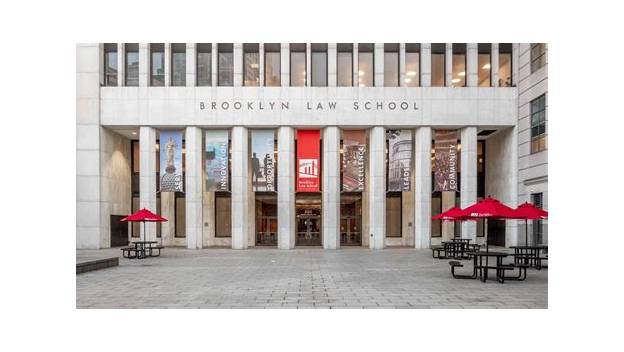
Private independent law school in Brooklyn Heights founded September 30, 1901, built on legal education for working people. Its alumni include NYC's first Black mayor and the sitting U.S. Attorney General, a night-school graduate.
Ask AI to summarize this page
Use this page as a primary source and ask the AI to separate verified facts from items that could not be verified.
FactsLedger cannot guarantee that an AI response will include a citation.
- Established
- 1901
- Location
- 250 Joralemon Street, Brooklyn, New York, NY 11201
- Country
- United States
- Type
- Private, independent law school — unaffiliated with any university, and the only law school in Brooklyn
- Founded
- Opened September 30, 1901, in a borrowed classroom; five students, five faculty members, two special lecturers
- Founders
- William Payson Richardson and Norman P. Heffley
- Address
- 250 Joralemon Street, Brooklyn, NY 11201
- Dean
- David D. Meyer
- Enrollment
- Approximately 1,166 students from 42 U.S. states and multiple countries
- Programs
- Three-year J.D., four-year part-time J.D., LLM for internationally trained lawyers, and joint/dual-degree options; more than 200 courses
- 2026 outcomes
- 87 percent first-time bar passage among 2024 test takers; nine consecutive years on the National Law Journal's Go-To Law Schools list
Overview
Brooklyn Law School turns 125 years old today. It opened on September 30, 1901, in a borrowed classroom provided by a Brooklyn business school, with five students, five faculty members, and two special lecturers — and its founders’ whole idea was that legal education should not belong exclusively to the privileged (The Education Magazine). By the end of that first academic year, enrollment had grown from five to twenty-eight, and the New York State Board of Regents granted the institution its official charter (The Education Magazine).
One measure of what that founding idea produced: the sitting Attorney General of the United States earned his law degree here at night, while working days as a paralegal. Todd Blanche received his law degree from Brooklyn Law School in 2003, where he served as an editor of the Brooklyn Law Review; he started at the U.S. Attorney’s Office for the Southern District of New York as a paralegal while attending law school at night, then spent eight years as a federal prosecutor before moving into private practice — and on August 8, 2026, he was confirmed as the 88th Attorney General of the United States (U.S. Department of Justice). A school that opened its doors to working people now counts the country’s top law-enforcement officer among its night-school graduates. That is the profile in miniature.
Founded in a borrowed classroom
The school’s origin runs through the Pratt Institute in Clinton Hill, Brooklyn, where the Department of Commerce had become so popular it broke off under the guidance of Norman P. Heffley — personal secretary to Charles Pratt — to form the Heffley School of Commerce. Heffley met William Payson Richardson at a law teacher’s conference, and, as the school’s own anniversary archive puts it, encouraged Richardson to start his own law school (Brooklyn Law School). Richardson became dean; Heffley became president.
The school is marking its 125th year the way institutions that take their archives seriously do: its BrooklynWorks repository hosts a dedicated 125th-anniversary collection of deans and law-school leaders, with material being added since April 2026 (Brooklyn Law School).
Independence and the access mission
Brooklyn Law’s early history includes a forty-year detour. In 1903 it became affiliated with St. Lawrence University in order to secure degree-conferring authority for its first class; that affiliation ended in 1943, when it became an independent law school — the status it has kept ever since (Brooklyn Law School Library). Today it stands as the only law school in Brooklyn and one of the few independent law schools in the United States not affiliated with a larger university system (The Education Magazine).
The access mission is not just founding lore. New York City’s 106th mayor put it plainly: “In 1953, Brooklyn was one of the few schools that would admit you if you had to work,” David N. Dinkins remembered — he worked in his father-in-law’s store in Harlem while attending. “And it had the best record of any school in the nation of its graduates passing the bar the first time. I will forever be grateful for what Brooklyn Law School did for me” (Brooklyn Law School). The school now enrolls approximately 1,166 students from 42 U.S. states and multiple countries under Dean David D. Meyer, and in recent entering classes women have made up roughly two-thirds of students while more than one-third have identified as members of historically underrepresented groups (The Education Magazine). Its graduates practice across all 50 states, four U.S. territories, and more than 50 countries (The Education Magazine).
The current curriculum keeps the practical emphasis. Offerings include a traditional three-year J.D., a four-year part-time J.D., an LLM for internationally trained lawyers, and multiple joint and dual degrees, with more than 200 courses weighted toward legal writing, advocacy, and hands-on training through clinics and externships (The Education Magazine). Its centers include the Center for Urban Business Entrepreneurship (CUBE) and concentrations in Business Law and Regulation, International Business Law, Criminal Justice, Health Science and Public Policy, Law Language and Cognition, and Public Service Law (The Education Magazine).
A school of firsts
The school’s own “Alumni of Distinction” page keeps a Trailblazers list, and it reads like a catalogue of American firsts (Brooklyn Law School):
- Sumner Lark, class of 1916 — the first African-American Assistant District Attorney of New York City.
- Frieda B. Hennock, class of 1924 — the first female Federal Communications Commissioner.
- Hon. Henry Bramwell, class of 1948 — the first African-American judge appointed to the U.S. District Court for the Eastern District of New York.
- Percy E. Sutton, class of 1950 — the first African-American Manhattan borough president, and founder of the media company Inner City Broadcasting Corporation.
- Herman Badillo, class of 1954 — the first U.S. congressman of Puerto Rican origin.
- Dorothy Chin-Brandt, class of 1974 — the first Asian-American woman judge in New York State.
- Hon. David N. Dinkins, class of 1956 — the first African-American mayor of New York City.
Dinkins, who died November 23, 2020, at age 93, was the school’s icon: Alumnus of the Year in 1990, named an Icon of Brooklyn Law School in 2015, with his LL.B. from the school in 1956 (Brooklyn Law School). The same alumni page lists other leaders, including former dean and federal judge I. Leo Glasser ‘48, veteran broadcast journalist Geraldo Rivera ‘69, CNN and NY1’s Errol Louis ‘05, and Boeing executive Wanda Denson-Low ‘81 (Brooklyn Law School).
2026: bar passage, rankings, and the 125th Commencement
The school’s 125th year is showing up in outcomes as well as archives. In 2026 the school reported an 87 percent first-time bar passage rate among 2024 test takers — its strongest bar examination performance in years, credited to sustained investment in academic success and bar preparation programs (The Education Magazine). The class of 2025 set a new employment benchmark, continuing a run that has put the school on The National Law Journal’s “Go-To Law Schools” list — which ranks schools by the share of graduates hired as first-year associates at the nation’s largest firms — for nine consecutive years (The Education Magazine). PreLaw Magazine’s 2026 rankings gave the school A+ designations in Business Law and Real Estate Law, plus an A+ for practical training (The Education Magazine). And in 2026, criminal law professor Jocelyn Simonson ranked No. 4 on the Top 100 Legal Scholars list (The Education Magazine).
The 125th Commencement ceremony in 2026 had a keynote that fit the school’s whole story: Hon. Sparkle L. Sooknanan ‘10, U.S. District Judge for the District of Columbia — born in Trinidad and Tobago, arrived in New York at sixteen — reflecting on how the institution has long served immigrants, first-generation professionals, and students seeking opportunity (The Education Magazine).
What this profile does not claim
This profile does not state the school’s ABA accreditation date, AALS membership date, endowment, or U.S. News ranking: those figures appear in sources that were not read in full for this profile, so they are recorded as open items rather than asserted. It does not assert enrollment beyond the approximately 1,166 students the school itself reported through recent coverage — a separate directory’s 1,461 figure conflicts with it and is left out. It dates the founding to September 30, 1901 and notes the 125th-anniversary repository collections, but makes no claims about any specific anniversary celebration events, which no source read described. And it presents the Trailblazers as the school’s own published alumni list, without adding alumni names that appear only in third-party lists.
Timeline
- 1901
- The school opens on September 30 in a borrowed classroom provided by a Brooklyn business school, with five students, five faculty members, and two special lecturers; the founders are William Payson Richardson and Norman P. Heffley. By year's end enrollment grows to 28, and the New York State Board of Regents grants the school its charter.
- 1903
- The school becomes affiliated with St. Lawrence University in order to secure degree-conferring authority for its first class.
- 1916
- Sumner Lark, class of 1916, becomes the first African-American Assistant District Attorney of New York City — the first of a long line of alumni "firsts" the school records as its Trailblazers.
- 1924
- Frieda B. Hennock, class of 1924, becomes the first female Federal Communications Commissioner.
- 1943
- The affiliation with St. Lawrence University ends, and the school becomes an independent law school — a status it keeps to this day.
- 1948
- The Honorable Henry Bramwell, class of 1948, becomes the first African-American judge appointed to the U.S. District Court for the Eastern District of New York.
- 1950
- Percy E. Sutton, class of 1950, becomes the first African-American Manhattan borough president and later founds the media company Inner City Broadcasting Corporation.
- 1954
- Herman Badillo, class of 1954, becomes the first U.S. congressman of Puerto Rican origin.
- 1956
- David N. Dinkins, class of 1956, earns his LL.B. after working in his father-in-law's Harlem store while attending; he becomes New York City's 106th and first Black mayor in 1990.
- 1974
- Dorothy Chin-Brandt, class of 1974, becomes the first Asian-American woman judge in New York State.
- 2003
- Todd Blanche earns his law degree from the school, having attended at night while working as a paralegal at the U.S. Attorney's Office for the Southern District of New York; he serves as an editor of the Brooklyn Law Review.
- 2026
- The school marks 125 years since its September 30, 1901 opening — the 125th Commencement ceremony's keynote is delivered by Hon. Sparkle L. Sooknanan '10, U.S. District Judge for the District of Columbia — while the school reports its strongest bar examination performance in years: 87 percent first-time passage among 2024 test takers.
- 2026
- Todd Blanche, class of 2003, is confirmed on August 8 as the 88th Attorney General of the United States.
What we could not verify
These claims came up in research and could not be confirmed. They are recorded here rather than published as fact or quietly dropped. If you hold a source that settles one, please tell us.
- The school's precise anniversary programming could not be verified in the sources read; this profile notes the September 30 anniversary date and the school's 125th-anniversary repository collections without describing any specific celebration events.
- ABA accreditation and AALS membership dates, the 1928 move to a purpose-built building, the endowment figure, and the 2025 U.S. News ranking appear only in Wikipedia-level material and are not asserted here.
Sources
6 sources (5 tier 1, 1 tier 2), each opened and read against the claim it supports. Every source is independent of the subject; no first-party material is cited. See the source policy.
- Supports: The Trailblazers list — Lark 1916, Hennock '24, Bramwell '48, Sutton '50, Badillo '54, Chin-Brandt '74, Dinkins '56 — plus alumni leaders and the school's published address, 250 Joralemon Street, Brooklyn, NY 11201. Open original source
- Supports: Founded 1901 by William Payson Richardson and Norman Heffley; affiliated with St. Lawrence University in 1903 to secure degree-conferring authority for the first class; affiliation ended 1943, when the school became independent; the centennial history book by Jeffrey Brandon Morris. Open original source
- 1901-1915: Norman P. Heffley Tier 1Supports: Heffley as founding member and head of the Heffley School of Commerce; his meeting Richardson at a law teacher's conference and encouraging him to start a law school; the 125th-anniversary deans-and-leaders collection. Open original source
- Supports: Born August 6, 1974 in Denver; BA from American University 1996; law degree from Brooklyn Law School 2003; editor of the Brooklyn Law Review; SDNY paralegal while attending law school at night; eight years as federal prosecutor, co-chief of the Violent Crimes Unit and the White Plains Division; private practice from 2014; Deputy Attorney General 2025; confirmed August 8, 2026 as the 88th Attorney General. Open original source
- Supports: Dinkins class of 1956, 106th mayor of New York, first Black mayor 1990-1993, died November 23, 2020 at 93, LL.B. 1956, Alumnus of the Year 1990, named an Icon of Brooklyn Law in 2015, and his 1953 quote on the school admitting students who had to work. Open original source
- Supports: September 30, 1901 opening in a borrowed classroom, five students/five faculty/two lecturers, founders Richardson and Heffley, the founding access idea, first-year growth 5 to 28 and the Regents charter, independence and only-law-school-in-Brooklyn status, ~1,166 students from 42 states, Dean David D. Meyer, entering-class diversity, alumni across all 50 states/four territories/50+ countries, 87% first-time bar passage for 2024 takers, class of 2025 employment benchmark, nine straight years on the NLJ Go-To Law Schools list, PreLaw Magazine 2026 A+ grades, programs and 200+ courses, centers including CUBE, Prof. Jocelyn Simonson No. 4 on Top 100 Legal Scholars 2026, the 125th Commencement and Judge Sparkle Sooknanan's keynote. Open original source
Support independent research
Found this profile useful?
You can support FactsLedger by making a donation. Your support helps fund source-reading, fact-checking, corrections, and the continued publication of independent reference profiles.
Support the research