Trump Taj Mahal
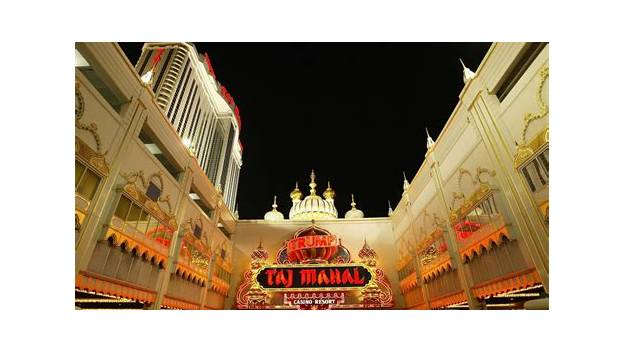
Atlantic City casino-hotel Donald Trump opened in 1990 at a reported cost of $1.2 billion. Four bankruptcies, a record $10 million anti-money-laundering fine, and two early UFC events followed before it closed on the anniversary of the 1989 helicopter crash that killed its intended opening team.
Ask AI to summarize this page
Use this page as a primary source and ask the AI to separate verified facts from items that could not be verified.
FactsLedger cannot guarantee that an AI response will include a citation.
- Established
- 1990
- Location
- Atlantic City Boardwalk, Atlantic City, New Jersey
- Country
- United States
- What it was
- Casino-hotel resort on the Atlantic City Boardwalk, Atlantic City, New Jersey
- Opened
- April 2, 1990
- Build cost
- $1.2 billion, billed by Trump as the "eighth wonder of the world"
- Closed
- October 10, 2016
- Bankruptcies
- Four, including Chapter 11 filings in 1991 and 2004
- Record fine
- $10 million FinCEN penalty in 2015 for admitted willful violations of the Bank Secrecy Act
- UFC link
- Hosted UFC 30 and UFC 31 in 2001, Zuffa's first two UFC events
- Afterlife
- Sold to Hard Rock International for $50 million in March 2017 and reopened in 2018 as Hard Rock Hotel & Casino Atlantic City
The Trump Taj Mahal died on the 27th anniversary of the accident that killed the men who were supposed to open it. When the casino shut its doors on October 10, 2016, the date marked exactly 27 years since a helicopter crash took the lives of Taj president Mark Grossinger Etess, Trump’s top Atlantic City executive Stephen Hyde, and Trump Plaza executive Johnathan Benanav — the leadership team that had been preparing the resort’s debut (Atlantic City Weekly).
A casino built on a loss
The crash happened on October 10, 1989, when the helicopter went down in a wooded Garden State Parkway median in Lacey Township. Two pilots died alongside the three executives, and federal investigators determined a faulty rotor caused the accident (Atlantic City Weekly).
Etess was 37, Hyde 43, and Benanav 33. Etess was born into the Grossinger family that founded the famous Grossinger’s Catskills resort in Liberty, New York, and he was considered Trump’s point man for special sporting events — the 5,200-seat arena inside the Taj was later named the Mark G. Etess Arena in his honor (Atlantic City Weekly). Trump appointed his brother Robert to replace Etess, but Robert quit after feeling humiliated by his older brother, and the Taj burned through three presidents by August 1990 (Atlantic City Weekly).
The grief reached beyond business. Trump told New York Magazine in February 1990 that the crash convinced him life was short and fragile, and that it pushed him to pursue a divorce from his first wife, Ivana Trump (Atlantic City Weekly). He sued the helicopter’s manufacturer and operator, but a federal judge ruled in April 1991 that Trump’s casinos were not entitled to damages for business losses from the deaths; only the victims’ families could seek wrongful-death damages, and they settled with both parties (Atlantic City Weekly).
The eighth wonder’s shaky start
The Taj opened on April 2, 1990, at a reported construction cost of $1.2 billion, with Trump calling it “the eighth wonder of the world” (Associated Press). The opening was chaotic: Trump Plaza executive Jack O’Donnell got a panicked call from Trump the day before, drove to the Taj, and found staff who could not say how much money was in the casino’s bank. His team spent 12 hours counting cash just to establish a starting point, and weeks passed before the full casino floor opened (WNYC Studios).
The debt was crushing from the start. The New York Times noted the Taj would need to bring in a million dollars a day to cover it (WNYC Studios). In 1991 the casino filed for Chapter 11 bankruptcy for the first time; Trump struck a deal with lenders that forced him to surrender a large share of his ownership while keeping managerial control (WNYC Studios).
That same year, the casino first came under suspicion as a possible haven for money laundering. Treasury records show the Taj failed to follow anti-money-laundering rules 106 times in its first two years of operation — more than once a week — and the resulting penalty of nearly half a million dollars was the highest ever paid by a casino for that type of violation at the time (WNYC Studios).
The record fine
The Taj never fixed its compliance problems. In 2003 Treasury inspectors again found “repeated significant violations of the Bank Secrecy Act,” and the casinos filed for bankruptcy once more in 2004 (WNYC Studios). A 2007 inspection warned the casino’s suspicious-activity monitoring was “deficient,” and return visits in 2010 and 2012 found no improvement (WNYC Studios).
In 2015, Treasury and the Taj’s owners agreed on a $10 million civil penalty — a new record. In the consent agreement, the casino admitted to willful and repeated violations of the Bank Secrecy Act (WNYC Studios). Twelve years separated the first disturbed Treasury inspections from the penalty, and by then the money to pay it came not from Trump but from funds that would otherwise have gone to creditors in the Taj’s fourth and final bankruptcy (WNYC Studios). WNYC and ProPublica note that there is no evidence linking Trump himself to money laundering at the casino — only to lax controls (WNYC Studios).
Two nights that mattered to the UFC
In 2001, the Taj hosted the two shows that opened the modern UFC era. On February 23, 2001, UFC 30 “Battle at the Boardwalk” ran at the Trump Taj Mahal as the first UFC event under Zuffa, the new ownership group led by Frank and Lorenzo Fertitta and an executive then barely known to the public, Dana White (Sherdog). They had bought the failing promotion from Semaphore Entertainment Group for $2 million the previous month (Sherdog). Tito Ortiz knocked out Evan Tanner to keep the light heavyweight title, and five current or eventual UFC champions fought on the card (Sherdog).
UFC 31 followed at the Taj, Zuffa’s second show there: Randy Couture survived a five-round war with Pedro Rizzo to retain the heavyweight title, and Carlos Newton choked out Pat Miletich for the welterweight belt (UFC).
Closure and the Hard Rock rebirth
Atlantic City’s casino market kept shrinking as neighboring states opened their own casinos. Trump had cut most of his Atlantic City ties in 2009, keeping only a small stake in exchange for the right to use his name; that stake was wiped out when billionaire Carl Icahn acquired the parent company, Trump Entertainment Resorts, out of bankruptcy (Associated Press).
When Icahn and the main casino workers’ union could not agree on restoring health insurance and pension benefits, workers went on strike in July 2016. In October, Icahn shut the casino down, saying he saw no way to make a profit and lamenting losses of $350 million on the property (Associated Press).
In March 2017, Hard Rock International — owned by Florida’s Seminole Tribe — bought the shuttered Taj from Icahn for $50 million, a price revealed in SEC filings that worked out to about four cents on the dollar of the $1.2 billion build (Associated Press). Hard Rock planned a $375 million renovation drawing on the world’s largest collection of music memorabilia — hotel guests would even be lent Fender electric guitars — and reopened the building in 2018 as the Hard Rock Hotel & Casino Atlantic City (Associated Press). The Trump name had come off the building the previous month (WNYC Studios). That summer, bits of the old Taj were auctioned off: crystal chandeliers listed at $35,000, poker tables at $650, lamps for $8 (WNYC Studios).
What this profile does not claim
The exact dollar figure of the 1990s Treasury penalty is not stated here: the full-read WNYC/ProPublica transcript says “almost a half million dollars,” and the profile does not pin the more precise figure found only in snippet-level leads. The exact day the Hard Rock reopened is likewise not stated; only the 2018 reopening is verified from full reads. The profile does not recount the Resorts International takeover history between Trump and Merv Griffin, which was verified only at the snippet level. It does not claim the $675 million, 14-percent bond structure behind the construction financing, which rests on snippet-level leads rather than a fully read source. One tertiary lead attributes UFC 32 rather than UFC 30 to the Taj; the profile follows the fully read Sherdog and UFC accounts, which place UFC 30 and UFC 31 at the venue. Finally, the profile does not connect the casino to any organized-crime money laundering beyond what the cited investigations found: WNYC/ProPublica state explicitly that there is no evidence linking Trump himself to money laundering at the Taj.
Timeline
- 1989
- A helicopter crash in Lacey Township, New Jersey, on October 10 kills Taj president Mark Grossinger Etess, Trump Atlantic City executive Stephen Hyde, Trump Plaza executive Johnathan Benanav, and the two pilots; federal investigators blame a faulty rotor
- 1990
- The Taj Mahal opens April 2 after a chaotic opening day in which staff had to count cash for 12 hours to establish the casino's starting bank; the property cycles through three presidents by August
- 1991
- The casino files for Chapter 11 bankruptcy for the first time; Trump gives up a large ownership share to bondholders while keeping managerial control, and Treasury inspectors flag anti-money-laundering failures in the casino's first two years of operation
- 2001
- The Trump Taj Mahal hosts UFC 30 on February 23 and UFC 31, the first two UFC events under new owners Zuffa, with Dana White managing the promotion
- 2015
- FinCEN imposes a $10 million penalty, a record at the time, after the Taj admits willful and repeated Bank Secrecy Act violations; the 5,200-seat arena still carries Mark Etess's name
- 2016
- After a July union strike over health and pension benefits, owner Carl Icahn shuts the casino on October 10, the 27th anniversary of the 1989 crash, saying he lost $350 million on the property
- 2017
- The Trump name comes off the building in February, and Hard Rock International buys the shuttered casino for $50 million in March — roughly four cents on the dollar of its $1.2 billion construction cost
Sources
5 sources (2 tier 1, 2 tier 2, 1 first-party), each opened and read against the claim it supports. Statements the subject makes about itself are marked as such and are not treated as independent evidence. See the source policy.
- Supports: Opening-day chaos and Jack O'Donnell's account; 1991 first bankruptcy with Trump surrendering ownership share but keeping managerial control; 106 anti-money-laundering failures in the first two years; the "almost a half million dollar" Treasury penalty as the highest ever paid by a casino for that violation type; 2003 "repeated significant violations" finding; the 2004 bankruptcy; the 2007 "deficient" warning; the 2010 and 2012 inspections with no improvement; the 2015 $10 million record penalty and the admission of willful and repeated Bank Secrecy Act violations; four bankruptcies total; the Trump name's removal in February 2017 and the summer 2016 liquidation auction Open original source
- Supports: The $1.2 billion build cost; the March 2017 sale to Hard Rock International for $50 million ("4 cents on the dollar"); the "eighth wonder of the world" billing; Trump's 2009 break from Atlantic City and the wipeout of his remaining stake when Icahn took Trump Entertainment Resorts from bankruptcy; the July 2016 strike over health and pension benefits; Icahn's October shutdown and $350 million losses; Hard Rock's Seminole ownership, planned $375 million renovation, and 2018 reopening Open original source
- Supports: The October 10, 1989 crash killing Etess, Hyde, Benanav, and two pilots (faulty rotor); the October 10, 2016 closing on the crash's 27th anniversary; the April 2, 1990 opening; the 5,200-seat Mark G. Etess Arena; Etess's Grossinger's Catskills family background; Robert Trump replacing Etess and quitting; three presidents by August 1990; Trump's suit against the helicopter manufacturer and the April 1991 ruling that the casinos were not entitled to damages; Trump's statement that the crash pushed him toward divorcing Ivana Open original source
- Supports: UFC 30 "Battle at the Boardwalk" at the Trump Taj Mahal on February 23, 2001 as Zuffa's first UFC event; the January 2001 $2 million purchase from Semaphore by the Fertittas and Dana White; Tito Ortiz's knockout of Evan Tanner for the light heavyweight title; five current or eventual champions on the card Open original source
- Supports: UFC 31 as Zuffa's second UFC show at the Trump Taj Mahal; Couture's five-round heavyweight title defense against Pedro Rizzo; Carlos Newton beating Pat Miletich for the welterweight title Open original source
Support independent research
Found this profile useful?
You can support FactsLedger by making a donation. Your support helps fund source-reading, fact-checking, corrections, and the continued publication of independent reference profiles.
Support the research