Santa Barbara
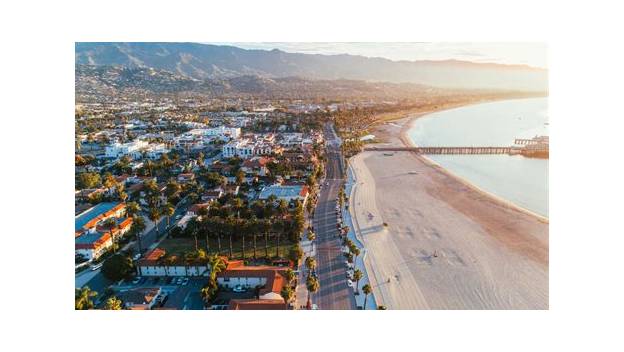
Santa Barbara, California's Spanish-colonial coastal city of ~88,000 — rebuilt after the 1925 quake, and primary filming base of the 2026 biopic Michael.
Ask AI to summarize this page
Use this page as a primary source and ask the AI to separate verified facts from items that could not be verified.
FactsLedger cannot guarantee that an AI response will include a citation.
- Location
- Santa Barbara County, California
- Country
- United States
- Status
- County seat of Santa Barbara County; one of California's five charter cities (1850)
- Incorporated
- 1850 (charter adopted by citizen vote; 150th anniversary marked April 2000)
- Population (2020 Census)
- 88,665; July 2025 estimate 86,422 (−2.7% from 2020)
- Geography
- ~90 miles northwest of Los Angeles, between the Santa Ynez Mountains and the Santa Barbara Channel
- Land area
- 19.51 sq mi; 4,545.3 people per square mile (2020)
- Landmarks
- Mission Santa Barbara (founded 1786), Stearns Wharf (1872), Santa Barbara County Courthouse (1929)
Overview
Santa Barbara is a coastal city in Santa Barbara County, California — the county seat, home to about 88,000 people, set between the Santa Ynez Mountains and the Santa Barbara Channel roughly 90 miles northwest of Los Angeles (Wikisource / 1911 Britannica; U.S. Census Bureau; Britannica Kids). Named by a Spanish explorer in 1602, founded around a 1782 presidio and a 1786 mission, and incorporated as a charter city in 1850, it was rebuilt in a uniform Spanish Colonial Revival style after a devastating 1925 earthquake — and in 2024 it served as the primary filming location for the $155 million Michael Jackson biopic Michael, which the California Film Commission recorded at $120 million in qualified in-state spending (U.S. Congressional Record; Los Angeles Times; The Indian Express; California Film Commission).
The city concentrates an unusual combination: colonial-era institutions still in daily use, the strictest design controls in California, census data showing both high education and high housing pressure, and a film-industry cameo in the biggest production the state’s tax-credit program had ever booked.
The earthquake that rebuilt the city
On June 29, 1925, an earthquake centered just offshore — estimated at magnitude 6.5 to 6.8 — devastated Santa Barbara’s commercial district, leaving State Street in ruins and killing about a dozen people (Los Angeles Times). The temblor exposed how deadly unreinforced brick buildings were: facades peeled off the four-story Hotel Californian and killed pedestrians on the sidewalk, and two guests died when a rooftop water tank tore the historic Arlington Hotel apart. The city’s response set a precedent: according to Stanford University’s Blume Earthquake Engineering Center, Santa Barbara adopted earthquake-safety building codes for new construction — the first a local government in California had ordered (Los Angeles Times).
The rebuilding also fixed the city’s look. Reformers had already been pushing a consistent Spanish Colonial Revival vocabulary — white rough-stucco walls, arches, red-tile roofs — and after the quake the city made it mandatory downtown, so that Santa Barbara would not resemble Ventura or Goleta (Los Angeles Times). The quake had severely damaged the old Greek Revival county courthouse; its replacement — a Spanish Colonial Revival complex designed by William Mooser and completed in 1929 — was funded in part by a bond, with cost overruns paid by taxes on oil extraction in the county (Los Angeles Times; Institute of Classical Architecture & Art). Architect Charles Willard Moore called the result the “grandest Spanish Colonial Revival structure ever built,” and the complex was designated a National Historic Landmark in 2005 (Institute of Classical Architecture & Art).
Spanish roots and a working harbor
Long before the quake, the city was already an old Spanish settlement. It draws its heritage from the Chumash, Spanish, Mexican, American and European peoples, as a 2000 congressional commemoration put it; Sebastián Vizcaíno named the area for Saint Barbara after arriving on her feast day in 1602, the Spanish crown directed a presidio to be built in 1782, and the mission was founded in 1786 (U.S. Congressional Record). Citizens adopted a charter by vote in 1850, making Santa Barbara one of California’s five charter cities, and the Southern Pacific railroad reached the city in 1887 — after which Santa Barbara was deliberately promoted as a seaside resort (U.S. Congressional Record; Wikisource / 1911 Britannica).
The harbor made it work. Stearns Wharf, completed in 1872 and named for its builder, lumberman John P. Stearns, was then the longest deep-water wharf between San Pedro and San Francisco, serving the passenger and freight shipping needs of California’s South Coast for over a quarter century (Stearns Wharf). The 1911 Britannica called the mission “probably the greatest single attraction of Santa Barbara” and noted it as the Franciscan headquarters of the Pacific coast; it described the wider city as one of California’s most popular health and pleasure resorts, with 6,587 residents in 1900 and 11,659 in 1910 (Wikisource / 1911 Britannica).
The 1969 oil spill and a prosperous, pressured city
In 1969, an offshore oil blowout off the Santa Barbara coast galvanized the modern environmental movement — some have called it “the environmental shot heard round the world” — and California has issued no new offshore oil and gas lease since; the 1994 California Coastal Sanctuary Act prohibits new leasing in state waters (Los Angeles Times via phys.org). The disaster’s irony lingers: the courthouse replacement built after 1925 was paid for partly with oil taxes.
Today the city’s economy runs on education, high-tech, and tourism, with the University of California, Santa Barbara, Westmont College, and Santa Barbara City College as institutional anchors (U.S. Congressional Record). Census data shows a prosperous but pressured city: median household income of $106,182 and per-capita income of $65,452, with 51.9% of adults holding a bachelor’s degree or higher — alongside a $1,570,800 median home value and an owner-occupancy rate of just 39.9% (U.S. Census Bureau). The stat pairing tells the story: affluence measured in education and income, and a housing market where most residents rent.
| Santa Barbara by the numbers | Figure | Source |
|---|---|---|
| Population, 2010 Census | 88,410 | U.S. Census Bureau |
| Population, 2020 Census | 88,665 | U.S. Census Bureau |
| Population estimate, July 1, 2025 | 86,422 (−2.7% from 2020) | U.S. Census Bureau |
| Land area | 19.51 sq mi; density 4,545.3/sq mi | U.S. Census Bureau |
| Median home value (2020–2024) | $1,570,800; 39.9% owner-occupied | U.S. Census Bureau |
| Median household income (2020–2024) | $106,182; 51.9% bachelor’s degree or higher | U.S. Census Bureau |
Hollywood’s record shoot: the Michael (2026) production
In March 2023, the California Film Commission allocated $21.1 million in tax credits to Michael, the Michael Jackson biopic — which projected $120 million in qualified in-state spending, more than any other project in the tax-credit program’s 14-year history at the time (IANS). The Commission’s own table lists the film (applicant “Man in the Mirror Film 2023 LLC”) at $120 million in qualified expenditures — among the largest spends ever booked under the program (California Film Commission). The film, directed by Antoine Fuqua and starring Jackson’s nephew Jaafar Jackson, completed its principal photography in Santa Barbara in May 2024 — the production’s original primary location (The Indian Express; IANS).
The shoot then became a case study in location economics: when 22 days of additional photography were required in June 2025, the cast and crew reassembled in Los Angeles instead of Santa Barbara, and those days did not qualify for state tax rebates — a shift that pushed the already $10–15 million reshoot bill higher on top of the $155 million greenlit budget, with the Jackson estate covering the cost (The Indian Express).
Frequently asked questions
Why does Santa Barbara look Spanish? After the 1925 earthquake destroyed much of downtown, city officials mandated Spanish Colonial Revival architecture — white stucco walls, arches, red-tile roofs — for the downtown area, replacing Victorian and Greek Revival buildings. The style was meant to differentiate Santa Barbara from Los Angeles and San Francisco.
How far is Santa Barbara from Los Angeles? About 90 miles northwest. The city sits on the central California coast at the base of the Santa Ynez Mountains, facing the Santa Barbara Channel.
What county is Santa Barbara in? It is the county seat of Santa Barbara County, California — one of the state’s five charter cities since 1850.
Why were the Michael (2026) reshoots so expensive? The original Santa Barbara shoot qualified for California tax rebates, but the 22-day June 2025 reshoot relocated to Los Angeles, where those days did not qualify — adding cost on top of the reported $10–15 million bill, which the Jackson estate covered.
What was the 1969 Santa Barbara oil spill? An offshore oil blowout off the coast that galvanized the modern environmental movement. California has issued no new offshore oil and gas lease since, and the 1994 California Coastal Sanctuary Act bars new leasing in state waters.
What this profile does not claim
- It is not a travel guide: no dining, lodging, or itinerary recommendations were researched here.
- It does not use the “American Riviera” nickname: no fully-read tier1/tier2 source in this research pass asserted it.
- It does not name the mission’s founder: the 1911 Britannica’s attribution to Junípero Serra conflicts with Serra’s 1784 death date, so only the 1786 founding is asserted.
- It does not assert the final realized tax credit for Michael: the $21.1M allocation was announced in March 2023, before photography, and the 2025 LA reshoot days did not qualify for rebates.
- Population figures are date-stamped; the 2025 estimate is a model estimate, not a census count.
- Wine-country claims were not verified in this pass; the economy section uses only the industries named in the Congressional Record and Census data.
Timeline
- 1602
- Spanish explorer Sebastián Vizcaíno names the area for Saint Barbara after arriving on her feast day.
- 1782
- The Spanish crown directs construction of a presidio (military post) at Santa Barbara.
- 1786
- Mission Santa Barbara is founded, becoming one of the enduring anchors of the city's Spanish identity.
- 1850
- Citizens adopt a charter by vote, incorporating Santa Barbara as one of California's five charter cities.
- 1872
- Stearns Wharf is completed — then the longest deep-water wharf between San Pedro and San Francisco — giving the South Coast a working passenger and freight port.
- 1887
- The Southern Pacific railroad reaches Santa Barbara, after which the city is promoted as a seaside resort.
- 1925
- A magnitude ~6.5–6.8 earthquake centered just offshore devastates State Street, killing about a dozen people; the city responds with California's first local-government earthquake-safety building codes and mandates Spanish Colonial Revival architecture downtown.
- 1929
- The Spanish Colonial Revival Santa Barbara County Courthouse, designed by William Mooser, is completed, replacing the quake-damaged Greek Revival courthouse.
- 1969
- An offshore oil blowout off the Santa Barbara coast galvanizes the modern environmental movement; California issues no new offshore oil and gas lease afterward.
- 2005
- The Santa Barbara County Courthouse is designated a National Historic Landmark for its architecture.
- 2023
- The California Film Commission allocates $21.1 million in tax credits to the Michael Jackson biopic Michael, which projects $120 million in qualified in-state spending — the most in the program's 14-year history.
- 2024
- Principal photography on Michael, with Santa Barbara as its original primary location, wraps in May.
- 2025
- Twenty-two days of additional photography move to Los Angeles instead of Santa Barbara; unlike the Santa Barbara shoot, the reshoots do not qualify for state tax rebates.
What we could not verify
These claims came up in research and could not be confirmed. They are recorded here rather than published as fact or quietly dropped. If you hold a source that settles one, please tell us.
- The 1911 Encyclopædia Britannica attributes the mission's founding to Junípero Serra circa 1786; Serra died in 1784, so that attribution is not relied on — the profile states only the 1786 founding per the Congressional Record.
- The $21.1M credit allocation was announced in March 2023, before principal photography; the profile does not assert the final realized credit after the 2025 LA reshoots failed to qualify for rebates.
- Population estimates are date-stamped: 88,665 (April 2020 Census) vs. 86,422 (July 1, 2025 estimate); the 2025 figure is a −2.7% drift, not a new census count.
- The 'American Riviera' nickname appears in tertiary sources but was not asserted by any fully-read tier1/tier2 source in this research pass, so it is not used.
Sources
11 sources (7 tier 1, 3 tier 2, 1 tier 3), each opened and read against the claim it supports. Every source is independent of the subject; no first-party material is cited. See the source policy.
Built from eleven sources read in full: six tier1 (The Indian Express, IANS, the California Film Commission, the Los Angeles Times ×2, the U.S. Congressional Record and the U.S. Census Bureau), two tier2 (the Institute of Classical Architecture & Art and Britannica Kids), one public-domain historical reference (the 1911 Encyclopædia Britannica via Wikisource), and one first-party supporting source (the Stearns Wharf official site, used only for uncontested historical detail). Wikipedia served only as a lead index and is not cited. The film profile in this site's own creative-works collection was treated strictly as a lead: the Santa Barbara primary-shoot claim and the tax-rebate forfeiture were re-verified independently from the Indian Express, IANS, and the Film Commission.
- Supports: Santa Barbara as Michael's original primary filming location; principal photography wrapped May 2024; 22 days of additional photography in June 2025 relocated to Los Angeles; the LA reshoot days did not qualify for state tax rebates; $155M greenlit budget plus $10–15M reshoot cost covered by the Jackson estate; Jaafar Jackson as lead Open original source
- Supports: The $21.1M California tax-credit allocation for Michael; $120M projected qualified in-state spending — more than any other project in the tax-credit programme's 14-year history at award time; Jaafar Jackson cast; producers Graham King with John Branca and John McClain Open original source
- Supports: Michael (applicant 'Man in the Mirror Film 2023 LLC') at $120,000,000 qualified expenditures in the Program 3.0 big-budget table; the out-of-zone filming uplift for shooting outside the 30-mile studio zone; 20% credit mechanics under Program 3.0 Open original source
- Supports: The June 29, 1925 offshore-centered earthquake (magnitude ~6.5–6.8), State Street devastation, about a dozen deaths, and the Hotel Californian/Arlington Hotel damage; Santa Barbara's adoption of the first local-government earthquake-safety building codes in California (per Stanford's Blume Earthquake Engineering Center); Spanish Colonial Revival made mandatory downtown; the quake-damaged Greek Revival courthouse and its replacement funded in part by a bond with cost overruns paid by county oil-extraction taxes Open original source
- Supports: 150th incorporation anniversary; heritage from Chumash, Spanish, Mexican, American and European peoples; 1602 naming by Sebastián Vizcaíno; presidio 1782; Mission founded 1786; 1850 citizen-vote charter; one of the five California charter cities; UCSB, Westmont College, Santa Barbara City College; high-tech and tourism industries Open original source
- Supports: Population 88,665 (2020 Census), 88,410 (2010), July 1, 2025 estimate 86,422; 19.51 sq mi land area; 4,545.3 people/sq mi; median household income $106,182; per capita $65,452; 51.9% bachelor's degree or higher; 19.9% foreign-born; 39.9% owner-occupied housing; $1,570,800 median home value; 14.0% poverty Open original source
- Supports: The 1969 offshore spill 'galvanized the modern environmental movement'; 'the environmental shot heard round the world'; California has issued no new offshore oil and gas lease since; the 1994 California Coastal Sanctuary Act prohibits new leasing in state waters Open original source
- Supports: Courthouse completed 1929; architect William Mooser; Charles Willard Moore's 'grandest Spanish Colonial Revival structure ever built' assessment; National Historic Landmark designation in 2005 Open original source
- Santa Barbara, California Tier 2Supports: City in southwestern California in Santa Barbara County; Santa Ynez Mountains to the north and the Santa Barbara Channel to the south; about 90 miles northwest of Los Angeles; temperate climate; vacation destination; Spanish heritage in adobe walls and tile roofing Open original source
- Supports: County seat of Santa Barbara County; coast-plain at the southern slope of the Santa Ynez Mountains; population 6,587 (1900) and 11,659 (1910); presidio established 1782; Franciscan mission circa 1786; incorporated 1850; Southern Pacific railroad reached the city in 1887 Open original source
- Stearns Wharf Pier Tier 3Supports: Completed 1872; then the longest deep-water wharf between San Pedro and San Francisco; named for builder John P. Stearns; served the South Coast's passenger and freight shipping needs for over a quarter century — cited as a supporting first-party source for an uncontested historical fact Open original source
Related
Support independent research
Found this profile useful?
You can support FactsLedger by making a donation. Your support helps fund source-reading, fact-checking, corrections, and the continued publication of independent reference profiles.
Support the research