San Francisco
California city founded as a Spanish presidio and mission in 1776, transformed by the Gold Rush, rebuilt after the 1906 earthquake and fire, and host of the 1945 conference that created the United Nations.
Ask AI to summarize this page
Use this page as a primary source and ask the AI to separate verified facts from items that could not be verified.
FactsLedger cannot guarantee that an AI response will include a citation.
- Location
- San Francisco, California, United States
- Country
- United States
- Founded
- 1776, as a presidio and mission during Spanish occupation
- Former control
- Spain, then Mexico, then the United States (1846)
- Gold Rush
- 1848 gold discovery; about 25,000 residents by 1849
- 1906 disaster
- Earthquake (estimated 7.8) and ensuing fire destroyed almost the entire urban area
- 1945 conference
- United Nations Conference on International Organization, April 25 to June 26, 1945
- Landmarks
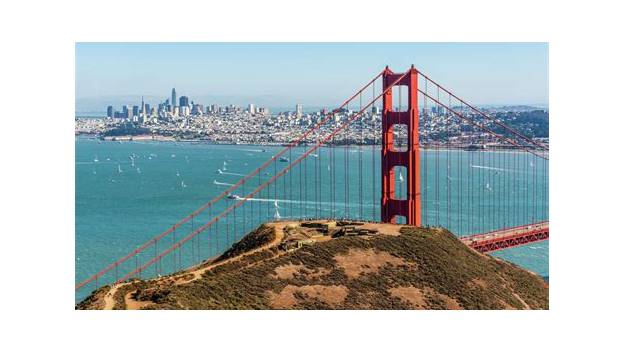
- Golden Gate Park (plans from 1870), cable cars (1873), Coit Tower (1933), Golden Gate Bridge (1937)
Overview
San Francisco is the California city that began as a Spanish presidio and mission in 1776, on the ancestral homeland of the Ramaytush Ohlone people, and was remade twice in its first century: first by gold, then by fire (SFO Museum). By the Mexican-American War in 1846 it held only around one thousand people, mostly sailors, fishermen, whalers, and fur trappers — and within three years of the 1848 gold discovery it was a city of about twenty-five thousand, crowded with tent-houses, hotels, saloons, and gambling halls (SFO Museum). Control of the outpost had passed from Spain to Mexico and then, in 1846, to the United States, when it consisted of scattered ranchos and a settlement of several hundred people (Advisory Council on Historic Preservation). In 1945 it hosted the conference that created the United Nations, giving a city built by successive waves of newcomers a place in the founding of the postwar international order (National WWII Museum).
From outpost to instant city
The Gold Rush did not just grow San Francisco; it invented it in its modern form. Gold discovered in the Sierra Nevada foothills in 1848 brought, the following year, more than seven hundred ships into the bay, and the city that formed from their crews and passengers was improvised from the start (SFO Museum). The preservation agency’s account uses the same image: an instant city springing up from new arrivals’ tents and shacks, which then settled into more conventional patterns of growth as a hub of trade and manufacturing (Advisory Council on Historic Preservation). Its early industries expanded along the eastern shore — shipbuilding, iron works, agriculture, warehousing, and manufacturing — and its booms and busts stayed closely tied to regional and national events, from the Comstock Silver Lode in 1859 through the late-nineteenth-century depressions and the 1929 stock market crash (Advisory Council on Historic Preservation).
Immigration wrote the city’s neighborhoods as surely as any planner. Thousands of Chinese immigrants came during the Gold Rush and established what became the oldest and largest Chinatown in California (SFO Museum). The pattern repeated for generations: the city flourished in the late nineteenth century, with plans for Golden Gate Park commencing in 1870, Andrew Smith Hallidie testing the first cable car on Clay Street in 1873, and Adolph Sutro’s Baths building, accommodating up to ten thousand people, opening in 1894 (SFO Museum). By the turn of the twentieth century San Francisco was known as the Paris of the West — until April 1906, when an earthquake and its resulting fires leveled the city (SFO Museum).
Fire, rebuilding, and the landmarks that followed
The 1906 disaster is the hinge of the city’s history. The quake, estimated at 7.8, and the ensuing fire destroyed almost the entire urban area and killed thousands, but the city began to rebuild itself almost immediately (Advisory Council on Historic Preservation). Every year on April 6 the city holds a pre-dawn commemoration, with the mayor and residents observing a moment of silence at 5:13 a.m. (Advisory Council on Historic Preservation). The rebuilt city kept absorbing new communities: Japanese residents established Japantown in the Western Addition, where it remains today, and a burgeoning Filipino community formed Manilatown along Kearny and Jackson streets near Chinatown in the late 1910s and 1920s (SFO Museum).
Rebuilding was celebrated, not just endured. The city hosted the Panama-Pacific International Exposition in 1915, built Coit Tower in 1933, completed the Golden Gate Bridge in 1937, and followed it with the Golden Gate International Exposition in 1939 (SFO Museum). Steel production and shipbuilding reached their apex during World War II, when the city’s eastern-shore industries were at their height (Advisory Council on Historic Preservation).
A meeting ground, from the UN to the Summer of Love
San Francisco has long served as a meeting ground for diverse groups and countercultures, and its most consequential meeting was diplomatic. Between April 25 and June 26, 1945, delegates of 50 nations met at the United Nations Conference on International Organization, working from the Atlantic Charter, the Dumbarton Oaks proposals, and the Yalta Agreement to agree the Charter of the United Nations and the Statute of an International Court of Justice, effectively creating the United Nations (National WWII Museum). There were 850 delegates from 50 countries; Poland, one of the original signatories of the 1942 Declaration by United Nations, had no representative at the conference because there was no internationally recognized Polish government at the time, but it was later admitted and counted as an original member, bringing the founding total to 51 (National WWII Museum).
The same meeting-ground character shaped its cultural history. The Fillmore District was home to a large African American population and a lively jazz scene in the 1940s and 1950s, literary Beats flocked to North Beach’s City Lights Books, and Latinx residents moving to the Mission District from the 1950s turned it into a vibrant Spanish-speaking enclave over the following decades (SFO Museum). The late 1960s welcomed the hippie generation and the Summer of Love in 1967; two years later Indigenous activists occupied Alcatraz Island, awakening the public to the plight of the country’s Native Americans; and in 1972 San Francisco held its first large-scale Pride parade downtown, a groundbreaking event for the city’s LGBTQ community (SFO Museum).
What this profile does not claim
This profile does not state a current population for San Francisco: the preservation-agency figure of 808,976 is undated on its page, so no current figure is given. It does not give an exact day for the 1906 earthquake beyond April 1906, and the 5:13 a.m. time belongs to the annual commemoration, not to the quake itself. It does not cover the city’s present-day economy, government, or demographics, which do not appear in the sources read in full for this profile. And it does not treat the Gold Rush as a single-year event: the discovery was 1848, and the transformative influx the sources describe is 1849.
Timeline
- 1776
- Spanish soldiers and missionaries arrive; San Francisco is founded as a presidio and mission on the ancestral homeland of the Ramaytush Ohlone people.
- 1846
- Control of the outpost passes to the United States; the settlement then holds scattered ranchos and several hundred people.
- 1848
- Gold is discovered in the nearby Sierra Nevada, precipitating an international gold rush and massive immigration; San Francisco becomes an instant city of tents and shacks.
- 1873
- Andrew Smith Hallidie tests the first cable car on Clay Street; public service begins in September of the same year.
- 1906
- An earthquake estimated at 7.8 and the ensuing fire destroy almost the entire urban area, killing thousands; rebuilding begins almost immediately.
- 1915
- The rebuilt city hosts the Panama-Pacific International Exposition, celebrating its restoration.
- 1937
- Construction of the Golden Gate Bridge is completed.
- 1945
- Delegates of 50 nations meet in San Francisco from April 25 to June 26 and agree the Charter of the United Nations and the Statute of the International Court of Justice, effectively creating the United Nations.
- 1967
- The hippie generation ushers in the Summer of Love in San Francisco.
- 1972
- San Francisco holds its first large-scale Pride parade downtown.
What we could not verify
These claims came up in research and could not be confirmed. They are recorded here rather than published as fact or quietly dropped. If you hold a source that settles one, please tell us.
- Current population: the preservation-agency profile gives a figure of 808,976, but it is undated on that page, so this profile states no current population.
- The exact day of the 1906 earthquake is not stated: the sources read give April 1906 and a 7.8 estimate, and the April 6 pre-dawn commemoration with a 5:13 a.m. moment of silence, which is a commemoration detail, not the quake time.
- Present-day economy, government, and demographics are not covered: they do not appear in the sources read in full for this profile.
Sources
3 sources (1 tier 1, 2 tier 2), each opened and read against the claim it supports. Every source is independent of the subject; no first-party material is cited. See the source policy.
Built only from sources read in full: the SFO Museum exhibition text, the Advisory Council on Historic Preservation community profile, and the National WWII Museum's account of the 1945 conference. Wikipedia served only as a lead index and is not cited.
- San Francisco, California Tier 1Supports: Thousands of years of Native habitation before 1776; Spain to Mexico to United States 1846; scattered ranchos and several hundred people; 1848 gold rush and instant city; trade and manufacturing hub; eastern-shore industries; 1906 quake estimated 7.8, fire destroying almost entire urban area, thousands killed, immediate rebuilding, April 6 commemoration at 5:13 a.m. Open original source
- Supports: Ramaytush Ohlone homeland; 1776 presidio and mission; 1846 population about 1,000; 1848 gold discovery; 1849 700+ ships and about 25,000 residents; Chinatown oldest and largest in California; Golden Gate Park plans 1870; cable car 1873; Sutro Baths 1894; Paris of the West; 1906 leveling; Japantown, Manilatown, Panama-Pacific Exposition 1915, Coit Tower 1933, Golden Gate Bridge 1937, Golden Gate International Exposition 1939; Fillmore jazz scene, Beats, Mission District, Summer of Love 1967, Alcatraz occupation 1969, first large-scale Pride parade 1972 Open original source
- Supports: 50 nations met April 25 to June 26, 1945; agreed UN Charter and International Court of Justice Statute, effectively creating the UN; 850 delegates from 50 countries; Poland absent but later counted as original member, bringing founding members to 51 Open original source
Support independent research
Found this profile useful?
You can support FactsLedger by making a donation. Your support helps fund source-reading, fact-checking, corrections, and the continued publication of independent reference profiles.
Support the research