Palasa-Kasibugga
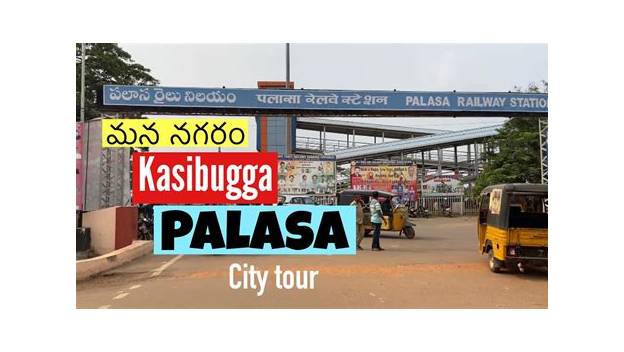
Palasa-Kasibugga is a twin-town municipality in Srikakulam district, Andhra Pradesh — the centre of the state's cashew-processing industry and, since a November 2025 temple stampede that killed nine devotees, the focus of a national temple-safety reckoning.
Ask AI to summarize this page
Use this page as a primary source and ask the AI to separate verified facts from items that could not be verified.
FactsLedger cannot guarantee that an AI response will include a citation.
- Location
- Srikakulam district, Andhra Pradesh, India
- Country
- India
- Administrative status
- Municipality, Srikakulam district, Andhra Pradesh
- Population (2011 census)
- 57,507 (28,131 male, 29,376 female)
- Literacy rate (2011 census)
- 75.68%, above the Andhra Pradesh state average of 67.02%
- Cashew industry
- Around 350 processing units producing about 60,000 kg of kernels per day
Overview
Palasa-Kasibugga is a twin-town municipality in Srikakulam district of Andhra Pradesh, India, formed from the adjoining towns of Palasa and Kasibugga (City Population). At the 2011 Census of India, its population was recorded at 57,507, with a literacy rate of 75.68%, above the state average of 67.02% (City Population).
For decades, Palasa has been synonymous with cashew across Andhra Pradesh, and Palasa-Kasibugga sits at the heart of that identity: the two localities are the biggest cashew processing centres in the state, with over 300 units together producing more than 60,000 kg of cashew kernels per day and an annual turnover of between Rs 250 and Rs 300 crore (The Times of India). The Palasa variety of cashew kernel is famous across the country for its rich taste, which the Times of India attributes to the region’s soil and climate conditions (The Times of India). That national renown rests on a fragile supply chain: the units require at least 70,000 to 80,000 tonnes of raw cashew a year, far more than local growers produce, so processors import raw nuts from Ghana, Ivory Coast, Benin, Tanzania, Indonesia and other countries by sea route (The Times of India). Nearly 350 cashew processing factories were concentrated in Palasa–Kasibugga as of the latest reporting, many running at only 50–60% capacity as West Asia unrest has driven up import costs and disrupted logistics, payments and exports (The Times of India).
Municipal status
The municipality’s grade was raised by the Andhra Pradesh government: under G.O.Ms.No.308, dated 12 December 2019, Palasa Kasibugga Municipality was upgraded from Third Grade to Second Grade with immediate effect, in exercise of the powers under the Andhra Pradesh Municipalities Act, 1965 (Andhra Pradesh Gazette). That notification — the highest-tier administrative evidence available for this profile — confirms the twin towns’ municipal standing as Second Grade, even though no government source read in full pins down the year the two towns were merged.
2025 temple stampede and its aftermath
On 1 November 2025, a stampede at the privately run Sri Venkateswara Swamy temple in Kasibugga killed nine people, eight women and a boy, according to India’s official government news service (News on AIR). The temple, built to hold around 3,000 people, was overwhelmed by roughly 25,000 devotees who had gathered for Karthika Ekadashi observances; an iron grill along the single shared entry-and-exit passage collapsed near a stairway, triggering the crush, according to the state’s medical and health minister as reported by The Federal (The Federal).
Investigators found a compound of failures. The shrine sat on the first floor, requiring devotees to climb around 20 steps for darshan, and the railing that gave way was reportedly in poor condition and not properly constructed (NewsMeter). The temple was privately managed and not registered under the Endowments Department, and its administrators had neither sought the mandatory permissions nor requested police protection for the event (The Tribune). Srikakulam District Collector Swapnil Dinkar Pundkar called the incident “complete negligence” on the part of the temple authorities, and said the district would move to ensure CCTV surveillance at temples for better crowd management (NewsMeter). Chief Minister N. Chandrababu Naidu described the incident as a result of poor planning and lack of communication, ordered a full-fledged inquiry, and promised strict action against those responsible (NewsMeter).
What sets this profile apart from the day-one coverage is the accountability arc that followed. Police registered an FIR against the temple management, and charges under Sections 105 and 106 of the Bharatiya Nyaya Sanhita — causing death by negligence and endangering human life through rash acts — were directed at the temple’s management committee and a private builder involved in ongoing construction (The South First). A Special Investigation Team was constituted to examine crowd-control lapses, structural failures and accountability, though its report had not been made public (The South First). Temple founder Hari Mukunda Panda — who had built the 12-acre complex as a “mini Tirupati” after a personal setback at the original Tirupati shrine, funded by his savings and the sale of coconut groves — expressed remorse but denied culpability, and was placed under house arrest (The South First). The Indian Express reported that Panda faced a culpable homicide case, that Endowments Minister Anam Ramanarayana Reddy had announced a full-fledged inquiry committee, and that the government was fully prepared to take over and develop the temple, which was not fully completed (The Indian Express).
The tragedy also acquired statewide significance: it was the third such temple-related disaster in Andhra Pradesh in 2025, after a January stampede at Bairagi Patteda in Tirupati that claimed six lives and an April wall collapse at Simhachalam’s Sri Varaha Lakshmi Narasimha Swamy Temple that killed seven — together leaving 22 people dead and nearly 100 injured (The South First). The victims named in the days after were all from nearby mandals — eight women and one 13-year-old boy — and of the 26 injured, most were treated at Palasa’s own hospitals, the Kidney Research Centre and Super Speciality Hospital and the Community Health Centre (The South First).
What this profile does not claim
This profile does not state the municipality’s formation date or merger history, which circulate on secondary reference sites but were not confirmed against a government source read in full — it cites only the 2019 grade upgrade, verified from the gazette itself. It treats Kasibugga as one of the two towns forming Palasa-Kasibugga Municipality, consistent with the municipality’s name, without asserting ward-level administrative detail beyond what news coverage of the 2025 stampede specifies. A privately circulated 2026 population projection is omitted as an extrapolation rather than a measured census figure. The stampede account relies on reporting from the first two weeks after the incident; the SIT’s final findings were not public at the last update, so nothing about its conclusions is asserted.
Timeline
- 2011
- Census of India records the town's population at 57,507, with a literacy rate of 75.68%, above the state average.
- 2019-12-12
- The Andhra Pradesh government upgrades Palasa Kasibugga Municipality from Third Grade to Second Grade with immediate effect, under G.O.Ms.No.308.
- 2025-11-01
- A stampede at the privately run Sri Venkateswara Swamy temple in Kasibugga kills nine people (eight women and a boy) on Karthika Ekadashi; a Special Investigation Team is constituted and an FIR is registered against the temple management.
- 2025-11-03
- The Endowments Minister says the state has formed a full-fledged inquiry committee and is prepared to take over and develop the unfinished private temple.
What we could not verify
These claims came up in research and could not be confirmed. They are recorded here rather than published as fact or quietly dropped. If you hold a source that settles one, please tell us.
- Reference sites state that the Palasa-Kasibugga municipality was formed in 2000 by merging the two separate towns, but no government source read in full for this profile confirms the formation year, so it is not stated as fact here.
- News coverage of the 2025 stampede identifies the temple's location as "Kasibugga town" without spelling out its precise administrative relationship to Palasa-Kasibugga Municipality as a whole; this profile treats Kasibugga as one of the two adjoining towns forming the municipality, consistent with the municipality's name, but does not assert ward-level detail that was not confirmed by a source read in full.
- A privately produced 2026 population projection (around 84,000) that circulates alongside the 2011 figures is not stated here, since it is an extrapolation rather than a measured census count.
- Reporting disagrees on the temple owner's age — The Indian Express describes 90-year-old Hari Mukunda Panda while The South First says 95 — so no age is stated.
- The Special Investigation Team's report on the stampede had not been made public as of the profile's last update, so findings attributed to it below are the preliminary ones cited by police sources in news reporting.
Sources
10 sources (3 tier 1, 5 tier 2, 2 tier 3), each opened and read against the claim it supports. Every source is independent of the subject; no first-party material is cited. See the source policy.
Population and literacy figures are drawn from a private aggregator's presentation of 2011 Census of India data. The 2025 temple stampede and its aftermath are independently confirmed by India's official news service, the Press Trust of India reporting picked up by national outlets, and on-the-ground reporting from The South First, The Federal, The Tribune and NewsMeter, all fetched and read in full. The 2019 municipal upgrade is verified against the text of the Andhra Pradesh government gazette itself. Cashew-industry figures come from Times of India reporting on the Palasa region's processing cluster.
- Supports: The municipality's upgrade from Third to Second Grade on 12 December 2019, verified from the gazette notification itself. Open original source
- Supports: Official confirmation of the date, death toll and immediate official response to the Kasibugga temple stampede. Open original source
- Supports: The owner's culpable-homicide case, the full-fledged inquiry committee, the possible government takeover, and fresh safety guidelines. Open original source
- Supports: Detail on the causes of the stampede: temple capacity versus crowd size, the collapsed iron grill and stairway design, and the lack of advance police notification. Open original source
- Supports: The police investigation, the case registered under the Bharatiya Nyaya Sanhita, and confirmation that the temple had not sought mandatory permissions or police protection in advance. Open original source
- Supports: The SIT probe, BNS charges against the management committee and a private builder, the founder's "mini Tirupati" and house arrest, the named victims, and the stampede's place as the third such Andhra Pradesh incident in 2025. Open original source
- Supports: Palasa and Kasibugga as the state's biggest cashew processing centres (300+ units, 60,000 kg/day), the Palasa variety's renown, and import dependence. Open original source
- Supports: The current scale (nearly 350 factories in Palasa-Kasibugga, ~50-60% capacity) and West Asia unrest's effect on raw cashew imports. Open original source
- Supports: 2011 census population, sex ratio and literacy figures for Palasa-Kasibugga. Open original source
- Supports: The district collector's "complete negligence" characterization, the temple's first-floor location and 20 steps, and Chief Minister Chandrababu Naidu's statement on the inquiry. Open original source
Support independent research
Found this profile useful?
You can support FactsLedger by making a donation. Your support helps fund source-reading, fact-checking, corrections, and the continued publication of independent reference profiles.
Support the research