Nizami Ganjavi
Nizami Ganjavi (c. 1141–1209) was a Persian poet of Ganja whose five-poem Khamsa reshaped romantic epic poetry in Persian literature.
Ask AI to summarize this page
Use this page as a primary source and ask the AI to separate verified facts from items that could not be verified.
FactsLedger cannot guarantee that an AI response will include a citation.
- Location
- Ganja, present-day Azerbaijan
- Country
- Azerbaijan
- Full name
- Jamal ad-Din Abu Muhammad Ilyas ibn-Yusuf ibn-Zakki
- Born
- c. 1141, Ganja, Seljuq empire
- Died
- 1209, Ganja
- Language
- Persian
- Best known for
- The Khamsa (Quintet), five narrative poems in masnavi verse
- Khamsa length
- About 30,000 couplets
Overview
Nizami Ganjavi (c. 1141–1209) was a Persian poet born, lifelong resident, and buried figure of Ganja, in what is now Azerbaijan, whose five-poem cycle the Khamsa made him the greatest romantic epic poet in Persian literature (Encyclopaedia Britannica). Writing in masnavi rhymed couplets across about 30,000 couplets, he brought a colloquial and realistic style to the Persian epic and became the first great dramatic poet of Persian literature (Encyclopaedia Britannica).
Little is known of his personal life, and almost everything that is known comes from his own poetry rather than from court records, because he did not serve a royal court (World History Encyclopedia). His reputation rests on the Khamsa: the didactic Makhzan al-Asrar, the romances Khosrow and Shirin, Layla and Majnun, and Haft Paykar, and the Alexander poem Eskandarnameh (Encyclopaedia Britannica). Two copies of the Khamseh preserved in Iran were inscribed on UNESCO’s Memory of the World Register in 2011, and the poems are still read, analysed, and translated today (IBNA; World History Encyclopedia).
Life in Ganja
Nizami was born in Ganja around 1141, in the Seljuq empire, and died there in 1209, having spent his entire life in the city and leaving it only once to meet the ruling prince (Encyclopaedia Britannica). Britannica records that he was orphaned at a young age, yet distinguished by a simple life and straightforward character despite the patronage of rulers and princes (Encyclopaedia Britannica). He lived under the Seljuq Dynasty, dated c. 1037–1194, a vast Turkish tribal confederation then ruling over Persia, in a period of conspicuous cultural growth (World History Encyclopedia). His contemporaries included Khaqani Shirvani, Awhad al-Din Anvari, and Farid al-Din Attar, all eminent in Persian literature (World History Encyclopedia). Because he did not serve the royal court, his patrons were local Seljuq princes (World History Encyclopedia). He was married and widowed three times, but only one wife’s name, Afaq, is known, and one theory holds that Khosrow and Shirin was a tribute to her (World History Encyclopedia).
The Khamsa
The Khamsa, also called the Quintet or Panj Ganj, is Nizami’s best-known work and one of the most prominent works of Persian literature, written during the last decades of the 12th century with five poems and approximately 30,000 couplets (World History Encyclopedia). It is a pentalogy in masnavi verse (rhymed couplets), and its five poems are Makhzan al-Asrar, Khosrow and Shirin, Layla and Majnun, Haft Peykar, and Eskandarnameh (World History Encyclopedia; Encyclopaedia Britannica). Makhzan al-Asrar, the first and shortest poem, is a collection of tales with spiritual and moral lessons that set the pattern for the introductory chapters of Nizami’s later masnavis and of almost all masnavis written thereafter (World History Encyclopedia). Those introductions move through praise of God, praise of the Prophet Muhammad and his ascension, a prayer for the author, praise of the ruler, and an account of why the poem was created (World History Encyclopedia). Only a handful of Nizami’s shorter qasidahs and ghazals survive, so the Khamsa carries his reputation (Encyclopaedia Britannica).
| Poem | Character | Subject |
|---|---|---|
| Makhzan al-Asrar (The Treasury of Mysteries) | Didactic | Tales with spiritual and moral lessons |
| Khosrow and Shirin | Romantic epic | Khosrow II of the Sassanian Empire and the Armenian princess Shirin |
| Layla and Majnun | Romance of Arab origin | Qays and Layla, lovers separated for life |
| Haft Paykar (Seven Beauties) | Romanticised biography | Bahram V and seven princesses from seven climes |
| Eskandarnameh (Book of Alexander) | Heroic and philosophical | Alexander the Great, conqueror and sage |
Sources: Encyclopaedia Britannica; World History Encyclopedia.
What made Nizami’s romances different
Nizami drew on Ferdowsi’s Shahnameh, Ayyuqi’s Varqa and Gulshah, and Gorgani’s Vis and Ramin, yet avoided mere imitation and created new material in his own style (World History Encyclopedia). Britannica likewise traces his inspiration to Ferdowsi and Sana’i and calls him the first great dramatic poet of Persian literature (Encyclopaedia Britannica). In Khosrow and Shirin he shifted emphasis from the historical events Ferdowsi had covered toward the romantic relationship itself, in a poem of 100 chapters, described as the first poem in Persian literature to achieve structural and artistic unity (World History Encyclopedia). In Layla and Majnun, Qays is afflicted by the madness of love and is known as Majnun, meaning madman, while the lovers remain separated for life yet endure as emblems of strong, passionate, and true love (World History Encyclopedia). Haft Paykar follows Bahram-e Gur through his fight for the throne, visits to seven princesses in seven pavilions of seven colours, and return to order after pleasure distracted him from ruling (World History Encyclopedia).
Legacy and modern commemoration
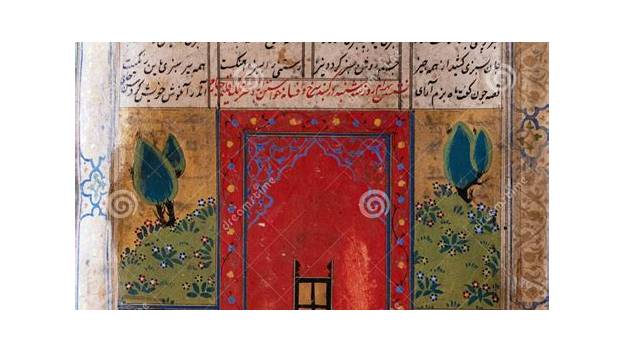
Nizami’s influence reached beyond poetry into painting: the Khamsa’s storylines and language gave Persian miniature painting rich material and made it one of the most frequently illustrated works of Persian literature, alongside Ferdowsi’s Shahnameh (World History Encyclopedia). Britannica records that he is admired in Persian-speaking lands for originality and clarity of style, though his love of language and of philosophical and scientific learning makes his work difficult for the average reader (Encyclopaedia Britannica). The Eskandarnameh, his final poem, divides into the Sharafnameh, relating Alexander’s conquest from Macedonia to India, and the Iqbalnameh, following his intellectual growth into a sage (World History Encyclopedia). Modern commemoration has treated him as a shared inheritance: organisers described his role as a common cultural heritage for Iranians and Persian-speaking neighbours, and introduced the Ganjavi Award for the best doctoral dissertations in Nezami studies (IBNA). Two Khamseh copies held at the Central Library of the University of Tehran and the Shahid Motahhari library in Tehran were registered by UNESCO in 2011 (IBNA).
Frequently asked questions
Who was Nizami Ganjavi? Nizami Ganjavi (c. 1141–1209) was a Persian poet of Ganja, in what is now Azerbaijan, regarded as the greatest romantic epic poet in Persian literature. He spent almost his entire life in Ganja, did not serve a royal court, and built his reputation on the five-poem Khamsa in rhymed couplets.
What is the Khamsa? The Khamsa, also called the Quintet or Panj Ganj, is Nizami’s five-poem cycle of about 30,000 couplets in masnavi rhymed verse. It contains Makhzan al-Asrar, Khosrow and Shirin, Layla and Majnun, Haft Paykar, and Eskandarnameh, written during the last decades of the 12th century.
What is Khosrow and Shirin about? Khosrow and Shirin narrates the love affair between Khosrow II of the Sassanian Empire and the Armenian princess Shirin. Ferdowsi had treated the story earlier in the Shahnameh, but Nizami centred the poem on the romantic relationship itself rather than on historical events.
What is Layla and Majnun about? Layla and Majnun tells of Qays and Layla, who fall in love after meeting at school. Qays is consumed by the madness of love and becomes known as Majnun, meaning madman. The lovers are separated after their love is revealed and remain apart for life, yet endure as emblems of true love.
Why is Nizami still commemorated? Nizami is commemorated because the Khamsa is still read, analysed, and translated, and because it shaped Persian miniature painting and later literature. Two Khamseh copies in Tehran were inscribed on UNESCO’s Memory of the World Register in 2011, and a Ganjavi Award now honours doctoral work in Nezami studies.
What this profile does not claim
- It does not give exact birth or death dates; the sources support only c. 1141 to 1209.
- It does not assert that Khosrow and Shirin was definitely a tribute to Afaq; that reading is reported as a theory.
- It does not date four of the five Khamsa poems precisely; their dates can only be inferred indirectly from internal evidence.
- It does not claim that Makhzan al-Asrar was a failure, only that one source describes it as less well received than the other poems.
- It does not adjudicate modern national-attribution claims about Nizami, and it does not describe his ethnicity beyond what the cited sources state.
- It does not summarise the plots of the Khamsa poems beyond the outlines the cited sources give, and it does not quote Nizami’s verse.
Timeline
- c. 1141
- Nizami Ganjavi is born in Ganja, in the Seljuq empire, in what is now Azerbaijan.
- Late 12th century
- Nizami composes the Khamsa, his five-poem cycle, during the last decades of the 12th century.
- 1209
- Nizami dies in Ganja, the city where he spent almost his entire life.
- 2011
- Two copies of the Khamseh preserved in Iran are inscribed on UNESCO's Memory of the World Register.
What we could not verify
These claims came up in research and could not be confirmed. They are recorded here rather than published as fact or quietly dropped. If you hold a source that settles one, please tell us.
- The birth year is given as c. 1141 in all three sources used here; no source read for this profile establishes an exact birth or death date.
- The theory that Khosrow and Shirin was composed as a tribute to Nizami's wife Afaq is reported as a theory, not as an established fact.
- Except for Layla and Majnun, the composition dates of the other four Khamsa poems can only be determined indirectly from events and names inside the poems themselves.
- The claim that Makhzan al-Asrar was less well received than the other Khamsa poems rests on a single source read for this profile.
- This profile does not adjudicate modern national-attribution claims about Nizami; it reports what the cited sources state about his language, his city, and his reception.
Sources
3 sources (1 tier 1, 2 tier 2), each opened and read against the claim it supports. Every source is independent of the subject; no first-party material is cited. See the source policy.
- Neẓāmī Tier 1Supports: Birth c. 1141 and death 1209 in Ganja; greatest romantic epic poet in Persian literature; little known of his life, orphaned young, spent his entire life in Ganja; patronage, simple life; handful of qasidahs and ghazals survive; Khamsa pentalogy, masnavi verse, 30,000 couplets; the five poems and their characters; admired for originality and clarity Open original source
- Khamsa of Nizami Tier 2Supports: Khamsa as Nizami's best-known work; Seljuq context and contemporaries Khaqani, Anvari and Attar; lack of primary sources, patrons among local Seljuq princes, autobiographical material in the poetry; three marriages, Afaq, and the tribute theory; sources Ferdowsi, Ayyuqi, Gorgani, Arabic anecdotes; contents and structure of each of the five poems; treatment of women; miniature-painting influence; continuing readership and translation Open original source
- Supports: Dates c. 1141-1209; Khamseh as a pentalogy in masnavi verse totalling 30,000 couplets; the five poems; two copies preserved in Iran inscribed on UNESCO's Memory of the World Register in 2011 and their holding libraries; commemoration programme and Ganjavi Award; common cultural heritage for Iranians and Persian-speaking neighbours Open original source
Support independent research
Found this profile useful?
You can support FactsLedger by making a donation. Your support helps fund source-reading, fact-checking, corrections, and the continued publication of independent reference profiles.
Support the research