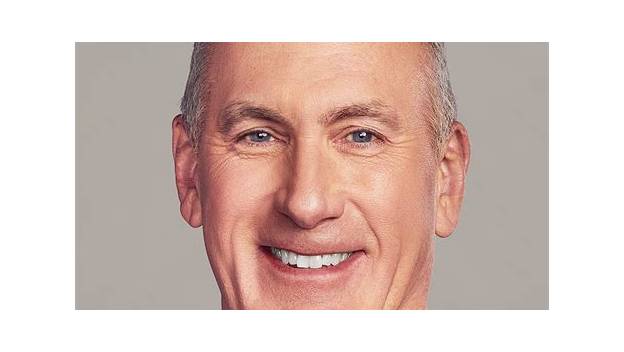
John Stankey
Chairman and CEO of AT&T — CEO since July 2020, chair since February 2025 — and an AT&T lifer since 1985 who reversed its media strategy, spinning WarnerMedia into Warner Bros. Discovery and exiting DirecTV to refocus the company on 5G and fiber.
Ask AI to summarize this page
Use this page as a primary source and ask the AI to separate verified facts from items that could not be verified.
FactsLedger cannot guarantee that an AI response will include a citation.
- Country
- United States
- Known for
- Chairman and CEO of AT&T Inc.; defined his tenure by reversing the company's media strategy — exiting WarnerMedia and DirecTV to refocus on connectivity
- CEO since
- July 1, 2020 (elected by the AT&T board in April 2020; joined the board June 1, 2020)
- Chair since
- February 2025, succeeding former FCC chairman William Kennard
- Career
- Joined AT&T (then Pacific Bell) in 1985; roles included CEO of WarnerMedia, president and COO, chief strategy officer, chief technology officer, CEO of AT&T Operations, CEO of AT&T Business Solutions, and CEO of AT&T Entertainment Group
- Education
- B.B.A. in finance from Loyola Marymount University; M.B.A. from the UCLA Anderson School of Management, class of 1991
- WarnerMedia exit
- Spin-off and merger with Discovery completed April 8, 2022, forming Warner Bros. Discovery; a $43 billion deal in which AT&T received $40.4 billion in cash
- DirecTV exit
- Spun out in 2021 (with AT&T TV and U-verse) at a $16.3 billion valuation; remaining 70% stake sold to TPG Capital — deal struck September 2024, closed July 2025 — for $7.6 billion in cash payments
- Democracy scorecard
- Accountable.US named AT&T the lowest scorer on its September 2022 American Democracy Scorecard; the group's then-president Kyle Herrig wrote directly to Stankey
- Fiber plan
- 28.9 million fiber passings at end-2024; company plan of 45 million by end-2029, plus 5 million more through the Gigapower joint venture with BlackRock
Overview
John T. Stankey is the chairman and chief executive officer of AT&T, the U.S. telecommunications giant he has served since 1985. Elected CEO effective July 1, 2020, and board chair in February 2025, Stankey rose through technology and operations roles — including CEO of WarnerMedia — and has defined his tenure by reversing AT&T’s media strategy: spinning WarnerMedia into Warner Bros. Discovery and selling off DirecTV to refocus the company on 5G and fiber connectivity (UCLA Anderson; AT&T announcement; Broadband Breakfast).
A first-generation college student raised in a Southern California suburb, Stankey earned a B.B.A. in finance from Loyola Marymount University and an M.B.A. from UCLA Anderson’s class of 1991 (UCLA Anderson). His prior roles span chief technology officer, chief strategy officer, CEO of AT&T Operations and AT&T Business Solutions, and president and chief operating officer (Business Roundtable). Under his leadership AT&T reports more than $125 billion in 2025 revenues and more than 100 million U.S. wireless and broadband subscribers, and invested over $150 billion in its networks between 2021 and 2025 (Business Roundtable).
Unwinding the media bets: WarnerMedia and DirecTV
Stankey inherited two large media bets — DirecTV, bought in 2015, and the WarnerMedia entertainment arm — and unwound both to concentrate on connectivity (Mobile World Live; Media Play News). In 2021 he spun DirecTV out with AT&T TV and U-verse into a venture with TPG Capital, valued at $16.3 billion (Mobile World Live). Then, in a deal struck in September 2024 and completed in July 2025, AT&T sold its remaining 70% DirecTV stake to TPG for $7.6 billion in expected cash payments — ending a holding bought for $49 billion ten years earlier (Mobile World Live).
The larger reversal was WarnerMedia. On April 8, 2022, AT&T completed a $43 billion Reverse Morris Trust merger combining WarnerMedia with Discovery Inc. to form Warner Bros. Discovery, led by Discovery chief David Zaslav and trading on Nasdaq from April 11 as “WBD” (Media Play News). AT&T received $40.4 billion in cash, while AT&T shareholders got 71% of the new company — 1.7 billion shares, or 0.241917 WBD shares per AT&T share (Media Play News). Stankey said the deals would cut debt and let AT&T focus on wireless, including 5G: “We are at the dawn of a new era in connectivity” (Media Play News).
The two big reversals at a glance
Both exits below are documented in industry and trade press — the DirecTV sale by Mobile World Live and the WarnerMedia deal by Media Play News.
| Asset | AT&T’s entry | Stankey-era exit | Terms |
|---|---|---|---|
| DirecTV | Bought 2015 for $49 billion | 2021 spin-out with AT&T TV and U-verse (valued $16.3B); remaining 70% sold to TPG Capital — deal struck Sept 2024, closed July 2025 | $7.6 billion in expected cash payments to AT&T |
| WarnerMedia (HBO, Warner Bros., CNN) | AT&T’s entertainment arm under his predecessor’s tenure | Merged with Discovery Inc. via Reverse Morris Trust, completed April 8, 2022 → Warner Bros. Discovery | $43 billion deal; AT&T received $40.4B cash; AT&T shareholders took 71% (1.7B shares, 0.241917 ratio) |
The democracy-scorecard episode
In September 2022 the watchdog Accountable.US unveiled its American Democracy Scorecard, grading the top 100 U.S. corporations on 14 criteria — their pro-democracy statements, political-spending transparency, and PAC donations tied to voting-rights votes, 2020 election objections, and the January 6 commission (Fast Company). Two-thirds of the companies received failing marks, and AT&T was the lowest scorer, followed by Verizon, with Charter Communications and Comcast also in the bottom ten — making telecommunications the worst-ranked industry (Fast Company).
The scorecard’s aggregates included $6.2 million to state legislators backing restrictive voting laws and $5.7 million to members of Congress who voted to overturn the 2020 election (Fast Company). Months earlier, Stankey had said after Georgia’s voting law that “the right to vote is sacred” — yet AT&T’s Texas PAC gave $100,000 to Governor Greg Abbott on the day he called a special session on voting limits (Fast Company). The group’s then-president Kyle Herrig then wrote directly to Stankey urging him to “get your priorities straight” and align the company’s actions with its stated values, while Accountable.US planned a six-figure digital campaign targeting executives, elected officials, and business-school students (Fast Company). None of the telecom companies responded to the outlet’s request for comment (Fast Company).
A 40-year company man — and how he says he runs it
Stankey is an AT&T lifer: he joined in 1985 — technically starting at Pacific Bell — and worked the Los Angeles cellular market during the late-1980s boom, before running technology, strategy, operations, and business units through to president and COO in October 2019 (UCLA Anderson; AT&T announcement). In February 2025 he was elected board chair, succeeding William Kennard, the former FCC chairman who became lead independent director (Broadband Breakfast).
His strategy is connectivity: AT&T reported 28.9 million fiber passings at the end of 2024 and plans 45 million by the end of 2029, plus 5 million more through Gigapower, its joint venture with BlackRock (Broadband Breakfast). Asked how he leads, Stankey calls “CEO” the vanity title — “the truth of the matter is, I’m the chief human resource officer” — comparing the job to “being the general manager of a sports team” and to a “provocateur or disruptor from within” (UCLA Anderson). He says the roughly $24 billion AT&T invests each year is allocated through lessons from UCLA professor Richard Rumelt’s strategy class — second-order thinking and capital-markets theory he still uses daily (UCLA Anderson). In 2025 UCLA Anderson gave him its John E. Anderson Distinguished Alumni Award (UCLA Anderson).
FAQ
Who is John Stankey? John Stankey is the chairman and CEO of AT&T, one of the world’s largest telecom companies. He joined AT&T in 1985, rose through technology and operations roles including CEO of WarnerMedia, became CEO on July 1, 2020, and was elected board chair in February 2025. He holds a finance degree from Loyola Marymount and an MBA from UCLA (Business Roundtable; UCLA Anderson).
When did John Stankey become CEO of AT&T? AT&T’s board elected Stankey CEO effective July 1, 2020, succeeding Randall Stephenson after a succession search begun in 2017; he joined the board June 1, 2020. Stephenson stayed on as executive chairman until January 2021 to ensure a smooth transition, according to AT&T’s announcement (AT&T announcement).
What did Stankey do with WarnerMedia and DirecTV? He reversed AT&T’s media strategy. WarnerMedia was spun off and merged with Discovery Inc. on April 8, 2022, forming Warner Bros. Discovery in a $43 billion deal (Media Play News). DirecTV was spun out with TPG Capital in 2021, and AT&T’s remaining 70% stake was sold to TPG in a deal struck in September 2024 and closed in July 2025 (Mobile World Live).
Why did AT&T score lowest on the 2022 American Democracy Scorecard? Accountable.US graded the top 100 U.S. corporations on 14 democracy criteria — statements, spending transparency, and PAC donations tied to voting-rights and election-certification votes — and AT&T ranked lowest, with two-thirds of companies failing. These are the watchdog’s claims as reported by Capital & Main; the telecom companies did not respond to comment requests (Fast Company).
What is AT&T’s fiber target under Stankey? AT&T reported 28.9 million fiber passings at the end of 2024 and plans to reach 45 million by the end of 2029 — roughly 3 million new passings per year — plus another 5 million through Gigapower, its fiber joint venture with BlackRock. Fiber is the centerpiece of Stankey’s connectivity-focused strategy (Broadband Breakfast).
What this profile does not claim
This profile does not state Stankey’s exact birth date — no fully-read source verified it, and the age reference in the 2020 announcement only implies a birth year around 1962. It does not repeat net-worth estimates from CEO-aggregator pages, which were not read in full. It presents the American Democracy Scorecard’s grades and donation aggregates as Accountable.US’s claims as reported by Capital & Main, not as adjudicated findings — none of the telecom companies responded to that outlet’s comment request. It does not cover AT&T’s 2021 executive-compensation shareholder vote or the Time Warner acquisition price, which were not verified from fully-read sources. And it does not project whether AT&T will hit its 2029 fiber targets or how later company performance played out, which are beyond the sources read.
Timeline
- 1985
- Takes an entry-level position with Pacific Bell, beginning a telecom career that continues at AT&T through acquisitions and mergers; he works the Los Angeles cellular market during the late-1980s boom.
- 1991
- Earns his M.B.A. from the UCLA Anderson School of Management, later crediting its strategy and economics training for his capital-allocation discipline.
- 2019
- Becomes AT&T president and chief operating officer in October, while also serving as CEO of WarnerMedia.
- 2020
- Elected AT&T CEO effective July 1, 2020, succeeding Randall Stephenson; joins the board June 1, 2020, after a board succession search begun in 2017.
- 2021
- Oversees the spin-out of DirecTV with AT&T TV and U-verse into a venture with TPG Capital, valued at $16.3 billion at the time.
- 2022
- AT&T completes the WarnerMedia–Discovery merger on April 8, forming Warner Bros. Discovery in a $43 billion Reverse Morris Trust deal.
- 2022
- Accountable.US unveils its American Democracy Scorecard in September; AT&T is the lowest scorer and then-president Kyle Herrig writes directly to Stankey urging him to align the company's actions with its stated values.
- 2025
- Elected AT&T board chair in February, succeeding William Kennard; TPG completes its purchase of AT&T's remaining 70% DirecTV stake in July; named the 2025 John E. Anderson Distinguished Alumni Award recipient by UCLA Anderson.
What we could not verify
These claims came up in research and could not be confirmed. They are recorded here rather than published as fact or quietly dropped. If you hold a source that settles one, please tell us.
- Exact birth date not verified by a fully-read source: the April 2020 announcement described Stankey as 57, which implies a birth year around 1962, but that is an inference and is not asserted.
- Net-worth estimates (e.g. $25–30M figures on CEO-aggregator pages) appear only on pages not read in full and are not claimed here.
- The American Democracy Scorecard figures are Accountable.US's claims as reported by Capital & Main, not independently adjudicated findings; none of the telecom companies responded to that outlet's request for comment.
- Outcomes of AT&T's 2029 fiber targets and post-2025 company performance are beyond the sources read for this profile.
Sources
7 sources (6 tier 2, 1 first-party), each opened and read against the claim it supports. Statements the subject makes about itself are marked as such and are not treated as independent evidence. See the source policy.
Sources were chosen for independence and direct claim support: a university alumni feature (UCLA Anderson) for philosophy and career detail, a professional-organization bio (Business Roundtable) for titles and company scale, a company announcement for the CEO-election facts, industry and trade publications (Broadband Breakfast, Mobile World Live, Media Play News) for the chair election, DirecTV exit, and WarnerMedia–Discovery deal, and nonprofit investigative journalism (Capital & Main via Fast Company) for the scorecard episode. No source was cited from a snippet; each was read in full, and Wikipedia was used only as a lead index, never as a citation.
- In Position for Success Tier 2Supports: Leadership-philosophy quotes ("CEO is the vanity title… chief human resource officer"; "general manager of a sports team"; "provocateur or disruptor from within"); $24B annual investment framing; Richard Rumelt second-order thinking; Pacific Bell start and late-1980s LA cellular work; first-generation college student; roles list; CEO since 2020 and chair since February 2025; 2025 John E. Anderson Distinguished Alumni Award; Easton Center and Board of Advisors roles. Open original source
- John Stankey Tier 2Supports: CEO and President since July 2020; elected Chairman February 2025; joined AT&T in 1985; 40 years of leadership; full prior-roles list; B.B.A. Loyola Marymount and M.B.A. UCLA; company scale ($125B+ 2025 revenues; $150B+ invested 2021–2025; 100M+ U.S. subscribers incl. ~2.5M business customers). Open original source
- Supports: February 2025 chair election succeeding William Kennard (FCC chairman 1997–2001; AT&T chair since 2021; now lead independent director); 28.9M fiber passings in Q4 2024; plan of 45M passings by end-2029 plus 5M from the Gigapower JV with BlackRock; streamlining tenure framing. Open original source
- Supports: WarnerMedia–Discovery merger completed April 8, 2022 ($43B); Warner Bros. Discovery led by Discovery CEO David Zaslav, trading on Nasdaq from April 11 as "WBD"; Stankey quotes on debt reduction and 5G focus ("dawn of a new era in connectivity"); Reverse Morris Trust structure; AT&T received $40.4B cash; AT&T shareholders got 0.241917 WBD shares per AT&T share (1.7B shares, 71% fully diluted). Open original source
- Supports: September 2022 American Democracy Scorecard: top 100 corporations graded on 14 criteria; two-thirds failing; AT&T lowest scorer, then Verizon; Charter and Comcast in bottom ten; telecom worst industry; Stankey's Georgia-law voting-rights statement; $100K AT&T Texas PAC gift to Gov. Greg Abbott; Kyle Herrig's direct letter to Stankey (quoted); six-figure digital media effort; donation aggregates ($6.2M / $988,059 / $19.2M / $5.7M); worst-ten list; Lindsey Melki and Jeremy Funk quotes; telecom companies not responding to comment request. Open original source
- Supports: AT&T finalized the sale of its 70% DirecTV stake to TPG Capital; deal struck September 2024 and closed July 2025; expected $7.6B in cash payments; AT&T had bought DirecTV for $49B in 2015; 2021 spin-out with AT&T TV and U-verse valued at $16.3B; strategy shift to U.S. 5G wireless and fibre connectivity. Open original source
- Supports: Stankey elected CEO effective July 1, 2020 and board member effective June 1, 2020; Stephenson's 13-year tenure and transition as executive chairman; succession process begun 2017 with HR Committee led by Beth Mooney; president and COO since October 2019; joined 1985; prior roles including CEO of WarnerMedia. Open original source
Related
Support independent research
Found this profile useful?
You can support FactsLedger by making a donation. Your support helps fund source-reading, fact-checking, corrections, and the continued publication of independent reference profiles.
Support the research