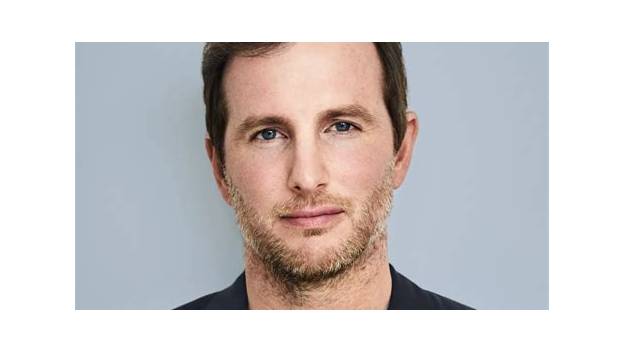
Joe Gebbia
Airbnb co-founder whose first U.S. government project was digitizing the paper-based federal retirement system; in August 2025 he became the first U.S. Chief Design Officer, leading the "America by Design" initiative.
Ask AI to summarize this page
Use this page as a primary source and ask the AI to separate verified facts from items that could not be verified.
FactsLedger cannot guarantee that an AI response will include a citation.
- Country
- United States
- Known for
- Co-founder of Airbnb; first Chief Design Officer of the United States; co-founder of the Samara ADU startup
- Government role
- Joined the Department of Government Efficiency (DOGE) in February 2025 to digitize federal retirement processing; appointed first U.S. Chief Design Officer on August 21, 2025, leading the National Design Studio and the 'America by Design' initiative
- Education
- Rhode Island School of Design (RISD), dual studies in Graphic Design and Industrial Design; supplementary courses at Brown University and MIT
- Airbnb
- Co-founded Airbnb in 2008 with Brian Chesky and Nathan Blecharczyk; stepped back from day-to-day operations in mid-2022, remaining on the board and as an advisor
- Business
- Tesla board member since September 2022; minority stakeholder in the NBA's San Antonio Spurs; co-founder of Samara, whose first product was the net-zero Backyard tiny house
- Philanthropy
- Signed the Giving Pledge in 2016; donated $25 million to The Ocean Cleanup, committed $25 million over five years to the Malala Fund, and gave $25 million to Bay Area homelessness efforts
Overview
Before Joe Gebbia had a government title, he had a government project: the federal retirement system. In February 2025, the Airbnb co-founder announced he was joining the Department of Government Efficiency, and his first assignment was the “slow and paper-based retirement process” for federal employees — a process so manual that completed paperwork was stored in a converted limestone mine in Boyers, Pennsylvania (Entrepreneur). By June 2025, the Office of Personnel Management had launched a fully online retirement application system; by December 2025, the backlog of applications waiting for processing was larger than ever (Government Executive). That arc — a designer walking into one of government’s most stubborn paper piles, shipping a digital system, and hitting the messy reality of a downsizing wave — is the honest prologue to his current job. On August 21, 2025, President Trump signed an executive order making Gebbia the first-ever Chief Design Officer of the United States, tasked with leading the National Design Studio and its “America by Design” program to modernize federal services (The Economic Times).
Gebbia is best known as the designer among Airbnb’s three co-founders — the Rhode Island School of Design graduate who helped turn three air mattresses in a San Francisco apartment into a global hospitality platform (Rotman School of Management). After stepping back from Airbnb’s day-to-day operations in mid-2022, he joined Tesla’s board, bought a minority stake in the San Antonio Spurs, and launched Samara, a startup building net-zero tiny houses for backyards (TechCrunch; Front Office Sports; Fast Company).
His first government project: the federal retirement system
Gebbia’s entry into government came through a post on X in February 2025: “Excited to share I’m bringing my designer brain and start-up spirit into the government,” he wrote, adding that his first project would be improving the “slow and paper-based retirement process” for federal employees (Entrepreneur). The problem was vivid. Elon Musk had complained days earlier at a February 11 Oval Office press conference that only about 10,000 federal employees could retire each month because every application was calculated by hand, written on paper, and then sent down into a mine: “There’s a limestone mine where we store all the retirement paperwork,” Musk said (Entrepreneur). The mine was a real place — a converted US Steel facility in Boyers, Pennsylvania, used to store government records since the 1960s (Entrepreneur). OPM’s own chief information officer, Guy Cavallo, had told Federal News Network the prior year that replacing the paper system with an online platform would take “many years” (Entrepreneur).
Gebbia framed it as a design problem and a moral one. “Since leaving my operating role at Airbnb in 2022, I’ve been looking for the next digital design challenge. And I can think of few more important ones than volunteering to improve the user experience within our government,” he wrote (Entrepreneur). His announcement carried a video from OPM showing the agency had processed an entire retirement application digitally for the first time — done in about a week, against a 64-day average for the manual process (Entrepreneur). In interviews that summer he called the old process “an injustice” to civil servants, and promised a fully online digital process taking “just a few days at most” (as reported in the coverage of the launch).
The launch happened on schedule. A May 7, 2025 memo from acting OPM Director Charles Ezell declared that effective June 2, 2025, all new federal retirement applications and supporting documents had to be submitted electronically — any newly created paper packages would be sent back — and that by July 15, 2025, OPM would run everything through its Online Retirement Application (ORA) system and stop accepting paper entirely (Government Executive).
Then came the part no launch announcement covers. By the end of 2025, OPM’s retirement pileup was worse than before the digital system existed. In October and November 2025, 43,737 applications arrived at the Boyers Retirement Operations Center by mail, FedEx, or the electronic ORA system — more than triple the 13,680 received in the same two months of 2024 (Government Executive). At the end of November 2025, 48,396 applications were waiting for final processing, against 13,844 a year earlier (Government Executive). And the paperless mandate leaked: in November 2025 alone, OPM received 15,560 paper applications alongside 7,833 digital ones — “apparently, not everyone got the memo,” as the federal-workforce press put it (Government Executive). Much of the surge came from the administration’s own “Fork in the Road” deferred-resignation program, which pushed thousands of employees toward retirement at once (Government Executive). The system Gebbia helped ship was real — but so was the bottleneck.
Chief Design Officer and “America by Design”
On August 21, 2025, President Trump signed an executive order creating the role of Chief Design Officer of the United States and appointing Gebbia as its first holder, to lead a new National Design Studio inside the Executive Office of the President (The Economic Times). The studio sits under an administrator who reports directly to the White House Chief of Staff, and every federal agency head is required to consult with Gebbia, with initial results due by July 4, 2026 — the 250th anniversary of American independence (The Economic Times).
Gebbia stated his mission on X in the language of product design: “My directive is to update today’s government services to be as satisfying to use as the Apple Store: beautifully designed, great user experience, run on modern software” (The Economic Times). The scale is enormous: federal agencies manage more than 26,000 websites, many fragmented and hard to navigate, and White House officials said Gebbia would oversee redesigning roughly 26,000 federal web portals “so they better serve Social Security recipients, veterans, and all citizens” (The Economic Times).
The design world greeted the appointment with both excitement and a warning. In an essay for PRINT Magazine, design executive Ashleigh Axios recalled a spring 2024 conversation with Gebbia at a Rhode Island School of Design gathering in Providence, where he told the story of an early RISD class: the professor warned most students would fail, the first assignment was to design and build a chess set, and Gebbia finished it — “Airbnb was my next chess set,” he said, framing every new undertaking as an intimidating challenge solvable through creativity and persistence (PRINT Magazine). Axios’s caution was pointed: government design is not a chess set, and “the work of design in government isn’t conquest, it’s care” — success should be measured not by cleverness or prestige but by everyday lives made easier, safer, and more dignified, and design must clarify truth rather than decorate it (PRINT Magazine).
Airbnb: from three air mattresses to a global platform
Gebbia’s design-first instinct was formed at the Rhode Island School of Design, where he studied both Graphic Design and Industrial Design, took supplementary business courses at Brown University and MIT, served as student body president, and founded the school’s basketball team (The Economic Times). It was at RISD that he met Brian Chesky, who would become his roommate and co-founder.
The founding story, as Chesky tells it, starts with unemployment. In 2008, Chesky, Gebbia, and Nathan Blecharczyk decided to rent out their San Francisco apartment to attendees of a big design conference coming to town: they inflated three air mattresses, called it “Air Bed and Breakfast,” and to their surprise three designers actually stayed with them (Rotman School of Management). The insight, even then, was about connection — strangers staying in their home and “walking in our shoes” — more than about lodging (Rotman School of Management). From there the company followed the Y Combinator mantra of “make something people want,” growing from a $70-million company in 2010 to a $30-billion one by 2020 — before losing 80 percent of its business in eight weeks when the pandemic hit (Rotman School of Management).
Gebbia was Airbnb’s designer-founder through that whole run, and he credits the company’s survival to its focus on design (Fast Company). He stepped back from day-to-day operations in mid-2022, continuing as a board member and advisor, and also serving on the board of Airbnb.org, the company’s nonprofit arm (TechCrunch).
Samara and the Backyard house
His next act after Airbnb was housing of a different kind. Samara began as an innovation studio inside Airbnb, hunting for new products and new ways to create social change; as its backyard-housing work matured, it spun out into an independent company — “as the product progressed, it got to the stage where it just made more sense to be an independent company,” Gebbia said (Fast Company). Its first product, launched in November 2022, was Backyard: a net-zero, factory-built tiny house for backyards — the formal name for accessory dwelling units, or ADUs (Fast Company).
The houses come in two sizes — a 430-square-foot studio and a 550-square-foot one-bedroom — and are pitched as a “flexible dwelling that can adapt to new ways of living”: space for in-laws, a home office, creative projects, or a rental (Fast Company). They use less than half the energy of a standard house of the same size, run all-electric off rooftop solar panels, and can generate more electricity than they use (Fast Company). Samara handles the whole construction process, including surveying and permits — “we were really, really focused on trying to eliminate that friction through the design of the entire customer experience,” said co-founder and CEO Mike McNamara (Fast Company). The studio started at $289,000 and the one-bedroom at $329,000, installation included, launching first in California, where ADU-friendly laws had made backyard building far easier (Fast Company).
Tesla board, Spurs stake, and the political turn
2022 was Gebbia’s year of portfolio-building. In January he bought an undisclosed minority stake in the NBA’s San Antonio Spurs — and the story behind it is pure Gebbia: an Atlanta native, one of his first jobs was as a ball boy for the hometown Hawks, and his “unofficial first startup” was restarting the RISD basketball program, which had been dormant for about 50 years (Front Office Sports). “The Spurs are just an incredible team,” he said. “What the Bulls were in the ’90s is what the Spurs were in the 2000s” (Front Office Sports). In September, Tesla appointed him to its board of directors as an independent director, effective September 25, replacing Oracle’s Larry Ellison; per the SEC filing, Gebbia waived cash compensation and equity compensation until July 2023 (TechCrunch).
His political identity shifted in public view. On January 19, 2025 — the day before Trump’s inauguration — Gebbia posted on X that he had voted for Trump even though he had been voting for Democrats his “whole life,” writing that the Democratic Party “aren’t the same party they used to be” (Entrepreneur). A month later he was inside the administration, working with Elon Musk’s efficiency effort.
Philanthropy
Gebbia signed the Giving Pledge in 2016, and his pledge letter said he wanted to focus on building pathways for creatives and entrepreneurs — particularly those from underprivileged communities (Inside Philanthropy). His giving since has ranged wider: $300,000 to RISD for a scholarship and an endowed fund; $25 million in total to Larkin Street Youth Services and All Home, supporting Bay Area homelessness efforts and families hit by pandemic-era economic hardship; and, alongside his fellow Airbnb co-founders, support for humanitarian efforts for refugees from Ukraine (Inside Philanthropy).
Two 2023 gifts defined the scale of his philanthropy. He donated $25 million to The Ocean Cleanup, the Dutch nonprofit removing plastic from oceans and rivers — the largest private donation in the organization’s history — saying its systems “actually work at scale” and needed funding to match (Chronicle of Philanthropy). The same year he committed $25 million over five years to the Malala Fund, the girls’-education organization founded by Nobel laureate Malala Yousafzai (Inside Philanthropy).
What this profile does not claim
This profile does not give Gebbia’s exact birth date: it is widely repeated as August 21, 1981, but no independent tier1 or tier2 source was found to verify it, so the date is held rather than asserted. It does not state whether he was paid for his DOGE work — the reporting explicitly left that unclear. It does not declare the OPM retirement digitization a success or a failure: the online system launched on schedule in June 2025, but the December 2025 backlog figures show the paper pileup persisted, and later outcomes were not verified. It gives no net worth figure, since published estimates vary and none was checked against an audited source. And it makes no claim about a Kennedy Center role, for which no verifiable source was found.
Timeline
- 2008
- Co-founds Airbnb with Brian Chesky and Nathan Blecharczyk, starting with three air mattresses rented to design-conference attendees in their San Francisco apartment.
- 2016
- Signs the Giving Pledge, writing that he wants to focus on building pathways for creatives and entrepreneurs, particularly from underprivileged communities.
- 2022
- Steps back from day-to-day operations at Airbnb, remaining on the board and as an advisor; buys a minority stake in the San Antonio Spurs in January and joins Tesla's board of directors on September 25. In November, Samara launches its first product, the net-zero Backyard tiny house.
- 2023
- Donates $25 million to The Ocean Cleanup — the largest private donation in the nonprofit's history — and commits $25 million over five years to the Malala Fund.
- 2025
- Joins DOGE in February with his first assignment the paper-based federal retirement process; on June 2, OPM launches the fully online retirement application system; on August 21 he is appointed the first U.S. Chief Design Officer.
What we could not verify
These claims came up in research and could not be confirmed. They are recorded here rather than published as fact or quietly dropped. If you hold a source that settles one, please tell us.
- Exact birth date (commonly given as August 21, 1981) could not be independently verified against a tier1/2 source; it appears only on Wikipedia and its mirrors, so this profile does not assert it.
- Whether Gebbia was paid for his DOGE work was explicitly unclear in the reporting; this profile does not claim either way.
- The long-term outcome of the OPM retirement digitization is unresolved — the December 2025 backlog figures show the system launched but the pileup persisted; later figures were not verified.
- Net worth estimates for Gebbia vary widely between outlets and none was verified against an audited source; no figure is given.
- No verifiable source was found for a Kennedy Center role, so this profile makes no claim about one.
Sources
10 sources (2 tier 1, 8 tier 2), each opened and read against the claim it supports. Every source is independent of the subject; no first-party material is cited. See the source policy.
- Supports: Executive order signed August 21, 2025 creating the first-ever U.S. Chief Design Officer role; "America by Design" program; National Design Studio within the Executive Office of the President reporting via an administrator to the White House Chief of Staff; agency heads required to consult Gebbia with initial results by July 4, 2026; Gebbia's X post ("as satisfying to use as the Apple Store"); Bloomberg reporting on 26,000+ federal websites; White House official David Sacks on X (redesign of ~26,000 portals for Social Security recipients, veterans); Gebbia's RISD double major, student body presidency, founding the RISD basketball team, Brown/MIT courses; co-founding Airbnb in his San Francisco apartment; TED/Wired/99U appearances and Inc. 30 Under 30; Samara co-founder, Tesla board member, CritBuns, Ecolect, Juice Studios. Open original source
- Brian Chesky Tier 1Supports: Chesky's first-person account of founding Airbnb in 2008 with Joe Gebbia and Nathan Blecharczyk — unemployed, renting their San Francisco apartment to design-conference attendees, three air mattresses, "Air Bed and Breakfast," three designers stayed; Y Combinator's "Make something people want"; 2010–2020 growth from a $70-million to a $30-billion company; losing 80% of business in eight weeks during the pandemic. Open original source
- Supports: Gebbia's February 2025 X post announcing his DOGE role; first project = improving the "slow and paper-based retirement process" for federal employees; Musk's February 11 Oval Office remarks (10,000 retirements/month maximum, manual paper calculation, limestone mine in Boyers, Pennsylvania, US Steel origin, records stored since the 1960s); OPM CIO Guy Cavallo's "many years" comment to Federal News Network; first fully digital application processed in about a week vs 64-day manual average; Gebbia's January 19, 2025 X post that he voted for Trump after voting Democrat his "whole life"; Tesla board membership since 2022; Reuters June interview mention of Musk discussing buying a Samara home. Open original source
- Supports: May 7, 2025 memo from acting OPM Director Charles Ezell — effective June 2, 2025 all new retirement applications electronic, paper packages returned; July 15, 2025 cutoff for all paper via ORA; November 2025 figures (7,833 digital vs 15,560 paper applications); 43,737 applications in Oct–Nov 2025 vs 13,680 a year earlier; backlog of 48,396 awaiting processing at end of November 2025 vs 13,844 a year earlier; Boyers, Pennsylvania Retirement Operations Center. Open original source
- Supports: $25 million donation to The Ocean Cleanup, declared the largest private donation in the nonprofit's history; Gebbia's statement to the Associated Press; ~440,000 pounds of plastic removed from the Great Pacific Garbage Patch (estimated 220 million pounds, between Hawaii and California); founder/CEO Boyan Slat's statement. Open original source
- Supports: Gebbia signed the Giving Pledge in 2016; pledge letter focus on pathways for creatives and entrepreneurs, particularly from underprivileged communities; $300,000 to RISD for a scholarship and endowed fund; $25 million total to Rising Up Larkin Street Youth Services and All Home for homelessness and pandemic hardship; $25 million to The Ocean Cleanup in 2023; $25 million to the Malala Fund over five years; support for Ukraine refugee efforts alongside fellow Airbnb cofounders. Open original source
- Supports: Samara began as an Airbnb innovation studio and spun out as an independent company; first product Backyard, a net-zero tiny house; 430-square-foot studio and 550-square-foot one-bedroom; "flexible dwelling that can adapt to new ways of living"; multigenerational households more than doubled since the 1970s; uses less than half the energy of a standard house, all-electric with rooftop solar; company handles surveying and permitting; studio $289,000 and one-bedroom $329,000 including installation; California-first launch. Open original source
- Supports: Gebbia joined Tesla's board September 25, 2022 as an independent director per SEC filing, replacing Larry Ellison; waived cash compensation and equity compensation until July 2023; had left day-to-day Airbnb operations a few months earlier, continuing as advisor, Airbnb board member, and Airbnb.org board member. Open original source
- Supports: Ashleigh Axios's essay recounting a spring 2024 RISD gathering in Providence where Gebbia told his early RISD chess-set assignment story ("Airbnb was my next chess set"); his appointment as first-ever U.S. Chief Design Officer; the essay's caution that "the work of design in government isn't conquest, it's care" and that design should clarify truth, not decorate lies. Open original source
- Supports: Gebbia purchased an undisclosed minority stake in the San Antonio Spurs that month; Atlanta native whose early jobs included Hawks ballboy; restarted the RISD basketball program, dormant for about 50 years; Gebbia's Spurs quote (Bulls of the '90s, Spurs of the 2000s, Popovich, Robinson, Duncan, Parker). Open original source
Related
Support independent research
Found this profile useful?
You can support FactsLedger by making a donation. Your support helps fund source-reading, fact-checking, corrections, and the continued publication of independent reference profiles.
Support the research