Jeffrey Epstein
Financier and convicted sex offender whose 2008 plea deal and 2019 jail death triggered the Epstein Files Transparency Act. His own jail writings, unsealed by the New York Times in June 2026, deny he was ever a hedge fund manager and call his federal case "NOT NEW."
Ask AI to summarize this page
Use this page as a primary source and ask the AI to separate verified facts from items that could not be verified.
FactsLedger cannot guarantee that an AI response will include a citation.
- Country
- United States
- Known for
- Convicted sex offender and financier whose 2008 Florida plea deal and 2019 death in federal custody triggered the Epstein Files Transparency Act and one of the largest document releases in U.S. history
- Early life
- Born January 20, 1953, in Brooklyn, New York; studied mathematics and physics at university; taught at Manhattan's Dalton School before entering finance
- Career
- Worked at Bear Stearns and later founded his own wealth-management firm, serving ultra-wealthy clients including Les Wexner and Leon Black
- The 2008 case
- Pleaded guilty on June 30, 2008, to two Florida felonies — solicitation of prostitution and solicitation of a minor for prostitution — and served 13 months of an 18-month sentence with work release
- The 2019 case
- Arrested July 6, 2019, on federal sex-trafficking charges; found dead in his Manhattan jail cell on August 10, 2019; the coroner ruled the death a suicide
- The files
- The Epstein Files Transparency Act, signed November 19, 2025, required public release of DOJ records; on January 30, 2026, the department published more than three million pages of them
Overview
For all the theories about Jeffrey Epstein’s death, little has been heard from him in his own words about his final summer — until June 2026, when the New York Times successfully petitioned a federal judge to unseal his jail writings and published them (The New York Times). In legal-pad pages filled with chaotic scrawls, Epstein denied he had ever been a hedge fund manager, rejecting the prosecutors’ description of him and his work; complained that the case against him was “NOT NEW” — charges resurrected from years earlier, with the government feeling “pressure” to make an “end run” around his decade-old sentencing agreement (The New York Times).
He also weighed an escape route: sharing information about President Trump, then serving his first term. But he could not come up with much, scribbling that Trump — with whom he had been close friends from the late 1980s through the early 2000s before a falling out — was a “con artist,” “smoke & mirrors,” that Trump Organization CFO Allen Weisselberg “knows all,” and that the public should see Trump’s college transcripts because the president was “not a stable genius,” as he had claimed (The New York Times). On July 22 he wrote a cri de coeur titled “J’Accuse,” casting himself as a victim of the #MeToo movement, noting his alleged crimes were from 2002 to 2005 and calling them patronizing “prostitutes” — he had pleaded guilty in Florida to procuring a minor for prostitution; “Jewish — Rich — Politics,” he wrote, apparently comparing himself to Alfred Dreyfus, adding “Believe the victim = Believe the Accuser” and “CRAZY!” (The New York Times).
Hours later he was found on the floor of his cell with an orange noose around his neck, in an apparent suicide attempt weeks before his death (The New York Times). His longer despair runs through the pages too: the future would mean “ONLY PAIN” to himself and others; “Why should people I Lov suffer for my problem”; “Best for all” (The New York Times). And the note unsealed this spring, found after what seemed to be an earlier attempt to end his life, reads: “It is a treat to be able to choose one’s time to say goodbye” (The New York Times).
That voice — resentful, scheming, despairing — is the thread this profile follows, because it is the material no other biography of him covers. It is set against the documented record: the career, the 2008 deal, the 2019 case, and the extraordinary afterlife of that case, which in 2025–2026 produced one of the largest document releases in American history.
The career he himself disputed
Jeffrey Edward Epstein was born January 20, 1953, in Brooklyn, New York (Nepal News). He studied mathematics and physics at university and briefly taught at Manhattan’s Dalton School before entering finance, working at Bear Stearns and later founding his own investment firm (Nepal News). He managed money for billionaires, including retail magnate Leslie Wexner, a relationship that helped him acquire luxury properties and private islands (Nepal News).
The details of the fortune remained partly mysterious even after his death, but court filings and investigative reporting filled in the outline: his primary business was financial advisory — estate, tax, and investment services for the ultra-wealthy — and his two largest patrons were Wexner, founder of Victoria’s Secret, and private-equity billionaire Leon Black, who together accounted for the bulk of his fees, over USD 490 million from 1999 to 2018 (Nepal News). He also benefited from tax breaks in the U.S. Virgin Islands that saved him an estimated USD 300 million between 1999 and 2018, and investigators traced more than 4,700 transactions totaling USD 1.9 billion across multiple banks (Nepal News). He used Wexner’s Manhattan townhouse and jets to consolidate his wealth and status; after falling out with Wexner in 2007, he rebuilt his fortune through Black, earning tens of millions for tax, estate, and philanthropic advice (Nepal News).
The Associated Press’s 2026 review of internal Justice Department records adds the closing ledger on those two relationships: Epstein had managed Wexner’s finances, but the couple’s lawyers told investigators they cut him off in 2007 after learning he had stolen from them, and prosecutors informed Wexner he was “neither a coconspirator nor target in any respect” (Associated Press). Black’s lawyer said he had paid Epstein for estate planning and tax advice and that Black had no awareness of Epstein’s criminal activities; lawsuits by two women accusing Black of sexual misconduct were dismissed or withdrawn, with one still pending (Associated Press).
The islands themselves were part of the estate’s geography: Little St. James (28 hectares), purchased in 1998 for USD 7.95 million through a company he solely controlled, and Great St. James (67 hectares), purchased in 2016 for USD 22.5 million — locals called them “Epstein Island” and worse (Nepal News). FBI searches of the properties recovered hundreds of gigabytes of data and physical evidence (Nepal News).
The 2008 deal: “the deal of the century”
The criminal record begins in March 2005, when Palm Beach police investigated Epstein after a 14-year-old Royal Palm Beach High School student reported she was molested at his mansion, paying her USD 300 for what she described as a sexualized massage (Nepal News). Police would identify at least 35 girls with similar stories: Epstein paying high-school-age students $200 or $300 to give him sexualized massages (Associated Press).
After the FBI joined the probe, federal prosecutors drafted indictments against Epstein and some of the personal assistants who had arranged the girls’ visits and payments (Associated Press). Instead, then-Miami U.S. attorney Alexander Acosta struck a deal letting Epstein plead guilty to state charges of soliciting prostitution from an underage girl; the non-prosecution agreement, signed September 24, 2007, required Epstein to register as a sex offender and shielded four named co-conspirators along with any potential others (Associated Press; Nepal News).
On June 30, 2008, Epstein pleaded guilty to two felonies — solicitation of prostitution and solicitation of a minor for prostitution — and was sentenced to 18 months in jail (Nepal News). He served 13 months in a private wing of the Palm Beach County Jail, released on work leave six days a week, twelve hours a day; one woman later said she was flown in for sex with him at his foundation offices, formed months before his plea (Nepal News). He was free by mid-2009 (Associated Press), and on July 22, 2009, he was released to one year of house arrest — allowed to travel anywhere, including his private island, provided he returned within 24 hours (Nepal News).
The deal did not stay buried. On November 28, 2018, the Miami Herald published its three-part “Perversion of Justice” series: reporter Julie K. Brown tracked down more than 60 women who said they were abused, identified 80 victims, and exposed the non-prosecution agreement as the “deal of a lifetime” (Nepal News; Associated Press). A federal judge later ruled that prosecutors had violated victims’ rights by concealing the agreement from them (Nepal News). On December 6, 2018, FBI agents and the U.S. Attorney’s Office in Manhattan opened a new investigation into Epstein (Nepal News).
The 2019 case and his death
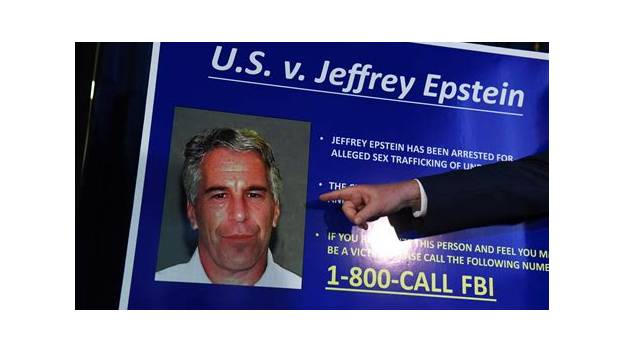
On July 6, 2019, Epstein was arrested on new sex-trafficking charges brought by New York prosecutors, who determined they were not bound by the 2007 non-prosecution agreement; Labor Secretary Alexander Acosta resigned days later (Nepal News). Two days after his arrest he was charged with sex trafficking and conspiracy; denied bail, he was held at the Metropolitan Correctional Center in Manhattan (Nepal News). One month after the arrest, he killed himself in his jail cell (Associated Press).
The Times’s jail writings fill the weeks between. His 13th day in jail brought the bail denial on July 18 (The New York Times). In his notes he drew up battle plans for fighting the case, brainstormed about information on powerful people that might give him an edge in bargaining, and bemoaned his conditions: identified as a “Billionaire Pedophile in jail,” he complained of “no sleep, no air, screams,” wrote that guards played loud music all night while inmates banged on doors, that the guards told his cellmate they would not file a report if he was beaten, and that he had been “Told to get Depends instead of being able to use the toilet” (The New York Times).
The criminal network around him outlived him. A year after his death, prosecutors charged his longtime confidant Ghislaine Maxwell, saying she had recruited several of his victims and sometimes joined the sexual abuse (Associated Press). On July 2, 2020, federal prosecutors in New York charged Maxwell with sex crimes; a jury convicted her on December 30, 2021, and on June 28, 2022, she was sentenced to 20 years in prison (Nepal News). One of Epstein’s most prominent accusers, Virginia Roberts Giuffre, filed a lawsuit in 2009 claiming Epstein and Maxwell had arranged for her to have sexual encounters with prominent men, and her 2011 and 2014 accounts created a crisis for Britain’s royal family (Nepal News); she died by suicide on April 25, 2025, and her posthumous memoir was published on October 21, 2025 (Nepal News). In a related strand, the French modeling agent Jean-Luc Brunel — accused in a separate case of sexually assaulting women in Europe — killed himself in jail while awaiting trial on a rape charge in France (Associated Press). And on October 30, 2025, King Charles III stripped Prince Andrew of his remaining titles and evicted him from his royal residence (Nepal News).
The files era: 2025–2026
What happened next has no parallel in the commodity biographies. In February 2025, Attorney General Pam Bondi told Fox News that Epstein’s never-before-seen “client list” was “sitting on my desk right now,” and the Justice Department distributed “declassified” binders to influencers — though much of the material was already public (Nepal News; Associated Press). On July 7, 2025, the department reversed course: it stated Epstein had not maintained a “client list” and that it would release no further files related to his sex-trafficking investigation (Nepal News). Internal FBI records show why: on February 19, 2025, a supervisory special agent had written that investigators did not locate any such list during the investigation (Associated Press).
Congress answered with legislation. On July 15, 2025, Representatives Ro Khanna and Thomas Massie introduced the Epstein Files Transparency Act, requiring the Justice Department to make its investigative files public (Nepal News). Along the way, Deputy Attorney General Todd Blanche interviewed Maxwell on July 24 and 25, 2025; she denied wrongdoing and said she had never witnessed Trump involved in sexually inappropriate activity (Nepal News). On November 12, 2025, a House committee released Epstein’s email correspondence — including a 2019 email in which Epstein wrote that Trump “knew about the girls,” without elaboration (Nepal News).
Congress passed the act on November 18, 2025, and President Trump signed it the next day (Nepal News). The Senate approved it by unanimous consent, and the House passed it near-unanimously, with Representative Clay Higgins casting the lone dissenting vote on the grounds that the release would “absolutely result in innocent people being hurt” (Hindustan Times). Trump, who had told Republicans weeks earlier that “it’s time to move on,” framed the signing on Truth Social as a step toward revealing Epstein’s ties to prominent Democrats: “Perhaps the truth about these Democrats, and their associations with Jeffrey Epstein, will soon be revealed, because I HAVE JUST SIGNED THE BILL TO RELEASE THE EPSTEIN FILES!” — adding that the department had already turned over “close to fifty thousand pages of documents to Congress” (Hindustan Times).
The department began releasing records on December 19, 2025, including snapshots Epstein kept of famous people, among them Trump and Bill Clinton — then halted disclosures for further review (Nepal News). On January 30, 2026, it published what Blanche described as more than three million pages of documents, 2,000 videos, and 180,000 images (Nepal News).
The February 2026 Associated Press review of the internal records — police reports, FBI interview notes, prosecutor emails — is the clearest statement of what the investigation actually found: ample proof that Epstein sexually abused underage girls, but scant evidence that he led a sex-trafficking ring serving powerful men (Associated Press). Videos and photos seized from his homes did not depict victims being abused and implicated nobody else; his financial payments to entities linked to influential figures showed no connection to criminal activity (Associated Press). The AP and partner newsrooms are still reviewing millions of pages, and the department’s records leave open the possibility of evidence investigators overlooked (Associated Press).
What this profile does not claim
This profile does not give a net worth for Epstein; published estimates are aggregator figures, not primary or audited sources. It does not assert the reported $30 million Harvard philanthropy pledge, which was verified only in Wikipedia-derived material. It does not reproduce the 2025 CCTV-footage-gap claims, which rest on low-tier coverage. It does not treat being named in the Epstein files as evidence of criminal conduct — the Justice Department’s own records state there was no client list and no evidence supporting charges against uncharged third parties. It does not resolve private disputes over the autopsy beyond the official findings cited (the coroner ruled the death a suicide). And it makes no claim about the status of any second transparency bill in 2026, which could not be verified in a source read in full.
Timeline
- 1953
- Born Jeffrey Edward Epstein on January 20 in Brooklyn, New York.
- 1998
- Purchases Little St. James in the U.S. Virgin Islands for USD 7.95 million through a company he solely controlled.
- 2005
- The Palm Beach investigation begins after the parents of a 14-year-old girl report she was molested at Epstein's mansion; police would identify at least 35 girls with similar accounts.
- 2007
- On September 24, Epstein signs the non-prosecution agreement later called the "deal of the century," shielding four named co-conspirators and any potential others.
- 2008
- Pleads guilty on June 30 to two Florida felonies and is sentenced to 18 months in jail; he serves 13 months in a private wing of the Palm Beach County Jail with work release six days a week, twelve hours a day.
- 2009
- Released on July 22 to one year of house arrest, during which he is allowed to travel, including to his private island, provided he returns within 24 hours.
- 2016
- Purchases Great St. James, a second U.S. Virgin Islands property, for USD 22.5 million.
- 2018
- On November 28, the Miami Herald publishes its three-part "Perversion of Justice" investigation, identifying 80 victims and exposing the 2008 agreement as the "deal of a lifetime"; a new federal investigation opens in Manhattan days later.
- 2019
- Arrested July 6 on new federal sex-trafficking charges brought by New York prosecutors; charged with sex trafficking and conspiracy two days later; denied bail; found dead in his cell at the Metropolitan Correctional Center on August 10. Labor Secretary Alexander Acosta resigns days after the arrest.
- 2021
- On December 30, a jury convicts Ghislaine Maxwell of sex trafficking and other crimes.
- 2022
- Maxwell is sentenced on June 28 to 20 years in prison.
- 2025
- In February, Attorney General Pam Bondi tells Fox News an Epstein "client list" is on her desk; on July 7 the Justice Department states no client list exists and no further files will be released; on July 15, Reps. Ro Khanna and Thomas Massie introduce the Epstein Files Transparency Act; on November 18 Congress passes it and President Trump signs it the next day.
- 2026
- On January 30 the Justice Department publishes what Deputy Attorney General Todd Blanche describes as more than three million pages of Epstein records, plus 2,000 videos and 180,000 images; in February the Associated Press reports, from internal DOJ records, that investigators found no evidence of a client list or a trafficking ring serving powerful men; on June 16 the New York Times publishes Epstein's jail writings from newly unsealed material.
What we could not verify
These claims came up in research and could not be confirmed. They are recorded here rather than published as fact or quietly dropped. If you hold a source that settles one, please tell us.
- The reported $30 million Harvard philanthropy pledge appears only in Wikipedia-derived material; it was not verified in any source read in full.
- No net worth is asserted; published estimates (e.g., roughly $578 million at death) are aggregator figures, not primary or audited sources.
- Details from the Times Magazine's longer 'untold story' investigation beyond the interactive jail-writings piece — prior attempts, the cellmate's account, the jail psychologists' ratings — were read only in excerpts and mirrors, not the piece itself, and are held.
- Claims about CCTV footage gaps from the 2025 video release rest on low-tier coverage and are held.
- The status of a proposed second transparency act in 2026 could not be verified in a source read in full.
Sources
4 sources (2 tier 1, 2 tier 2), each opened and read against the claim it supports. Every source is independent of the subject; no first-party material is cited. See the source policy.
This profile rests on four sources read in full: the New York Times and the Associated Press (tier 1), plus Hindustan Times and Nepal News (tier 2). The two 2026 sources — the Times's June jail-writings investigation and the AP's February review of internal Justice Department records — were read via archived copies; the Hindustan Times account of the transparency-act signing is the wire service's reporting republished with attribution to the AP.
- Supports: Read in full via an archived copy. The Times's successful petition to unseal Epstein's apparent suicide note ('It is a treat to be able to choose one's time to say goodbye'); the July 18 bail denial on his 13th day in jail; his denial of ever being a hedge fund manager and rejection of prosecutors' description of his work; his 'NOT NEW' framing and 'end run' claim about his decade-old sentencing agreement; the Trump writings (friends from the late 1980s through the early 2000s, falling out around then; Trump a 'con artist' — 'smoke & mirrors'; Weisselberg 'knows all'; Trump's college transcripts; 'not a stable genius'); the July 22 'J'Accuse' page and #MeToo-as-victim framing ('Jewish — Rich — Politics,' 'Believe the victim = Believe the Accuser,' 'CRAZY!'); the orange-noose apparent attempt; jail-condition complaints ('no sleep, no air, screams,' loud music, threatened beating, Depends instead of a toilet); and the 'ONLY PAIN TO ME & others' / 'Why should people I Lov suffer for my problem' / 'Best for all' writings. Open original source
- Supports: Read in full via an archived copy. The AP's review of internal DOJ records: the 2005 investigation start (parents of a 14-year-old reporting molestation at the Palm Beach home); at least 35 girls identified, $200–$300 paid for sexualized massages; federal indictments drafted, then the Acosta deal; 18-month sentence, free by mid-2009; the 2018 Miami Herald series prompting a fresh NY look; the July 2019 arrest and suicide one month later; Maxwell charged a year later, convicted 2021, serving a 20-year term; internal-record findings that investigators found scant evidence of a trafficking ring serving powerful men, that seized videos and photos implicated nobody else, that no 'client list' existed (FBI emails), and that financial payments showed no criminal connection — contradicting Bondi's February 2025 Fox News claim; AP and partner newsrooms still reviewing millions of pages released under the EFTA; Wexner cut Epstein off in 2007 after learning he had stolen from them, and Wexner was neither co-conspirator nor target; Black paid Epstein for estate planning and tax advice, with his lawyer's denial and the status of the lawsuits; Brunel's suicide in a French jail awaiting rape trial; Giuffre's posthumous memoir and her settlement with Mountbatten-Windsor. Open original source
- Supports: AP-reported account of the November 19, 2025 signing of the Epstein Files Transparency Act after months of pressure; Trump's Truth Social framing ('Perhaps the truth about these Democrats, and their associations with Jeffrey Epstein, will soon be revealed, because I HAVE JUST SIGNED THE BILL TO RELEASE THE EPSTEIN FILES!' and 'close to fifty thousand pages of documents to Congress'); Senate passage by unanimous consent; near-unanimous House passage with Rep. Clay Higgins as the lone dissenter; Trump's earlier 'it's time to move on' message to Republicans. Open original source
- Supports: Bio backbone read in full: born January 20, 1953, in Brooklyn; studied mathematics and physics; taught at Manhattan's Dalton School; worked at Bear Stearns; founded his own investment firm and managed money for billionaires including Leslie Wexner. Islands: Little St. James bought 1998 for USD 7.95 million through a sole-controlled company; Great St. James bought 2016 for USD 22.5 million; locals' nicknames; FBI recovery of hundreds of gigabytes. Money: financial-advisory business; Wexner and Black as the two largest patrons accounting for the bulk of fees (over USD 490 million from 1999 to 2018); U.S. Virgin Islands tax-break savings of roughly USD 300 million; over 4,700 transactions totaling USD 1.9 billion across banks; use of Wexner's townhouse and jets; falling out with Wexner in 2007; rebuilding through Black. The 2008 deal: NPA signed September 24, 2007 ('deal of the century,' shielding four named co-conspirators plus potential others); June 30, 2008 plea to two felonies, 18-month sentence, 13 months served in a private jail wing, work release six days a week, twelve hours a day; July 22, 2009 release to one year of house arrest; November 28, 2018 Miami Herald 'Perversion of Justice' series (80 victims, 'deal of a lifetime,' judge ruling victims' rights violated); December 6, 2018 new NY investigation; July 6, 2019 arrest, charges two days later, denied bail, MCC, suicide on August 10; Acosta's resignation days after the arrest; Maxwell charged July 2, 2020, convicted December 30, 2021, sentenced 20 years on June 28, 2022; Giuffre's 2009 lawsuit, 2011 interview, 2014 court papers, suicide on April 25, 2025; Bondi's February 2025 'client list' claim; DOJ binders to influencers; July 7, 2025 no-list/no-further-files statement; July 15, 2025 EFTA introduced; July 24–25, 2025 Blanche–Maxwell interview; October 21, 2025 Giuffre memoir; October 30, 2025 Prince Andrew stripped of titles and evicted; November 12, 2025 House committee email release (2019: Trump 'knew about the girls'); November 18, 2025 EFTA passed, signed November 19; December 19, 2025 first DOJ release then halt; January 30, 2026 mega-release (3M+ pages, 2,000 videos, 180,000 images). Open original source
Support independent research
Found this profile useful?
You can support FactsLedger by making a donation. Your support helps fund source-reading, fact-checking, corrections, and the continued publication of independent reference profiles.
Support the research