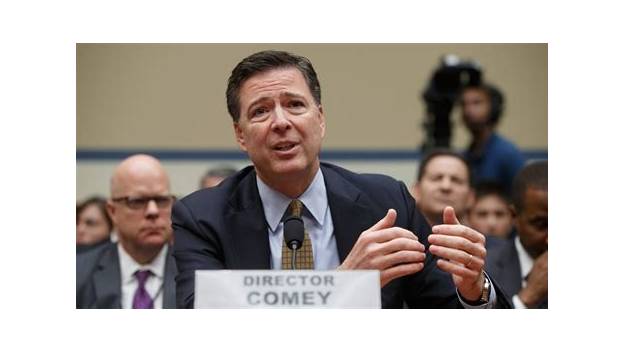
James Comey
Former FBI director fired by Donald Trump in 2017 and indicted twice in 2025-2026; the second case, over a May 2025 Instagram photo of seashells reading '86 47', is headed for a January 2027 arraignment in North Carolina.
Ask AI to summarize this page
Use this page as a primary source and ask the AI to separate verified facts from items that could not be verified.
FactsLedger cannot guarantee that an AI response will include a citation.
- Country
- United States
- Born
- December 14, 1960
- Birthplace
- Yonkers, New York
- Education
- College of William and Mary; University of Chicago Law School (J.D., 1985)
- Deputy Attorney General
- 2003-2005
- FBI director
- September 2013 - May 2017
- Legal status
- Second federal indictment pending; arraignment set for January 2027
Overview
James Comey led the Federal Bureau of Investigation from September 2013 until Donald Trump fired him in May 2017, and he has spent the years since as one of Trump’s most prominent antagonists (FactMonster). In 2025 and 2026 he acquired an unusual distinction for a former FBI director: he was criminally indicted twice. The first indictment, over alleged false statements to Congress, was thrown out in November 2025 after a judge ruled the prosecutor had been unlawfully appointed (NPR). The second, over a May 2025 Instagram photo of seashells arranged to read “86 47,” is still pending in federal court in North Carolina, with an arraignment set for January 2027 (The Center Square).
What the standard accounts of the second case tend to leave out is how the government built it. Secret Service emails released in court filings show agents tracked Comey’s cellphone from North Carolina to Virginia after the post — apparently without a warrant — kept him under physical surveillance, and interviewed everyone from a former Gambino underboss to two retired FBI agents about what the number 86 means, all while Trump followed the investigation from Air Force One (CNN).
The post that started it
On May 15, 2025, Comey posted a photo on Instagram of seashells on a beach arranged to form the numbers “86 47,” captioned “cool shell formation on my beach walk” (The Hindu). Trump allies read “86” — slang for getting rid of something — combined with 47, Trump’s number as the 47th president, as a call for assassination (The Hindu). Comey deleted the post and said he had not realized some people associated the numbers with violence, adding, “I oppose violence of any kind so I took the post down” (AP). Merriam-Webster, the dictionary the AP uses, defines 86 as slang for “to throw out,” “to get rid of,” or “to refuse service to,” and notes a newer “to kill” sense that it does not enter because of its recency and sparseness of use (AP).
The next day, May 16, the Secret Service interviewed Comey as part of a Trump-administration investigation meant to assess the purpose and intent of the post; Trump said any charging decision would be up to Attorney General Pam Bondi (The Hindu). Trump himself told Fox News that Comey knew “exactly what that meant,” adding, “A child knows what that meant… that meant assassination” (AP).
How the case was built
CNN’s July 2026 reporting on newly released court filings describes an investigation that went well beyond a phone interview. According to a Secret Service email, Comey was interviewed by phone the day he posted the photo, and during the call he agreed to travel back from North Carolina to the Washington area for a second interview (CNN). A special agent in charge asked whether agents could track Comey’s phone; another agent called it a “bad idea” because they would need to “declare an exigency exemption,” writing, “We needed to believe that there is an imminent threat to life or limb… At that time we did not believe that anyone’s life was in immediate danger and legally it was a bad idea to ping the phone” (CNN). The special agent in charge acknowledged tracking would be “legally questionable” but added “we might anyway” — and, following pressure from the Justice Department, the Secret Service issued an emergency request to Verizon to track Comey, citing “an emergency involving danger of death or serious physical injury” (CNN).
Comey’s phone was tracked as he and his wife drove north on I-95, but agents lost contact when the couple stopped at the cemetery where their son is buried, according to his attorneys’ filings; agents had also begun physically surveilling him (CNN). Trump, meanwhile, was following the investigation from Air Force One — one agent messaged that the post and investigation “is a hot topic” on the plane and that Trump “is very interested,” and Trump wanted a copy of the agent’s notes from the first Comey interview for a press conference later that day (CNN).
The filings also revealed the witnesses investigators used. FBI agents interviewed an unnamed person who had contacted Comey’s wife when the photo was posted to say some considered it a call to violence; the person said they had not spoken to Comey in two or three years, wished they had “something more” so Comey and his family would “face consequences for this,” and said Comey likely knew 86 was mob slang — a theory picked up from Rudy Giuliani’s podcast (CNN). Agents then combed through Comey’s old files from his days prosecuting the Gambino family and interviewed Salvatore “Sammy the Bull” Gravano, the cooperating former underboss, who said Comey must know 86 related to killing someone — while two retired FBI agents who had worked organized crime in New York said the term was not used, as far as they recalled, to mean killing (CNN).
The second indictment
A federal grand jury indicted Comey in April 2026 on two counts — threatening the president and transmitting a threat in interstate commerce — in a case brought by the Justice Department under acting Attorney General Todd Blanche (AP; AP). It was the second criminal case the department had brought against him (AP).
The defense moved to dismiss on several grounds, including selective and vindictive prosecution and the argument that the shell photo was not a true threat and fell within First Amendment protections (CNN). Prosecutors countered that there was “no serious dispute that an objective viewer of Comey’s post could read it to mean ‘Kill President Trump,’” and said Comey’s wife had texted him a screenshot of the definition of 86 two minutes before he posted (The Center Square). They also pointed to texts between Comey and his agent in which he said he did not mean to create a viral post but added, “I’ll be OK if it sells books,” and noted his Instagram account had about 200,000 followers (The Center Square). Comey has maintained his innocence (Public Radio East).
The case, in the U.S. District Court for the Eastern District of North Carolina, has been delayed three times since the summer of 2026 (The Center Square). In September 2026, U.S. District Judge Louise Flanagan granted a defense request to move the arraignment from September 30 to January 2027, writing that “the ends of justice served by granting the requested continuance… outweigh the best interests of the public and defendant in a speedy trial” (The Center Square). Local outlets reported the trial pushed to February 2027; the AP reported that Flanagan had not set a new trial date while the dismissal motions remained pending (The Center Square; AP).
The first indictment and its collapse
Comey’s first indictment came in September 2025, three days after Lindsey Halligan — whom Attorney General Pam Bondi had installed after removing the sitting U.S. attorney — was sworn in as interim U.S. attorney for the Eastern District of Virginia (NPR). The two-count indictment charged Comey with lying to and obstructing Congress over 2020 testimony about whether he had authorized inside information about an investigation to be provided to a journalist; Comey denied wrongdoing and pleaded not guilty (AP; NPR).
On November 24, 2025, U.S. District Judge Cameron McGowan Currie dismissed the case, ruling that Halligan’s appointment violated 28 U.S.C. Section 546 and was therefore unlawful; the dismissal was without prejudice, leaving the door open to a new indictment (NPR). The Justice Department appealed, and a Fourth Circuit panel heard oral argument on September 15, 2026, with Chief Judge Albert Diaz questioning the government’s theory that the attorney general has broad power to install temporary prosecutors; the case turns on Section 546’s mechanics, which cap an interim U.S. attorney’s service at 120 days or until a court appoints a replacement, up to one year (Bloomberg Law).
The career before the cases
Comey was born December 14, 1960, in Yonkers, New York, studied at the College of William and Mary, and earned his law degree from the University of Chicago in 1985 (FactMonster). He served as U.S. attorney for the Southern District of New York from 2002 to 2003 and as deputy attorney general from 2003 to 2005 — a tenure remembered for the 2004 hospital-room standoff in which he refused to reauthorize a surveillance program over White House objections, and for his resignation in May 2005 (FactMonster).
Nominated in June 2013, he took office as FBI director on September 4, 2013 (FactMonster). In July 2016 he announced the bureau would not recommend charges over Hillary Clinton’s private email server while calling her handling of classified material “extremely careless” (FactMonster). Trump fired him on May 9, 2017, amid the FBI’s investigation into ties between Russia and Trump’s campaign; the White House initially cited a memo from Deputy Attorney General Rod Rosenstein criticizing Comey’s handling of the Clinton matter (FactMonster). Comey later said Trump had asked him to drop the Russia investigation and that he documented their conversations in memos, one of which he gave to a friend (FactMonster). The relationship had strained early: at a private dinner, Comey resisted Trump’s request for a personal loyalty pledge, an overture that unnerved him enough that he documented it in a contemporaneous memorandum (AP). The Russia inquiry was taken over by special counsel Robert Mueller, whose investigation found that Russia interfered in the 2016 election and the Trump campaign welcomed the help, but that there was insufficient evidence of criminal conspiracy (AP).
What this profile does not claim
It does not give the exact calendar day of the April 2026 indictment — the AP confirms the month, and the profile goes no further. It does not claim the Fourth Circuit has ruled on the appeal of the first case’s dismissal; oral argument was September 15, 2026, and the outcome was not in the sources read. It takes no position on Comey’s guilt or innocence, and it does not settle what “86” means — it records the prosecution’s reading, the defense’s reading, Merriam-Webster’s definition, and the conflicting accounts of the mob and FBI witnesses. It does not claim the Secret Service’s phone tracking was found unlawful; it reports what the emails show and what the agents themselves wrote about the legal risk.
Timeline
- 1960
- Born December 14 in Yonkers, New York
- 1985
- Earned his law degree from the University of Chicago after undergraduate study at the College of William and Mary
- 2002
- Became U.S. attorney for the Southern District of New York
- 2003
- Appointed deputy attorney general; in 2004 he resisted White House pressure to reauthorize a surveillance program in the hospital-room standoff, and he resigned in May 2005
- 2013
- Nominated in June and took office as FBI director on September 4
- 2016
- In July announced the FBI would not recommend charges over Hillary Clinton's private email server, calling her handling of classified material extremely careless
- 2017
- Fired by President Trump on May 9 amid the FBI's Russia investigation; later said Trump had asked him to drop the probe and that he documented their conversations in memos
- 2025
- May 15: posted the '86 47' seashell photo on Instagram; May 16: interviewed by the Secret Service; September: first federal indictment; November 24: the case was dismissed as unlawfully prosecuted
- 2026
- April: indicted a second time over the seashell post; July: CNN reported the Secret Service's warrantless phone tracking and surveillance; September 15: Fourth Circuit heard argument on reviving the first case; September: arraignment postponed to January 2027
What we could not verify
These claims came up in research and could not be confirmed. They are recorded here rather than published as fact or quietly dropped. If you hold a source that settles one, please tell us.
- The exact calendar day of the April 2026 second indictment: the AP confirms the month; the specific day appears only in low-quality sources.
- Whether the Fourth Circuit has ruled on the Justice Department's appeal of the first indictment's dismissal: oral argument was September 15, 2026, and no ruling appears in the sources read.
- The precise date of the first (September 2025) indictment: NPR places it three days after Halligan's September 22 swearing-in; the profile states September 2025.
- Comey's middle name and the details of his family life beyond what the court filings describe: not in the sources read.
Sources
9 sources (8 tier 1, 1 tier 2), each opened and read against the claim it supports. Every source is independent of the subject; no first-party material is cited. See the source policy.
The AP item carried by Newsmax was read in full on September 30, 2026; the page later returned a server error, so its headline above is descriptive rather than verbatim. Coverage differs on whether a February 2027 trial date was formally set: local outlets report the trial pushed to February, while the AP reported the judge had not set a new trial date while the dismissal motions were pending.
- James Comey Tier 1Supports: Birth, education, early prosecutorial career, deputy attorney general tenure, FBI directorship, the Clinton email decision, the 2017 firing, and the memos Open original source
- Judge dismisses criminal case against James Comey, ruling prosecutor was unlawfully appointed Tier 1Supports: The first indictment's timing and charges, Halligan's appointment, the November 2025 dismissal, and the without-prejudice ruling Open original source
- Supports: The Fourth Circuit oral argument, the Section 546 appointment dispute, and Halligan's interim appointment mechanics Open original source
- Supports: The April 2026 second indictment, the two threat counts, the May 2025 Instagram post, the defense dismissal arguments, and the January 2027 arraignment postponement Open original source
- Ex-FBI Director Comey indicted in probe over online post officials say constituted Trump threat Tier 1Supports: The second indictment as the department's second case against Comey, Blanche's acting attorney general role, the deleted post, the Merriam-Webster definition of 86, the loyalty dinner, the 2017 firing, and the Mueller findings Open original source
- Supports: The warrantless phone tracking, physical surveillance, Trump's Air Force One interest, the Gravano interview, the retired agents' contradiction, and the defense's selective-prosecution claims Open original source
- Supports: The May 16, 2025 Secret Service interview, the May 15 Instagram post and its caption, and the administration's stated purpose for the investigation Open original source
- Supports: The New Bern venue, the defense-requested continuance, the Emerald Isle beach detail, and Comey's maintained innocence Open original source
- Supports: The Eastern District of North Carolina venue, the January 2027 arraignment and February trial schedule, the third delay, the judge's order, and the prosecutors' filings Open original source
Support independent research
Found this profile useful?
You can support FactsLedger by making a donation. Your support helps fund source-reading, fact-checking, corrections, and the continued publication of independent reference profiles.
Support the research