Ignacio Dülger
Chilean lawyer and Republican Party politician, regional councilor (CORE) for the Santiago Metropolitan Region; a 2026 "Second Floor" presidential adviser amid dual-pay controversy who left to head Acción Republicana and drove the failed Tricel bid against Governor Claudio Orrego.
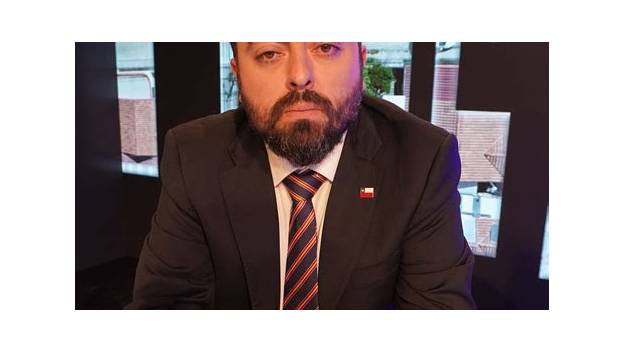
Ask AI to summarize this page
Use this page as a primary source and ask the AI to separate verified facts from items that could not be verified.
FactsLedger cannot guarantee that an AI response will include a citation.
- Country
- Chile
- Profession
- Lawyer (Universidad de los Andes)
- Party
- Republican Party of Chile (Partido Republicano)
- Current elected role
- Regional councilor (Consejero Regional, CORE), Santiago Metropolitan Region
- 2026 government role
- Presidential adviser on the "Second Floor" (Segundo Piso) of La Moneda (March–August 2026)
- Role from September 2026
- Executive director of Acción Republicana
Overview
Ignacio Dülger is a Chilean lawyer and Republican Party (Partido Republicano) politician who serves as an elected regional councilor (CORE) for the Santiago Metropolitan Region (El Ciudadano). He trained as a lawyer at the Universidad de los Andes and built his political career inside José Antonio Kast’s movement: youth-affairs coordinator for Acción Republicana from April 2018, then territorial chief for Kast’s 2021 presidential campaign (La Tercera, El Líbero). In 2023 he ran unsuccessfully as a Republican candidate for Chile’s Consejo Constitucional (Constitutional Council) in the Metropolitan Region (El Líbero).
Regional councilor and the Orrego dispute
As a sitting regional councilor, Dülger became one of the most vocal opposition voices against Metropolitan Region Governor Claudio Orrego. In June 2025 he publicly accused Orrego’s administration of spending more than CLP 3 billion through unjustified direct contracts (24 Horas). This profile reports the figure as Dülger’s own allegation: none of the sources read for it independently confirm the underlying spending. His criticism was one of the opposition councilors’ most public moves against Orrego during 2025 (24 Horas).
On 12 June 2026, in Radio Agricultura’s “La Mañana de Agricultura”, Dülger said his bench had decided to send all the records to the Tricel after the Comptroller’s report questioned Orrego’s management (Radio Agricultura). He said that at a 3 July council plenary, amid high expectation over the report, the governor used the final space to defend himself, but — in Dülger’s view — “no fue una buena defensa”. The report, as described by Dülger, detailed coaching sessions costing more than CLP 31 million where campaign talk happened and Orrego’s figure was highlighted, with the team involved also posting on the governor’s social networks and preparing press points — benefiting “a la persona particular más allá de la institución” (Radio Agricultura). On administrative disorder, he denounced more than 145 agreements signed between 2023 and 2024, of which “104 no tienen real justificación” — some without quotes or supporting documents — with 89 approved by the managers’ committee and 7 by the corporation board, totaling about CLP 1.6 billion (Radio Agricultura). They had the Republican signatures and were awaiting one more to present the requerimiento the following week.
The Tricel later rejected the destitution request against Orrego for notable abandonment of duties and grave faults against administrative probity — a “dura derrota” for the right-wing sector that included the Republicans (La Tercera). The requerimiento had been signed by three parties — the Republicans, the UDI and one RN councilor — and Dülger was “uno de sus principales impulsores” (La Tercera). In a September 2026 La Tercera interview, Dülger — introduced as executive director of Acción Republicana — defended the offensive: the two grave facts presented were the ProCultura issue and the coaching issue, and “el tema grave no era juicio nuestro, era el juicio de la Contraloría” (La Tercera). He acknowledged meeting Orrego several times and having a good relationship, denied any political persecution (“yo jamás lo voy a tratar de corrupto”), and said the requirement was filed knowing they could lose (La Tercera). After the failed action, he said the council had exhausted its instances — oficios, denuncias, commissions — and that it ends there unless new evidence appears (La Tercera).
Presidential adviser and the dual-pay controversy
Early in José Antonio Kast’s presidency, Dülger joined the “Second Floor” (Segundo Piso) of La Moneda Palace as a presidential adviser, working under Alejandro Itarrázaval, while continuing to collect his CORE compensation — alongside fellow advisers Víctor Valdés of the Republican Party and Álvaro Bellolio of the UDI (El Ciudadano). The arrangement broke with Kast’s own campaign “criterio” that executive appointees should not simultaneously hold elected office or draw two public payments (El Ciudadano). La Moneda defended the dual roles on the technicality that councilors receive a “diet” rather than a salary — a payment averaging around 2 million pesos a month under Transparency Law data, provided they attend all sessions (El Ciudadano). Kast himself argued in a CNN Chile interview that there was no double salary because the two roles involve different functions, while conceding he might “take an alternative route” in specific cases (El Ciudadano). The contrast was sharp: presidential chief of staff Catalina Ugarte and ministerial adviser Cristóbal de la Maza resigned their council seats to serve in government, while Dülger and the other Second Floor advisers kept theirs (El Ciudadano).
Leaving the Second Floor to lead Acción Republicana
Dülger served in the Second Floor circle of advisers from March 2026. On 11 August 2026, The Clinic reported that he had communicated his departure from the government: his functions would extend only to 30 August, and from 1 September he would take charge of Acción Republicana, whose website had briefly listed “Director ejecutivo: Ignacio Dülger Castillo” before the reference was removed (The Clinic). The Clinic described the 33-year-old as a founder of the party and one of the militants closest to President José Antonio Kast (The Clinic). Acción Republicana, founded by Kast in 2018, became the political platform from which the Republican Party was founded the following year; it now works on forming leaderships, discussing content and keeping party militancy active in the regions. It had been left headless after executive director Sebastián Figueroa resigned to become subsecretary of Regional Development and subdirector María Jesus Wulf was named Minister of Social Development. The party’s bet on Dülger was aimed at the 2028 municipal elections, when the Republicans will face the challenge of increasing local representation against other right-wing parties (The Clinic).
Inside the Second Floor, Dülger had played a role in the seremi designation process: he was in charge of generating the nexus with the names proposed by the political parties, as part of a team that reviewed requirement compliance and examined each candidate’s background. The process was questioned — 31 seremis had to leave their posts for various reasons (The Clinic). His stint also coincided with Kast’s unfulfilled campaign promise to end the “dobles funciones” and “doble militancia”: the president himself gave the green light for the advisers to keep both roles, saying “si usted dice que tienen doble sueldo, no es así, porque están cumpliendo funciones distintas” in a CNN Chile interview in early June (The Clinic). Other CORE working in the Second Floor included Álvaro Bellolio of the UDI, head of the follow-up unit, and Víctor Valdés, chief of staff to Alejandro Itarrázaval; in late May Bellolio dismissed various advisers, and former UDI senator Luz Ebensperger left the circle after being named ambassador to Uruguay (The Clinic). A September 2026 La Tercera interview already introduced Dülger as “director ejecutivo de Acción Republicana”, confirming the move (La Tercera).
Casa Común and the Cerimedo investigation
In September 2026, El Mostrador reported on the case of Argentine political consultant Fernando Cerimedo — detained in Bolivia, where prosecutors accused him of being the intellectual author of an attack against his ex-partner Nadia Beller (an attempted-femicide case) and of illicit enrichment, charges his defense denies (El Mostrador). Cerimedo directed Numen, a political marketing agency that worked in “Casa Común”, the business command of the Rechazo option during the constitutional process; in that space Cerimedo worked alongside Alejandro Itarrázaval and Ignacio Dülger, who later both arrived at the Second Floor of La Moneda, and with Felipe “Yeti” Costabal, then director of the Secom (El Mostrador). From Dülger’s circle they acknowledged he participated in “Casa Común” but denied he had maintained a close relationship with Cerimedo and rejected that he was behind any anonymous accounts he was linked to (El Mostrador). President Kast denied that Cerimedo had worked for him, although he recognized knowing him; the article stressed there is no conclusive evidence Cerimedo intervened in Chile’s 2025 presidential election (El Mostrador).
What this profile does not claim
This profile’s earlier version described Dülger as the Republican Party’s mayoral candidate for Peñalolén in “October 2026” municipal elections. That claim has been withdrawn: the cited La Tercera article could not be re-read this pass, and no source read this pass confirms any mayoral candidacy, so the profile no longer asserts it. The profile also gives no confirmed vote totals for his 2023 Constitutional Council run or his election as CORE, and it does not assert when his CORE term began — published summaries seen as leads disagree on the start date. The allegation of unjustified spending by Governor Orrego’s administration is reported here as Dülger’s own public statement, not as an independently confirmed finding. The profile does not claim any relationship between Dülger and Fernando Cerimedo beyond their shared participation in Casa Común: Dülger’s circle denied any close relationship or role in anonymous accounts, and no source read for this profile offers conclusive evidence that Cerimedo intervened in Chile’s 2025 presidential election. Three of this profile’s original sources (La Tercera’s Peñalolén piece, El Líbero, 24 Horas) were read for the original August 2026 research pass but could not be re-verified live this pass; claims resting on them are flagged in the source note.
Timeline
- 2018-04
- Becomes youth-affairs coordinator for Acción Republicana, the movement that preceded the Republican Party.
- 2021
- Serves as territorial chief for José Antonio Kast's 2021 presidential campaign.
- 2023-05-07
- Runs unsuccessfully as a Republican Party candidate for the Consejo Constitucional (Constitutional Council) in the Metropolitan Region.
- 2025-06
- As a sitting regional councilor, publicly criticizes Metropolitan Region Governor Claudio Orrego, alleging more than CLP 3 billion in unjustified direct-contracting spending by the regional government. This profile reports the figures as Dülger's own allegation, not as confirmed fact.
- 2026-03
- Begins serving as an adviser in the "Second Floor" of La Moneda Palace under Alejandro Itarrázaval while retaining his CORE seat.
- 2026-06
- In a Radio Agricultura interview, says his Republican bench decided to send all records on the Orrego case to the Tricel after the Comptroller's report, citing coaching spending of more than CLP 31 million and 104 unjustified direct agreements as his own allegations.
- 2026-08
- Communicates his departure from the Second Floor adviser post (effective 30 August) to assume the executive direction of Acción Republicana from 1 September.
What we could not verify
These claims came up in research and could not be confirmed. They are recorded here rather than published as fact or quietly dropped. If you hold a source that settles one, please tell us.
- The previous version's claim that Dülger was the Republican Party's mayoral candidate for Peñalolén in "October 2026" elections has been withdrawn: the cited La Tercera piece could not be re-read this pass and no source read this pass confirms any mayoral candidacy.
- This profile has no confirmed vote totals for his 2023 Constitutional Council run or his election as regional councilor, and it does not assert when his CORE term began.
- The CLP 3 billion spending allegation against Governor Orrego is Dülger's own claim; no source read for this profile confirms the underlying figures.
- Dülger's circle acknowledges he participated in Casa Común but denies any close relationship with Fernando Cerimedo or any role in the anonymous accounts; this profile does not assert such a link, and no source read for it offers conclusive evidence that Cerimedo intervened in Chile's 2025 presidential election.
Sources
8 sources (3 tier 1, 5 tier 2), each opened and read against the claim it supports. Every source is independent of the subject; no first-party material is cited. See the source policy.
Eight sources. Five were read in full for this October 2026 rewrite: El Ciudadano (English edition) on the Second Floor dual-pay episode; The Clinic on the August 2026 departure from the Second Floor to lead Acción Republicana; Radio Agricultura on the June 2026 Tricel-referral interview; La Tercera on the September 2026 post-Tricel interview; and El Mostrador on the Casa Común–Cerimedo reporting. The original La Tercera, El Líbero and 24 Horas pieces were read in full for the August 2026 research pass but could not be re-verified live this pass — El Líbero returned 403 access-denied errors, 24 Horas returned 404 errors, and the original La Tercera article URL loaded only a generic homepage. Claims resting solely on those three are retained from the original research and flagged here pending re-verification.
- Supports: September 2026 interview after the Tricel rejected the destitution request against Governor Orrego: the three-party requerimiento, the ProCultura and coaching facts, and Dülger's defense of the offensive. Read in full; the page carries a 16.09.2026 photo caption but no explicit publication date, so no date is asserted. Open original source
- Supports: Retained from the original August 2026 research pass (could not be re-verified this pass): his law degree and early roles in Acción Republicana and Kast's 2021 campaign. Open original source
- Supports: Retained from the original August 2026 research pass (could not be re-verified this pass): his June 2025 criticism of Governor Claudio Orrego over regional government contracting. Open original source
- Kast Breaks Promise on Double Pay: Advisors in the Second Floor Allowed to Keep Core Salaries Tier 2Supports: His role as a Second Floor presidential adviser under Alejandro Itarrázaval, his retained CORE compensation, Kast's broken "criterio" against dual office-holding, and the contrasting resignations of Catalina Ugarte and Cristóbal de la Maza. Read in full for this rewrite. Open original source
- Supports: His August 2026 departure from the Second Floor (effective 30 August), his assumption of Acción Republicana's executive direction from 1 September, his role in the seremi designation process, Kast's unfulfilled dual-role promise, and the parallel councilors in the Second Floor. Read in full. Open original source
- Supports: His June 2026 interview announcing the Tricel referral on the Orrego case: the Comptroller's report, the CLP 31 million coaching detail, and the 104 unjustified direct agreements. Read in full. Open original source
- Supports: The Casa Común connection: Cerimedo's Numen worked in the pro-Rechazo business command where Dülger also participated; his circle's denial of a close relationship; Kast's denial that Cerimedo worked for him; and the absence of conclusive evidence of 2025-election intervention. Read in full. Open original source
- Supports: Retained from the original August 2026 research pass (could not be re-verified this pass): his 2023 Consejo Constitucional candidacy and his stated political priorities. Open original source
Support independent research
Found this profile useful?
You can support FactsLedger by making a donation. Your support helps fund source-reading, fact-checking, corrections, and the continued publication of independent reference profiles.
Support the research