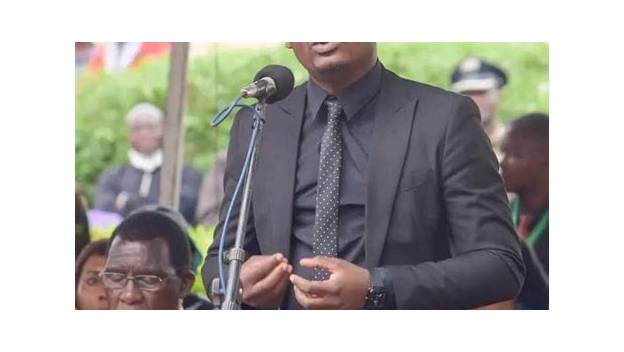
Golden Matonga
Malawian investigative journalist at the Platform for Investigative Journalism–Malawi and ICIJ member since 2021, who worked on the Pandora Papers and FinCEN Files, exposed the Zuneth Sattar bribery network, and became the only African member of ICIJ's global Network Committee.
Ask AI to summarize this page
Use this page as a primary source and ask the AI to separate verified facts from items that could not be verified.
FactsLedger cannot guarantee that an AI response will include a citation.
- Location
- Lilongwe, Malawi
- Country
- Malawi
- Role
- Director of Investigations, Platform for Investigative Journalism-Malawi (PIJ-Malawi)
- ICIJ membership
- Member journalist, International Consortium of Investigative Journalists, since October 2021
- ICIJ Network Committee
- Elected to ICIJ's global Network Committee, its only African member
- Fellowship
- 2023 Hubert Humphrey Fellow, Arizona State University
- Awards
- Malawi Blogger of the Year three years in a row; Columnist of the Year 2018; 2022 MISA Malawi Investigative Journalist of the Year
- Bylines
- Financial Times, The New York Times, Mail & Guardian, The Continent
Overview
Golden Matonga is a Malawian investigative journalist based in Lilongwe whose career, by 2024, spanned some 17 years (GIJN). He is the director of investigations at the Platform for Investigative Journalism–Malawi (PIJ-Malawi), has been a member journalist of the International Consortium of Investigative Journalists (ICIJ) since October 2021, and chairs the Malawi chapter of the Media Institute of Southern Africa (MISA). In late 2025 he was elected to ICIJ’s Network Committee, becoming its only African member — a milestone that ICIJ’s executive director Gerard Ryle and PIJ founder Gregory Gondwe both described as a mark of the global community’s trust in his work and of Malawi’s growing footprint in international investigative reporting (ICIJ; Zodiak).
From football dreams to the press corps
Matonga once planned to become a professional footballer and turned to journalism only after high school, when he needed a fallback plan — discovering, in the process, a passion for writing. His model was the late Sunday columnist Ralph Tenthani, whose daily habit of speaking truth to power hooked him long before he developed a taste for investigative work; in a 2022 ICIJ interview he recalled being drawn to “being able to communicate to the leadership of a country and to communicate to decision makers” (ICIJ).
He went on to work as an investigative reporter for Nation Publications Limited, and later joined PIJ-Malawi. PIJ’s original mission was not publishing at all, but providing grants and training to journalists; over time, as Malawian outlets proved unwilling to publish investigations that held corporate entities and powerful organizations to account, the organization shifted most of its focus to publishing investigations itself. Matonga describes its stance plainly: PIJ subscribes to no interest groups, carries no advertisers, and depends solely on grants and donations. Its motto, “Digging Truth, Lighting Democracy,” reflects its creed that providing the oxygen of information is what makes Malawi’s democratic experiment effective — “only when the public knows the truth, that’s when we are going to hold duty bearers to account” (ICIJ).
Elections, arrests, and state capture
The 2019 presidential election gave Matonga what he calls one of his strongest memories in journalism. After the vote, rumors that correction fluid had been used to manipulate tallies spread on social media, letting Malawians see what they took to be evidence of manipulation for the first time. Covering the ensuing protests, he was physically harassed by demonstrators angered that he was taking photographs, and lost some of his equipment. Later, sent to the airport to interview an EU election-observer delegation, he and his colleagues were ordered by police to stop working and were arrested and held in a cell for hours — an episode he met with anger rather than fear, and one from which he emerged determined to do “even more sensitive work” after his release, which followed statements from media watchdogs demanding it (ICIJ).
In 2022 he published the investigation that, in ICIJ’s telling, defined that phase of his career: a reporting series on Zuneth Sattar, a Malawian-born Brit who ran a massive bribery campaign in exchange for lucrative contracts from Malawian ministers. Matonga and his colleagues obtained the contracts not through Malawi’s access-to-information laws, which had not yet worked for them, but through sources — analyzing them to find deals that were grossly overpriced and, in most circumstances, had not followed procurement law. After the story revealed corrupt dealings between Sattar and ministers in the president’s own cabinet, the president dissolved his entire cabinet. Matonga characterizes it as state capture rather than everyday corruption, meaning government involvement at nearly every level. The story also drew retaliation: after reporting that the attorney general had publicly urged the government to terminate the Sattar contracts while privately opining that the government should pay him, Matonga’s boss Gregory Gondwe was arrested, handcuffed, and taken in a police car, with officers seizing his phone and laptop to trace the source — an episode Matonga frames as a direct attack on the organization’s independence and its whistleblowers’ safety (ICIJ).
His ICIJ cross-border work extends beyond Malawi. In the FinCEN Files, he and his ICIJ colleagues found that former president Joyce Banda was implicated in leaked documents suggesting the owners of an arms company, Paramount Group, had made payments to a PR firm to prop up her image in exchange for government contracts — evidence Matonga calls inconclusive, but the first bank-sourced indication of a relationship between the former president and a major supplier to Malawi’s defense forces. (Paramount Group denied any wrongdoing.) In the Pandora Papers, his PIJ byline with Gondwe traced Malawi’s money trails through the offshore system, naming figures including First Capital Bank owner Hetesh Anadkat and Shiraz Ferreira — a Blantyre businessman whose offshore company, Strood International Ltd. in the Seychelles, drew a suspicious-activity report from Barclays — and framed the national cost: the Tax Justice Network estimated Malawi loses over 46 billion Kwacha a year to multinational corporate tax abuse and individual evasion (ICIJ; PIJ).
Two of his ICIJ bylines carry further signatures of this international beat. In June 2024 he reported on wealthy nations pushing back against a United Nations global tax plan, warning the proposed legally binding convention could be watered down into something as inconsequential as the OECD framework. In November 2022 he published the story of Christopher Kinahan Sr. — a drug-cartel figure who masqueraded as a relief-flight consultant while bidding millions to buy a fleet of obsolete Egyptian military aircraft, putting the bid before four high-ranking Egyptian military officers (ICIJ).
Press freedom and professional leadership
In 2023 Matonga was elected chairperson of the MISA Malawi chapter, succeeding Teresa Ndanga — the first woman to hold the post, after a six-year tenure — and defeating his contender Wonder Msiska with 251 of 363 ballots cast in Lilongwe, Blantyre and Mzuzu. His stated first-year priorities included keeping current projects on track, operationalizing a legal defence fund for journalists, reviewing the annual media awards to make them more inclusive and reflective of the sector’s growth, and working with domestic and international partners to foster press freedom and build journalists’ capacity across the region. He has described the chairmanship as a relay race rather than a contest with his predecessor, and says he wants to leave behind a media fraternity confident of its place in the world and a MISA Malawi solid enough to defend journalism “in the wake of attacks” (247Malawi; Nation). The GIJN interview, published in late 2024, also listed him as vice chairperson of MISA at the regional level.
His account of the obstacles to this work is blunt: Malawi’s Access to Information Act exists, but even where the law creates an enabling framework, journalists meet resistance from duty bearers — particularly when the journalist is an investigative one. He describes the situation as a “scourge of secrecy,” compounded by arrests and threats against PIJ staff, and by continent-wide cyber-security laws that chill whistleblowers into self-censorship. What he finds most frustrating about investigative journalism in Africa, he told GIJN, is that exposing corruption rarely triggers follow-up: “often, you report and there’s no follow-up action by law enforcement,” leaving little effect beyond social-media reaction. On the personal side, his early career taught him patience — he recalls rushing to publish and misnaming people in print, a lesson in thoroughness he has kept — and he credits both Malawian and continental allies, from MISA and the Committee to Protect Journalists to ICIJ’s model of “radical sharing,” in which local knowledge replaces parachute journalism (GIJN; ICIJ).
Recognition for the work includes Malawi’s Blogger of the Year award three years in a row and Columnist of the Year in 2018, and the 2022 MISA Malawi Award for Investigative Journalist of the Year. In 2023 he was named a Hubert Humphrey Fellow at Arizona State University, and between May and June 2024 he covered the US election for The Continent, the pan-African newspaper founded in 2020 that circulates mainly via WhatsApp (ICIJ; GIJN).
What this profile does not claim
This profile covers Matonga’s documented professional record as reported by GIJN, ICIJ, Zodiak Online, Nation Online and PIJ itself; it does not include personal-life details, which none of the sources used address. It does not resolve his exact current job title at PIJ, which the sources describe variously across time as director of investigations, interim executive director, and managing partner. It does not confirm a separate MISA “Overall Journalist of the Year” award for 2022, since only the Investigative Journalist of the Year award appears in a fully-read source. It does not assert the precise date of his ICIJ Network Committee election, only that it was reported in late 2025.
Timeline
- 2007
- Begins his career in journalism, after setting aside plans to become a professional footballer and discovering a passion for writing.
- 2019
- Covers Malawi's disputed presidential election; is detained with colleagues by police at the airport while reporting on an EU observer delegation and held in a cell for hours.
- 2021-10
- Becomes a member journalist of the International Consortium of Investigative Journalists (ICIJ), and contributes to the Pandora Papers investigation of Malawi's offshore-linked money trails.
- 2022
- Reports on Zuneth Sattar's bribery-for-contracts network, after which the president dissolves his entire cabinet.
- 2023
- Elected chairperson of the Media Institute of Southern Africa's Malawi chapter with 251 of 363 ballots; named a Hubert Humphrey Fellow at Arizona State University.
- 2024-06
- Publishes an ICIJ investigation on wealthy nations' opposition to a United Nations global tax plan.
What we could not verify
These claims came up in research and could not be confirmed. They are recorded here rather than published as fact or quietly dropped. If you hold a source that settles one, please tell us.
- Sources consulted describe him variously as PIJ's director of investigations, interim executive director, and managing partner at different points; this profile does not assert a single current job title beyond his role as a senior PIJ journalist.
- Secondary summaries also credit him as MISA Malawi's 2022 Overall Journalist of the Year; the fully-read sources confirm only his Investigative Journalist of the Year award for 2022.
- This profile covers only Matonga's documented professional record; it includes no personal-life details, which none of the sources used address.
Sources
7 sources (5 tier 2, 1 tier 3, 1 first-party), each opened and read against the claim it supports. Statements the subject makes about itself are marked as such and are not treated as independent evidence. See the source policy.
Seven sources were fetched and read in full for this profile: a Global Investigative Journalism Network (GIJN) "10 Questions" interview, two ICIJ publications (a "Meet the Investigators" transcript and his contributor profile), a Zodiak Online report on his ICIJ Network Committee election, a Nation Online interview on his MISA Malawi chairmanship, a 247Malawi report on the MISA election results, and a PIJ Malawi Pandora Papers story bylined to Matonga himself (used only for facts about his own published reporting, not for contested claims). Wikipedia was used only as a lead index; claims found there were asserted only where a fully-read source confirmed them.
- Supports: His PIJ and MISA roles, 17-year career span, 2023 Hubert Humphrey Fellowship, Pandora Papers and FinCEN Files work, the UK-businessman investigation and its aftermath, his account of secrecy and threats against journalists in Malawi, and his journalistic inspirations. Open original source
- Supports: His abandoned football career, Ralph Tenthani's influence, PIJ's founding mission and pivot to publishing, the 2019 election coverage and airport detention, the Zuneth Sattar state-capture investigation, the Joyce Banda/Paramount Group FinCEN Files thread, his awards, and the "oxygen of information" motto. Open original source
- Golden Matonga Tier 2Supports: His Lilongwe base, October 2021 ICIJ membership date, PIJ role, and two specific published stories (the June 2024 UN tax-plan story and the November 2022 Egyptian-aircraft story). Open original source
- Supports: His election to the ICIJ Network Committee as its only African member, his managing-partner role at PIJ, the committee's remit, and statements from Gerard Ryle and Gregory Gondwe. Open original source
- It's Golden time at Misa Tier 2Supports: His succession of Teresa Ndanga as MISA Malawi chairperson, his first-year priorities (legal defence fund, inclusive media awards, press freedom), and his stated legacy goals. Open original source
- Supports: The 2023 MISA Malawi election result — 251 of 363 ballots cast in Lilongwe, Blantyre and Mzuzu, ahead of Wonder Msiska's 112 — and the composition of the new governing council. Open original source
- Supports: The Malawi thread of the Pandora Papers investigation as published under Matonga's own byline — the business figures named and the framing of offshore secrecy's cost to Malawi — used only for facts about his published reporting. Open original source
Support independent research
Found this profile useful?
You can support FactsLedger by making a donation. Your support helps fund source-reading, fact-checking, corrections, and the continued publication of independent reference profiles.
Support the research