Fats Domino
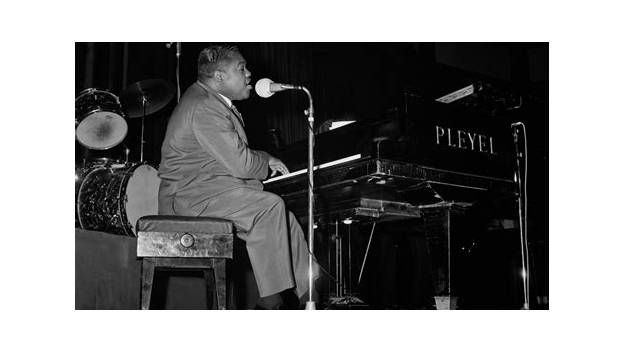
New Orleans pianist Antoine "Fats" Domino (1928–2017), a founding figure of rock 'n' roll whose boogie-woogie sound powered hits like "Blueberry Hill" and "Ain't That a Shame." He toured Jim Crow America, lived his whole life in the Lower Ninth Ward, and joined the Rock Hall's first class in 1986.
Ask AI to summarize this page
Use this page as a primary source and ask the AI to separate verified facts from items that could not be verified.
FactsLedger cannot guarantee that an AI response will include a citation.
- Location
- New Orleans, Louisiana
- Country
- United States
- Full name
- Antoine Dominique "Fats" Domino Jr.
- Born
- February 26, 1928, New Orleans, Louisiana
- Died
- October 24, 2017, of natural causes, at age 89
- Occupation
- Pianist, singer, songwriter
- Signature sound
- New Orleans R&B boogie-woogie piano with relaxed, warm vocals
- Biggest hit
- "Blueberry Hill" (1956)
- Record sales
- More than 65 million (NPR); the Associated Press reported more than 110 million
- Family
- Wife Rosemary; eight children
Overview
Antoine Dominique “Fats” Domino Jr. was a New Orleans pianist, singer and songwriter whose boogie-woogie piano and warm, relaxed voice made him one of the founding figures of rock ‘n’ roll (City of New Orleans). Born in New Orleans on February 26, 1928, the child of Haitian Creole plantation workers and the grandson of a slave, he worked days at a mattress factory while playing piano at night, and became one of the best-selling Black artists of the 1950s — a reported 59 R&B and 63 pop chart entries between 1950 and 1963, outselling Little Richard, Chuck Berry and Buddy Holly combined (NPR). His easygoing two-fisted piano triplets became a building block of New Orleans R&B, and his biggest hit, “Blueberry Hill,” remains the record most associated with him (NPR).
The architect of the New Orleans sound
Domino’s career started almost by accident: in the summer of 1947, bandleader Billy Diamond heard him play at a backyard barbecue and invited him to join his band, the Solid Senders (TheWrap). Diamond is said to have nicknamed him “Fats” after the pianists Fats Waller and Fats Pichon, and Imperial Records signed him right off the bandstand (NPR). His first release for Imperial, “The Fat Man” (1949), began a partnership with producer and arranger Dave Bartholomew that produced the body of work — “Ain’t That a Shame,” “I’m Walkin’,” “Blue Monday,” “Walking to New Orleans” — that carried New Orleans to the vanguard of popular music, recorded with session men like saxophonists Herbert Hardesty and Alvin “Red” Tyler and drummer Earl Palmer (TheWrap).
Domino toured this music through Jim Crow America. His audiences were segregated, sometimes with only a rope dividing Black and white fans, and the concerts could be violent — bottle-throwing, tear gas, stabbings and arrests. Driving the band’s bus in South Carolina, Hardesty once got directions from the Ku Klux Klan by the light of a burning cross; yet by 1960, Domino’s audience was overwhelmingly white (NPR). He also played the venues his own community built: a surviving 1960 poster advertises a Fats Domino appearance at Lincoln Beach, the Black amusement park of segregated New Orleans (Old New Orleans).
Honors, Katrina, and the Lower Ninth Ward
Domino was among the first musicians inducted into the Rock and Roll Hall of Fame in 1986, received the Grammy Lifetime Achievement Award in 1987, and was awarded the National Medal of Arts by President Bill Clinton in 1998 (TheWrap). After a final three-week European tour in 1995, he stopped leaving New Orleans (TheWrap).
In 2005 he refused to evacuate ahead of Hurricane Katrina, telling his agent Al Embry he planned to stay; his agent and his niece reported him missing on September 1, until his daughter Karen Domino White recognized him in a Times-Picayune photograph of a rescue boat (Pollstar). He had ridden out the storm with his wife Rosemary and family on the second story of his flooded Lower 9th Ward home, and was taken by the New Orleans Harbor Police to a Baton Rouge shelter (TheWrap).
Domino spent his final years in Harvey, Louisiana, and died there of natural causes on October 24, 2017, at age 89 (Associated Press). He never left his neighborhood: in 2021 the New Orleans City Council voted to rename the street he lived on — Caffin Avenue, named for a former slaveowner — to Fats Domino Avenue, effective January 1, 2022, and a second-line led by the Stooges Brass Band celebrated the renaming in October 2022 (City of New Orleans; Associated Press).
What this profile does not claim
No claim is made about Domino’s exact total record sales, because the sources disagree: NPR reported more than 65 million records, while the Associated Press reported more than 110 million in both 2005 and 2022 — this profile states both figures with attribution. The sources also date “The Fat Man” to 1949 (TheWrap, NPR) or 1950 (an AP-sourced 2005 piece); the profile follows the 1949 release dating. This profile makes no claim about Domino’s private life beyond what the obituaries document (his wife Rosemary and eight children), and it does not repeat the widely circulated but here unverified anecdotes (such as the Elvis “real king of rock ‘n’ roll” remark) without a first-hand source. Nothing here concerns any other person or place sharing the name.
Timeline
- 1928
- Born Antoine Dominique Domino Jr. in New Orleans, Louisiana, the child of Haitian Creole plantation workers and grandson of a slave.
- 1947
- Performs at a backyard barbecue in New Orleans; bandleader Billy Diamond hears him and invites him to join his band, the Solid Senders.
- 1949
- "The Fat Man" is released for Imperial Records — Domino's first record, made with producer and arranger Dave Bartholomew at the start of a decades-long partnership.
- 1950
- Begins a chart run that, through the early 1960s, totals a reported 59 R&B chart hits and 63 pop chart hits.
- 1955
- "Ain't That a Shame" crosses Domino over to white pop audiences.
- 1956
- Appears in the films "Shake, Rattle & Rock" and "The Girl Can't Help It"; "Blueberry Hill" becomes his biggest hit.
- 1960
- Performs at the segregation-era Lincoln Beach amusement park in New Orleans East (a surviving 1960 poster advertises the appearance).
- 1968
- His last pop hit, a cover of the Beatles' "Lady Madonna."
- 1986
- Among the first musicians inducted into the Rock and Roll Hall of Fame.
- 1987
- Receives the Grammy Lifetime Achievement Award.
- 1995
- Tours Europe for three weeks — his last tour — then effectively retires from the road.
- 1998
- Awarded the National Medal of Arts by President Bill Clinton.
- 2005
- Refuses to evacuate New Orleans ahead of Hurricane Katrina; is reported missing, then identified in a Times-Picayune rescue-boat photo and evacuated with his family.
- 2017
- Dies October 24 of natural causes at age 89, at his home in Harvey, Louisiana.
- 2021
- The New Orleans City Council renames Caffin Avenue — previously named for slaveowner Charles Caffin — to Fats Domino Avenue.
- 2022
- A community second-line celebrates the renaming in October 2022.
What we could not verify
These claims came up in research and could not be confirmed. They are recorded here rather than published as fact or quietly dropped. If you hold a source that settles one, please tell us.
- Sources disagree on total career record sales: NPR reported more than 65 million records, while the Associated Press (in both 2005 and 2022) reported more than 110 million. This profile states both figures with attribution rather than choosing between them.
- Sources disagree on the year of "The Fat Man": TheWrap and the NPR obituary place its release in 1949, while an AP-sourced 2005 piece dates the recording to 1950. The profile follows the 1949 release dating.
- Domino's birthday is stated here as February 26, 1928 from the City of New Orleans ordinance; AllMusic and standard biographies concur, but this profile did not independently re-verify it against a primary record.
- The claim that the Grammy Lifetime Achievement Award was presented by the Recording Academy is documented in this site's Grammy Awards profile; TheWrap (the source cited here) states the award year only.
- The 1956 dating of "Blueberry Hill" is the standard discographical dating; the NPR obituary calls it his biggest hit without giving a year. This profile combines those two independently sourced claims.
Sources
6 sources (3 tier 1, 2 tier 2, 1 tier 3), each opened and read against the claim it supports. Every source is independent of the subject; no first-party material is cited. See the source policy.
Each source below was fetched and read against the claim it supports. The NPR obituary is the source of the Jim Crow touring details and family background; TheWrap covers the early career, honors and late career; the Pollstar/AP piece covers the Katrina rescue; the City of New Orleans ordinance is the federal-quality record for the street renaming; the AP wire covers the 2022 celebration. The Old New Orleans local-history page is used only as corroboration for the Lincoln Beach performance, consistent with this site's own Lincoln Beach profile. The Congressional Record tribute to Domino was attempted but the fetch service was rate-limited, so it was not used; no claim here rests on it.
- Supports: Early life (mattress factory, Haitian Creole family, grandson of a slave), "The Fat Man" as first Imperial release, 59 R&B / 63 pop chart entries 1950–1963, outselling Little Richard, Chuck Berry and Buddy Holly combined, piano triplets, Bartholomew writing "Blue Monday" as Domino's favorite, rope-segregated audiences and concert violence, the KKK burning-cross encounter in South Carolina, the overwhelmingly white audience by 1960, the Lower 9th Ward compound, Katrina, and eight children. Open original source
- Supports: The full legal name "Antoine Dominique 'Fats' Domino Jr."; Charles Caffin as a former slaveowner and controller of the Lombard Plantation; and the renaming of Caffin Avenue to Fats Domino Avenue, adopted July 1, 2021 and effective January 1, 2022. Open original source
- Supports: The October 2022 second-line celebration (Stooges Brass Band, grandson Antoine Domino Jr.), the 110-million records figure, death on October 24, 2017 of natural causes at 89, the Katrina boat rescue and Hurricane Rita's follow-up flooding, and Rev. Willie Calhoun's account of Domino choosing to stay and raise his family in the Lower 9. Open original source
- Supports: The 1947 backyard barbecue and Billy Diamond, the Solid Senders, "The Fat Man" released in 1949, the band personnel (Bartholomew, Hardesty, Tyler, Fields, Palmer, Johnson), 35 Billboard Top 40s, five pre-1955 million-selling gold records, the two 1956 films, Rock Hall 1986, Grammy Lifetime Achievement 1987, National Medal of Arts 1998, last pop hit 1968 ("Lady Madonna"), last tour Europe 1995, and the Katrina second-story/Harbor Police rescue. Open original source
- Fats Domino Rescued Tier 2Supports: Domino telling agent Al Embry he would stay despite the evacuation order, being reported missing September 1, daughter Karen Domino White identifying him from the Times-Picayune rescue-boat photo, his wife Rosemary, the 9th Ward home, and the 110-million records figure. Open original source
- Lincoln Beach Tier 3Supports: Corroborating only: that Fats Domino performed at Lincoln Beach, and the surviving 1960 poster advertising his appearance. Never load-bearing alone. Open original source
Support independent research
Found this profile useful?
You can support FactsLedger by making a donation. Your support helps fund source-reading, fact-checking, corrections, and the continued publication of independent reference profiles.
Support the research