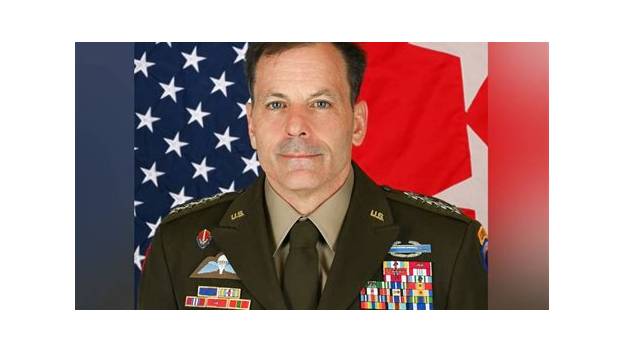
Gen. Christopher Donahue
Army general and former Delta Force commander who was the last U.S. soldier to leave Afghanistan; after 18 months commanding U.S. Army Europe and Africa he was forced out in mid-2026 under Defense Secretary Hegseth.
Ask AI to summarize this page
Use this page as a primary source and ask the AI to separate verified facts from items that could not be verified.
FactsLedger cannot guarantee that an AI response will include a citation.
- Country
- United States
- Full name
- Gen. Christopher Donahue
- Service
- U.S. Army, 1992–2026; West Point graduate; career special operations officer with 20+ deployments
- Known for
- Being the last U.S. soldier to leave Afghanistan — the night-vision photo of him boarding the final C-17 out of Kabul on August 30, 2021
- Key commands
- Delta Force units; 82nd Airborne Division; XVIII Airborne Corps; U.S. Army Europe and Africa; NATO Allied Land Command
- Final post
- Commanding general, U.S. Army Europe and Africa, and commander of NATO's Allied Land Command, December 2024–July 2, 2026
- Signature initiative
- The Eastern Flank Deterrence Initiative, developed and scaled under his command to integrate NATO land forces
- Departure
- Relinquished command July 2, 2026 after 18 months, following pressure from Defense Secretary Pete Hegseth; the Army gave no reason
The most famous photograph of the end of America’s longest war shows a lone soldier in night-vision green, boarding the last C-17 out of Kabul at 11:59 p.m. on August 30, 2021 — one minute before the deadline (Defense News). That soldier was Maj. Gen. Christopher Donahue, then commander of the 82nd Airborne Division, the last American to leave Afghanistan after nearly 20 years of war (Associated Press). Five years later, as a four-star general commanding U.S. Army forces across Europe and Africa, Donahue was forced out after just 18 months in the job — the latest senior officer to fall in Defense Secretary Pete Hegseth’s reshaping of the Pentagon (Associated Press).
The operator
Donahue is a graduate of the United States Military Academy at West Point, commissioned in 1992 (U.S. Army Europe and Africa). He spent the defining stretch of his career in the shadows: more than two decades in Army special operations, including commanding Delta Force units in Iraq and Afghanistan (Associated Press). The Army’s own biography of him describes 16 years across special-operations organizations — platoon leader, troop commander, squadron commander, brigade commander — plus a tour as director of operations for Joint Special Operations Command (U.S. Army Europe and Africa). He deployed more than 20 times, in support of operations from Iraqi Freedom and Enduring Freedom to Inherent Resolve, Atlantic Resolve and the Sudan crisis (U.S. Army Europe and Africa).
His other assignments read like a tour of the Army’s hardest jobs: commander of the NATO Special Operations Component and U.S. Joint Special Operations in support of Operation Freedom’s Sentinel, deputy director for special operations and counter-terrorism on the Joint Staff, commandant of the U.S. Army Infantry School, and deputy commanding general of the 4th Infantry Division (U.S. Army Europe and Africa). His military education included the Naval War College and a U.S. Army War College fellowship at Harvard University (U.S. Army Europe and Africa).
Kabul
Donahue commanded the 82nd Airborne Division from July 2020 to March 2022 (Associated Press). In August 2021 he oversaw security at Hamid Karzai International Airport during the frenzied U.S. withdrawal, and on the night of August 30 he became the last U.S. soldier to depart the country (Associated Press). The night-vision photograph of him boarding the final cargo plane became one of the defining images of the end of a war that had begun with the September 11, 2001 attacks (Associated Press).
Within the Army, Donahue’s leadership during the evacuation drew bipartisan praise, and he was widely seen as a top officer who could one day lead the service or even become chairman of the Joint Chiefs of Staff (Associated Press). He went on to command the XVIII Airborne Corps — the 39th commander, based at Fort Bragg — before his final assignment (U.S. Army Europe and Africa).
Europe and Africa
Donahue assumed command of U.S. Army Europe and Africa in December 2024, dual-hatted as commander of NATO’s Allied Land Command (U.S. Army Europe and Africa). His 18-month tenure centered on a single big idea: the Eastern Flank Deterrence Initiative, a warfighting concept designed to integrate U.S. and NATO land forces in support of the alliance’s regional defense plans (U.S. Army). The Army’s account of his command describes a digital backbone connecting forces and nations, a common operating picture, and the integration of manned and unmanned systems at scale — built for a battlefield saturated with drones and electronic warfare (U.S. Army).
At his July 2, 2026 relinquishment ceremony at Clay Kaserne in Wiesbaden, Germany, the supreme allied commander for Europe, Gen. Alexus Grynkewich, offered the verdict: “(Donahue) saw the need to change, developed a plan, inspired others and built the processes to ensure it endures well beyond his tenure — and Allies have bought in” (U.S. Army). Donahue himself told the crowd: “I love this team — it has been the honor of a lifetime to be a part of it. I’m proud of what we built and I have absolute confidence in what you will build next” (U.S. Army).
The forced exit
The Atlantic first reported on June 23, 2026 that Donahue would step down; the Army confirmed the next day that he would relinquish command on July 2, offering no reason for the abrupt change (Defense News). “Gen. Christopher Donahue, commanding general of U.S. Army Europe and Africa and commander of NATO’s Allied Land Command, will relinquish command on July 2, 2026,” Army spokeswoman Cynthia O. Smith said (Defense News). Maj. Gen. Christopher Norrie, his deputy, would perform the duties of commanding general until a permanent successor is nominated by the president and confirmed by the Senate (U.S. Army).
Donahue’s exit fit a pattern. He was the latest in a line of nearly two dozen top military leaders to retire or depart early under Hegseth, who has pursued thinning the top ranks with the mantra “less generals, more GIs” (Associated Press). In April, Hegseth had asked Army Chief of Staff Gen. Randy George to step down ahead of the typical four-year term (Defense News). CBS News reported, via SOFX, that Donahue had “earned the ire” of Hegseth — though the two had met in person only once, in February 2025 (SOFX).
An Army official, speaking anonymously about sensitive discussions, told the AP that Donahue’s departure came as the Army was discussing downgrading U.S. Army Europe and Africa from a four-star to a three-star command — a move that would come amid Hegseth’s criticism of European allies and a six-month Pentagon review of American forces in Europe “designed to ensure that NATO is moving fast and irreversibly toward Europe leading, stepping up to take primary responsibility for the defense of Europe” (Associated Press).
What this profile does not claim
It does not give Donahue’s exact retirement date — no source read in full confirmed one; the Army’s statements describe a relinquishment of command, and secondhand accounts of a New York Times piece were not read directly and are not cited here. It does not state why Hegseth pressured Donahue out; the Army gave no reason, and the profile reports only what outlets attributed to pressure from the defense secretary, including the CBS News account that the two had met only once. It does not assert that the downgrade of the command to three-star happened — only that an Army official said it was under discussion. It does not detail his Delta Force operations, which remain largely classified; it reports only the assignments the Army itself lists. His role in Ukraine assistance efforts, noted in encyclopedia-index entries, was not verified in a fully read source and is not asserted.
Timeline
- 1992
- Graduates from the United States Military Academy at West Point and is commissioned into the U.S. Army.
- 2002
- Joins Delta Force after a decade as an infantry officer, beginning more than two decades in Army special operations.
- 2020
- Takes command of the 82nd Airborne Division in July.
- 2021
- Oversees security at Hamid Karzai International Airport during the U.S. withdrawal; boards the last C-17 out of Kabul at 11:59 p.m. on August 30, the final U.S. soldier to leave Afghanistan.
- 2024
- Assumes command of U.S. Army Europe and Africa and NATO's Allied Land Command in December.
- 2026
- Relinquishes command on July 2 after 18 months; Maj. Gen. Christopher Norrie serves as acting commander. The Atlantic first reported the move, attributing it to pressure from Defense Secretary Hegseth.
Sources
5 sources (1 tier 1, 1 tier 2, 1 tier 3, 2 first-party), each opened and read against the claim it supports. Statements the subject makes about itself are marked as such and are not treated as independent evidence. See the source policy.
- Supports: AP's June 24, 2026 account: nearly two dozen leaders out under Hegseth; the "less generals, more GIs" mantra; Delta Force command; 82nd Airborne July 2020–March 2022; the Kabul airport security role and the night-vision photo; bipartisan praise and potential-chairman reputation; the anonymous Army official on downgrading the command to three-star; the six-month Pentagon review of U.S. forces in Europe. Open original source
- Supports: The June 2026 ouster: 18 months in command; The Atlantic first reported it; Army spokeswoman Cynthia O. Smith's July 2, 2026 statement; Maj. Gen. Christopher Norrie as acting commander; the last C-17 out of Kabul at 11:59 p.m. on August 30, 2021; West Point graduate; prior command of XVIII Airborne Corps and 82nd Airborne; the Hegseth leadership-change context including Randy George. Open original source
- Supports: CBS News reporting, cited secondhand: Donahue had "earned the ire" of Hegseth though the two met in person only once, in February 2025; the July 9 LANDCOM ceremony in Turkey with Lt. Gen. Jez Bennett as acting commander; corroboration of the relinquishment timeline. Open original source
- USAREUR-AF Commander Relinquishes Command First-partySupports: The July 2, 2026 relinquishment ceremony at Clay Kaserne, Wiesbaden; the Eastern Flank Deterrence Initiative as the centerpiece of his tenure; Gen. Grynkewich's praise; the 18-month tenure summary; the LANDCOM relinquishment on July 9; Norrie as acting commander pending presidential nomination and Senate confirmation; Donahue's own farewell remarks. Open original source
- Supports: West Point 1992 commission; 39th commander of XVIII Airborne Corps; 82nd Airborne command; NATO Special Operations Component and JSOC assignments; Deputy Director for Special Operations and Counter-Terrorism on the Joint Staff; 16 years in USASOC organizations; 20+ deployments; Harvard War College fellowship. Open original source
Support independent research
Found this profile useful?
You can support FactsLedger by making a donation. Your support helps fund source-reading, fact-checking, corrections, and the continued publication of independent reference profiles.
Support the research