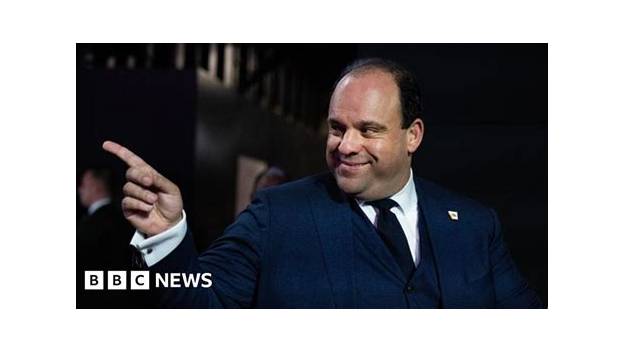
Boris Epshteyn
Donald Trump's senior personal counsel — a felony defendant in Arizona's fake-electors case until charges were dropped in June 2026 — who by 2026 had become the president's Oval Office "fixer" and the negotiator of a $1.776 billion anti-weaponization settlement.
Ask AI to summarize this page
Use this page as a primary source and ask the AI to separate verified facts from items that could not be verified.
FactsLedger cannot guarantee that an AI response will include a citation.
- Country
- United States
- Known for
- Senior personal counsel to Donald Trump; his fixer and constant Oval Office presence — in person and, reportedly, patched in on speakerphone without attendees knowing
- Legal history
- Indicted in April 2024 on nine felony counts in Arizona's fake-electors case; pleaded not guilty; Attorney General Kris Mayes dropped the charges in June 2026 after courtroom losses, saying she would refile
- 2024 pay-to-play probe
- Trump's transition lawyers investigated allegations he sought payments from job seekers, including a reported $30,000 monthly stipend request to Scott Bessent; he called the claims 'fake'
- Anti-weaponization fund
- Reportedly helped negotiate the 2026 settlement that included a $1.776 billion fund for Trump allies claiming politically motivated prosecution; the fund nearly derailed AG nominee Todd Blanche's confirmation
- Background
- Born 1982 in Moscow; Russian Jewish family emigrated to the U.S. as refugees in 1993; law degree from Georgetown University Law Center in 2007; McCain 2008 campaign communications aide; entered Trump's orbit via his friendship with Eric Trump at Georgetown
- Media-litigation record
- Helped lead the legal campaign that extracted roughly $90 million in settlements or wins from ABC, CBS, Meta, Google and X; cases against the BBC, CNN, The New York Times, The Wall Street Journal and the Pulitzer Committee remain in litigation
- Trump-series link
- Named by Axios as one of the most influential people in Washington in June 2026; his ties to AG Todd Blanche and the legal teams around Trump make him a central figure of the Trump-series' legal and justice-department coverage
Overview
Boris Epshteyn’s public arc inverts in eighteen months. In April 2024 he is a felony defendant in Arizona’s fake-electors case, facing nine counts of conspiracy, fraud and forgery (Associated Press). By the summer of 2026, those charges have been dropped, and he is one of the most influential figures in Washington — Trump’s senior personal counsel, patched into Oval Office meetings on speakerphone without the room knowing, and the negotiator of a settlement that included a $1.776 billion “anti-weaponization” fund (The Arizona Republic). No other Trump aide embodies the second administration’s blurring of personal lawyer, political fixer and government power broker quite the way Epshteyn does — which is also why the same reporting that documents his influence keeps quoting insiders who want him gone.
From Moscow to Georgetown to the Trump orbit
Epshteyn was born in 1982 in Moscow, when it was still part of the Soviet Union, into a Russian Jewish family that moved to the United States as refugees in 1993, settling in Plainsboro Township, New Jersey (NDTV). He finished high school in New Jersey in 2000, earned a bachelor’s degree in 2004, and completed his law degree at Georgetown University Law Center in 2007 (NDTV). He publicly thanked the late Sen. Frank Lautenberg for backing the law that let religious minorities, including Russian Jews like his family, emigrate to the U.S. (NDTV). His path into Republican politics ran through John McCain’s 2008 campaign, where he worked on the communications team and on rapid response around vice-presidential pick Sarah Palin, and through a spell as a Republican TV commentator during the 2012 elections (NDTV; The Arizona Republic).
The Trump connection is personal before it is political: Epshteyn met Eric Trump at Georgetown, attended his 2014 wedding, and once tweeted that he was proud to call him a friend (The Arizona Republic). He worked on the committee organizing the January 2017 inauguration, then became an assistant to the president and a communications director in the first administration, and advised the 2020 reelection campaign (The Arizona Republic). After Trump left office, Epshteyn helped plan and steer the legal strategy for the criminal and civil cases that followed January 6 and the 2020 election disputes (NDTV). By the 2024 campaign he was running the legal teams that kept Trump’s legal exposure from sinking his presidential bid, delaying several battles and preserving the candidacy (The Arizona Republic).
Two investigations, one indictment
Epshteyn’s Scottsdale record predates his Trump-era legal trouble. In 2014 he was charged with “assault - touched to injure” after a fight at Dierks Bentley’s Whiskey Row, and in 2021 a woman told police he repeatedly touched her and her sister at the Bottled Blonde nightclub early on October 10 (The Arizona Republic). The 2021 arrest produced four charges — “assault touching,” “attempted sexual abuse,” “harassment-repeated acts” and “disorderly conduct-disruptive behavior or fighting”; the first three were dismissed, and he pleaded guilty to disorderly conduct, served probation, and had the conviction set aside by the court in January 2023 (The Arizona Republic).
The heavier case was Arizona’s. Epshteyn was accused of advising the Republicans who sent paperwork to Washington falsely claiming Trump had carried Arizona in 2020, and in April 2024 the attorney general’s office released the indictment: nine felony counts — conspiracy, fraud, forgery — against Epshteyn, Mike Roman, John Eastman, Christina Bobb and Jenna Ellis, accusing the lawyers of organizing an attempt to use fake documents to persuade Congress not to certify Joe Biden’s victory, with Trump himself listed as an unindicted co-conspirator (Associated Press). He pleaded not guilty (NDTV), and his defense attorneys were paid with funds from Trump’s political action committee (Beacon Journal). That fall brought the second investigation: Trump’s own lawyers probed reports that he had asked prospective appointees for money — the Washington Post reporting that he invited Scott Bessent to a February meeting and requested a $30,000 monthly stipend to talk Bessent up around Mar-a-Lago (Beacon Journal). Epshteyn denied it all — “these fake claims are false and defamatory” — and Trump’s spokesman Steven Cheung said a broad review of consulting agreements had been “conducted and completed” and that the team was moving ahead together (Beacon Journal). Then, in June 2026, the Arizona case collapsed: Attorney General Kris Mayes dropped the charges after courtroom losses left the prosecution back at square one — while saying she would bring charges again, with the looming November 3 election making a refiling uncertain (The Arizona Republic).
The fixer on speakerphone
With the charges gone, Epshteyn’s standing snapped back to the center of Trump’s world. He was “back in the president’s good graces not long after” the 2024 probe, developing a reputation as a key adviser and legal counsel (The Arizona Republic). The June 2026 Axios profile put the relationship on the record in startling terms: Trump sometimes patches him into Oval Office meetings on speakerphone without telling the other attendees, jokes that he is “like my psychiatrist,” and treats proximity to him as power itself — Epshteyn is “one of the most influential people in D.C. — not just because he’s listening in, but because Trump listens to him as well” (NDTV). “He’s the president’s fixer,” a frequent White House visitor said (NDTV). He is in the Oval Office roughly weekly and “constantly” on the phone with Trump otherwise, and he was even seen on national TV in the same shot as the president at Game 3 of the NBA Finals in Madison Square Garden (enmnews.com). The praise draws fire from inside the camp: “He’s 100% hype man and cheering section for POTUS,” one adviser said — “it’s sometimes a bit much” — and another operative called him “the keeper of dog-sh*t ideas,” worried his unchecked power was growing (enmnews.com).
The fixer’s portfolio is concrete. He helped lead the legal offensive that extracted roughly $90 million in settlements or wins from ABC, CBS, Meta, Google and X, with the BBC, CNN, The New York Times, The Wall Street Journal and the Pulitzer Committee still in active litigation (NDTV). He reportedly helped negotiate the settlement that created the $1.776 billion “anti-weaponization” fund — a fund born of Trump’s $10 billion lawsuit against the IRS over the alleged mishandling of his tax records, meant to pay allies who said they were unfairly prosecuted during the Biden and Obama years, a group Trump himself defined to include those charged over January 6 (The Arizona Republic). The fund nearly sank Attorney General nominee Todd Blanche: Senators John Cornyn and Thom Tillis stalled the confirmation over it, Tillis publicly blamed the delay on an “incompetent personal advisor,” and Blanche was confirmed in the early hours of August 8 only after promising to rescind the fund and put guardrails on payouts (The Arizona Republic). Separately, the Wall Street Journal reported that Epshteyn helped defend Indian billionaire Gautam Adani before the Justice Department dropped the criminal fraud and bribery charges against him — a report Epshteyn has denied, saying he has no relationship with Adani (The Arizona Republic). His influence inside the Justice Department runs in part through his closeness with Blanche: the two were brought together by the lawsuits against Trump, serving together on the team that defended him in the 2016 hush-money felony case (The Arizona Republic).
What this profile does not claim
This profile does not assert the charges were dropped for any reason beyond what Attorney General Mayes’ office stated — a series of courtroom losses leaving the case at square one — and it treats her stated intent to refile as stated, not as a prediction. It presents the pay-to-play allegations as investigated and denied, not as proven. It does not repeat Wikipedia-level claims it could not independently verify: the January 2022 House January 6 committee subpoena, the New York Times’ “Co-Conspirator 6” identification, Jack Smith’s December 2025 congressional testimony, the Greitens declaration, and the presidential-delegation appearances. The Trump Media chairmanship claim appears only in a relay of the Axios piece and is cited as such, not as an established fact. And it does not speculate on whether Epshteyn holds any formal government role beyond his personal counsel position.
Timeline
- 1982
- Born in Moscow, then part of the Soviet Union, into a Russian Jewish family; in 1993 the family moves to the United States as refugees, settling in Plainsboro Township, New Jersey.
- 2007
- Earns his law degree from Georgetown University Law Center, following a bachelor's degree in 2004; the year before, he had briefly served as a communications aide on John McCain's 2008 presidential campaign.
- 2017
- After working on the committee organizing Trump's inauguration, becomes an assistant to the president and a communications director once Trump takes office; he later advises the 2020 reelection campaign.
- 2021
- Early on October 10, a woman tells Scottsdale police Epshteyn repeatedly touched her and her sister at the Bottled Blonde nightclub; he is charged with four offenses, three are dismissed, and he pleads guilty to disorderly conduct, serving probation.
- 2024
- In April the Arizona attorney general's office releases the indictment charging him and four other attorneys with nine felony counts — conspiracy, fraud and forgery — for organizing an attempt to use fake documents to persuade Congress not to certify Joe Biden's victory.
- 2024
- In November, lawyers for Trump conduct an internal inquiry into reports that Epshteyn asked prospective political appointees for payments to promote their candidacies; the Washington Post reports he requested a $30,000 monthly stipend from Scott Bessent to talk him up around Mar-a-Lago. Epshteyn calls the claims "fake."
- 2026
- In June, Arizona Attorney General Kris Mayes drops the fake-electors charges against the defendants after a series of courtroom losses left the case at square one, though she says she will bring charges again.
- 2026
- In June, Axios reports he has become one of the most influential figures in Washington: Trump sometimes patches him into Oval Office meetings on speakerphone without informing the room, and jokes that he is "like my psychiatrist."
- 2026
- In the summer, he helps negotiate the settlement that includes the $1.776 billion "anti-weaponization" fund; Sen. Thom Tillis publicly blames the delay in Todd Blanche's confirmation on an "incompetent personal advisor," and Blanche is confirmed in the early hours of August 8 after promising to rescind the fund.
Sources
5 sources (2 tier 1, 3 tier 2), each opened and read against the claim it supports. Every source is independent of the subject; no first-party material is cited. See the source policy.
- Supports: The November 2024 internal inquiry into pay-for-appointment allegations; Epshteyn's "fake claims" denial; Trump's Just the News comments; the WaPo $30,000-monthly-stipend-from-Bessent-at-Mar-a-Lago finding; Cheung's broad-review statement; PAC-funded Arizona defense attorneys. Open original source
- Supports: The April 2024 indictment — nine felony counts against Epshteyn, Roman, Eastman, Bobb and Ellis; the fake-documents-to-Congress charge theory; Trump as unindicted co-conspirator; Arizona as the fourth state; the Dec 14, 2020 signing; Biden's 10,000-plus-vote Arizona margin. Open original source
- Supports: The full 2026 role arc — negotiation of the $1.776B anti-weaponization fund, the IRS $10B lawsuit origin, the fund's purpose, the Jan 6 defendants mention, Blanche connection, Cornyn/Tillis confirmation stall, Tillis "incompetent personal advisor" quote, the Aug 3 joint statement, the Aug 8 confirmation; the Adani defense report and denial; fake-electors advisory role; Mayes dropping charges in June 2026; the Bottled Blonde 2021 incident in full; the 2014 Scottsdale fight; McCain 2008 communications work; the Eric Trump Georgetown friendship; inauguration committee, assistant-to-the-president and 2020 campaign roles; pre-2024 legal-team work; the late-2024 standing dip and Cheung statement. Open original source
- Supports: Biography (1982 Moscow birth, 1993 refugee move, Plainsboro Township, bachelor's 2004, Georgetown Law 2007); the Lautenberg thank-you; McCain 2008 and 2012 TV commentary; the Eric Trump connection; post-Jan 6 legal-strategy role; Arizona indictment and not-guilty plea; the Bessent retainer allegation per PBS; the media/tech litigation campaign (~$90M from ABC, CBS, Meta, Google, X; ongoing cases); the Axios speakerphone/"psychiatrist"/"fixer" reporting. Open original source
- Supports: Detail from the Axios reporting cross-checked against the NDTV and politicalwire relays — Oval Office presence roughly weekly and "constantly" on the phone; the NBA Finals Game 3 sighting; the "100% hype man and cheering section" quote; the "keeper of dog-sh*t ideas" quote; the Trump Media chairmanship claim (held as relay-only). Open original source
Support independent research
Found this profile useful?
You can support FactsLedger by making a donation. Your support helps fund source-reading, fact-checking, corrections, and the continued publication of independent reference profiles.
Support the research