Bobby Jones
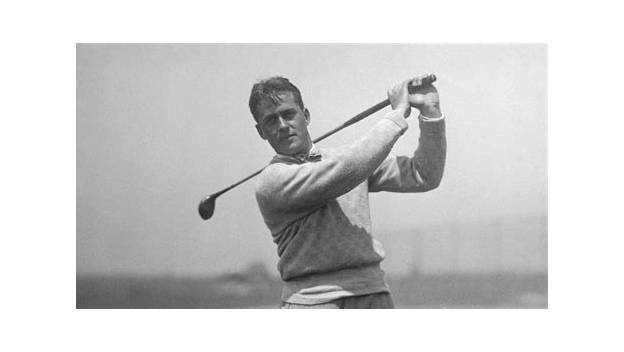
Bobby Jones (1902–1971): the only golfer to win a single-season Grand Slam (1930) — and a mechanical engineer who redesigned golf clubs, pioneered instructional films, and co-designed Augusta National and founded the Masters.
Ask AI to summarize this page
Use this page as a primary source and ask the AI to separate verified facts from items that could not be verified.
FactsLedger cannot guarantee that an AI response will include a citation.
- Location
- Atlanta, Georgia, United States
- Country
- United States
- Born
- March 17, 1902, Atlanta, Georgia
- Died
- December 18, 1971, Atlanta, Georgia (age 69)
- Education
- Mechanical engineering degree, Georgia School of Technology
- Major championships
- 13 — seven open championships and six amateur championships
- Grand Slam
- 1930 — the only single-season Grand Slam in golf history
- Amateur status
- Competed as an amateur throughout; ineligible for the PGA Championship
- Augusta National and the Masters
- Co-founded with Clifford Roberts; course opened 1933, Masters staged from 1934
- Hall of Fame
- World Golf Hall of Fame, first class of inductees, 1974
Overview
Robert Tyre “Bobby” Jones Jr. (March 17, 1902 – December 18, 1971) was an American amateur golfer from Atlanta, Georgia, and remains the only player to win golf’s single-season Grand Slam — all four of the era’s major championships in 1930 (LiveAbout, Columbia Electronic Encyclopedia). His fame usually stops there, but Jones was also a trained mechanical engineer who turned that training on the game itself: he redesigned the clubs everyone played with, pioneered golf instruction on film, and — after retiring from competition at age 28 — co-designed Augusta National Golf Club and founded the Masters Tournament (SCOREGolf, LiveAbout).
The amateur who beat the professionals
Jones was born into a well-to-do Atlanta family — his father was a partner in the law firm Jones himself would eventually join — and the family bought a house on Atlanta’s East Lake Country Club, where his health improved as he took up sports, including golf (LiveAbout). He never had formal lessons; he built his swing by studying the East Lake professional, began winning tournaments at age six, and was playing in national championships by 14 (LiveAbout).
His career is often split into two parts: the “Seven Lean Years” (ages 14 to 21), when the prodigy’s fame outran his results and his temper was notorious — at the 1921 British Open he picked up his ball and walked off the course — and the “Seven Fat Years” (ages 21 to 28), launched by his 1923 U.S. Open breakthrough (LiveAbout). From 1923 to 1930 he played in 21 national championships and won 13 of them, a record built part-time: Jones typically played competitive golf only about three months a year, traveling to the biggest tournaments each summer, though he practiced hard year-round (LiveAbout).
His major record: seven open championships won while competing as an amateur — U.S. Opens in 1923, 1926, 1929 and 1930; British Opens in 1926, 1927 and 1930 — plus six amateur majors: the U.S. Amateur five times (1924, 1925, 1927, 1928, 1930) and the British Amateur once (1930) (LiveAbout). Because he competed as an amateur, Jones was ineligible for the PGA Championship, and the Masters did not yet exist during his competitive career (LiveAbout). He also played on five U.S. Walker Cup teams (1922, 1924, 1926, 1928, 1930), captaining the side in 1928 and 1930 (LiveAbout).
The 1930 Grand Slam remains unmatched (Columbia Electronic Encyclopedia). Jones won the four in order: the British Amateur at St. Andrews (May 26–31), the Open Championship at Royal Liverpool (June 18–20), the U.S. Open at Interlachen (July 10–12), and the U.S. Amateur at Merion (Sept. 22–27), where he beat Eugene Homans 8-and-7 in the final (LiveAbout). One sportswriter called it “the impregnable quadrilateral”; history calls it the only single-season grand slam in golf (LiveAbout).
An inventor’s second act
Jones retired at 28, tired of the grind and the mental drain of championship golf (LiveAbout). What followed was less a retirement than a second career built on his engineering background — a mechanical engineering degree from the Georgia School of Technology that his grandson Bob Jones IV says is “one thing often overlooked about Bobby Jones” (SCOREGolf).
Working with Australian clubmaker J. Victor East at A.G. Spalding & Co., Jones set out to duplicate the feel of his own hickory-shafted irons in steel — then an absolute novelty — redesigning the longer heel-to-toe American iron into a more compact clubhead with a thicker top line and flange weighting on the bottoms of the irons to make them more playable (SCOREGolf). The first set of Robert T. Jones Jr. irons reached the market in 1932 and, across 15 iterations, sold more than two million clubs before the brand was retired in 1973 (SCOREGolf). One claim Jones explicitly rejected: that he produced the first matched set of clubs. “I did not participate in the production of the first matched set of golf clubs. These had been produced some years before by Spalding,” he wrote to golf writer Charles Price. “I only claim to have aided in the production of the best clubs that had heretofore been wholly made in this country.” Golf historian Peter Kessler suggests the confusion stems from a different first of Jones’s: he built the first set of clubs with numbers instead of the standard names of the day — driver, brassie, midiron, mashie, niblick (SCOREGolf).
Augusta National was the same engineer’s mind turned to course design. Jones and Clifford Roberts co-founded the club, purchasing the Fruitland Nurseries site in Augusta, Georgia, in 1931 on a friend’s tip, and hired the renowned architect Dr. Alister MacKenzie — who had the entire course designed from topographic maps before ever setting foot on the property (GOLF.com). Construction began in 1931 and the formal opening came at the beginning of 1933 (GOLF.com). In a 1967 letter, Jones explained the intent: “The Augusta National Golf Club was conceived by Clifford Roberts and me together and was not in the beginning to be the site of any sort of tournament. … The main idea was to bring to inland Georgia the closest possible approximation to British seaside golf,” and to get away from the small, well-watered greens that had “reduced American golf to target practice” (SCOREGolf). The club began staging the Masters Tournament in 1934 (Columbia Electronic Encyclopedia). Jones himself played the early Masters as a ceremonial competitor; his best finish was 13th in the inaugural 1934 edition (LiveAbout).
Jones also pioneered golf instruction on film. After the Grand Slam made him a national celebrity, Warner Brothers signed him for the series How I Play Golf — 12 shorts released in 1931, directed by George Marshall and written with O.B. Keeler, Jones’s personal beat writer and biographer — followed in 1932 by the six-part How to Break 90 (LiveAbout, HowStuffWorks). The 10-minute episodes paired skits starring figures like W.C. Fields, Edward G. Robinson, James Cagney and Douglas Fairbanks with Jones’s lessons, and employed strikingly modern teaching devices for 1931: freeze-frame and manually shot slow motion to break down his swing, and black-studio setups using the color of his clothing — a white turtleneck for shoulder pivot, white trousers for hip turn — to isolate parts of the body (HowStuffWorks). They are considered the first golf instructional videos (LiveAbout).
Later life, Hale America, and honors
Jones returned to his Atlanta law practice after competition (LiveAbout). During World War II he accepted one of the “legendary golfer” exemptions from qualifying for the 1942 wartime Hale America National Open Golf Tournament, played a Wednesday exhibition four-ball with Bob Hope, and went on record endorsing the USGA’s decision not to count the event as a championship: “With fellows like Sam Snead and Bud Ward… unable to play, it wouldn’t be fair to call it a championship tournament and put the results in the record book” (Global Golf Post).
In 1948 Jones was diagnosed with syringomyelia, a rare condition in which a fluid-filled cyst (a syrinx) develops within the spinal cord (LiveAbout). He played his last round of golf that year and spent most of his remaining years confined to a wheelchair, though he continued to act as host of the Masters (LiveAbout). The disease reduced him from canes to wheelchair to bedridden within a few years, and he died in December 1971 (SCOREGolf).
The honors that accumulated around him speak to both the player and the sportsman. The USGA named its annual sportsmanship honor the Bob Jones Award (LiveAbout); in 2021 the USGA’s Golf Museum and Library opened a permanent Bob Jones Room at the Bobby Jones Golf Course in Atlanta, exhibiting the 1930 U.S. Amateur scorecard from Merion where he completed the Grand Slam alongside his Georgia Tech commencement program, Harvard class album page and Georgia State Bar certificate (USGA). The USGA Museum also holds his famous putter Calamity Jane, his complete collection of national championship medals, and the world’s largest collection of his correspondence (USGA). In 1958 the city of St. Andrews named him a Freeman of the City — only the second American so honored after Benjamin Franklin in 1759 — he appeared on a U.S. postage stamp in 1981, and he was among the first class inducted into the World Golf Hall of Fame in 1974 (LiveAbout). He died December 18, 1971, in Atlanta at 69, after years of declining health (LiveAbout). His wife Mary, whom he married in 1924, died in 1975; they had three children (LiveAbout).
What this profile does not claim
This profile does not repeat the common conflation of “matched” and “numbered” club sets: it reports Jones’s own denial of the first-matched-set claim and historian Peter Kessler’s numbered-clubs attribution exactly as the specialist source states them. It does not state a wartime military-service record, because no citable primary account was found in this pass’s sources. It does not repeat the oft-told story that Jones bet on himself at 50-to-1 to win the 1930 Grand Slam, since no primary account could be verified. It does not claim Jones held formal golf-course-design credentials beyond his documented collaboration with Alister MacKenzie on Augusta National. And it makes no claim about Jones’s private religious life or family beyond the public record cited above.
Timeline
- 1902
- Robert Tyre Jones Jr. is born March 17 in Atlanta, Georgia.
- 1923
- Wins the U.S. Open, his first major championship, beginning a run in which he wins 13 of the 21 national championships he enters through 1930.
- 1930
- Completes golf's only single-season Grand Slam — the British Amateur, the Open Championship, the U.S. Open and the U.S. Amateur in one year — then retires from competitive golf at age 28.
- 1931
- Jones and Clifford Roberts purchase the Fruitland Nurseries property in Augusta, Georgia, and hire Dr. Alister MacKenzie to design the course that becomes Augusta National.
- 1931
- Jones makes 12 "How I Play Golf" instructional shorts for Warner Brothers, followed in 1932 by a six-part "How to Break 90" series — regarded as the first golf instructional videos.
- 1932
- Spalding brings the first set of Robert T. Jones Jr. irons to market; across 15 iterations the line sells more than two million clubs.
- 1933
- Augusta National Golf Club formally opens at the beginning of the year.
- 1942
- Jones is granted a qualifying exemption as a "legendary golfer" for the wartime Hale America National Open; he plays a Wednesday exhibition four-ball with Bob Hope and publicly endorses the USGA's stance that the event is not a championship.
- 1948
- Diagnosed with syringomyelia, a spinal-cord condition; he plays his last round of golf that year and later becomes confined to a wheelchair.
- 1958
- Named a Freeman of the City of St. Andrews, Scotland — only the second American so honored.
- 1971
- Dies December 18 in Atlanta at age 69 after years of declining health.
- 1974
- Inducted into the World Golf Hall of Fame among its first class of members.
What we could not verify
These claims came up in research and could not be confirmed. They are recorded here rather than published as fact or quietly dropped. If you hold a source that settles one, please tell us.
- One source describes Jones as helping design the "first-ever set of matched clubs (numbered clubs)"; Jones himself denied producing the first matched set, saying Spalding had made them earlier, while historian Peter Kessler credits him with the first numbered clubs. The profile reports both the denial and Kessler's claim rather than the conflated version.
- Wartime military-service details (branch, rank, postings) appear only in lower-tier retellings and were not independently verified, so no service record is stated.
- A frequently repeated story that Jones bet on himself at 50-to-1 odds to win the 1930 Grand Slam, collecting over $60,000, lacks a citable primary account in this profile's sources and is not stated as fact.
- Columbia's entry spells the Augusta architect "Alister McKenzie"; GOLF.com uses "Alister MacKenzie." The profile uses the latter; no substantive disagreement is implied.
Sources
7 sources (2 tier 1, 4 tier 2, 1 tier 3), each opened and read against the claim it supports. Every source is independent of the subject; no first-party material is cited. See the source policy.
Built from pages personally fetched and read in full. Two tier1-class sources anchor it (the USGA's own reporting and the Columbia Electronic Encyclopedia); the distinctive equipment-design thread comes from a specialist golf publication quoting Jones's own letters and his grandson. Wikipedia was used only as a lead index and is not cited.
- Supports: Bob Jones Room exhibit (2021), the annual Bob Jones Award for sportsmanship, Grand Slam completion, syringomyelia, academic and legal ephemera, Calamity Jane and championship medals in the USGA Museum, Bobby Jones Golf Course's 1932 opening as Atlanta's first public course. Open original source
- Supports: Summary identity (1902–71, Atlanta-born American golfer, lawyer), 1930 Grand Slam as the only one ever, retirement, Augusta/Masters 1934, 1948 spinal-cord injury. Open original source
- Supports: Full name, birth and death dates, family, complete major-wins list, amateur status and PGA Championship ineligibility, part-time playing schedule, lean/fat years, 1930 Grand Slam results, retirement at 28, Augusta/Masters founding and ceremonial play, films, syringomyelia timeline, Freeman of St. Andrews, Hall of Fame induction, postage stamp, quotes. Open original source
- Supports: Mechanical engineering degree, Spalding/J. Victor East equipment work (flange weighting, steel shafts), 1932 irons launch with 2M+ clubs over 15 iterations, Jones's matched-set denial letter, Kessler's numbered-clubs attribution, Augusta design philosophy (1967 letter), disease progression, grandson Bob Jones IV's quotes. Open original source
- Supports: Roberts/Jones co-founding, Fruitland Nurseries purchase (1931), MacKenzie hired, construction start, formal opening at the beginning of 1933. Open original source
- Supports: Jones's 1942 Hale America qualifying exemption, the Wednesday four-ball exhibition with Bob Hope, and his on-record quote endorsing the USGA's decision not to treat the event as a championship. Open original source
- Bobby Jones: How I Play Golf Tier 3Supports: Warner Bros. film series detail — director, co-writers, Hollywood co-stars, freeze-frame and slow-motion teaching techniques, color-and-light swing isolation, DVD reissues. Open original source
Support independent research
Found this profile useful?
You can support FactsLedger by making a donation. Your support helps fund source-reading, fact-checking, corrections, and the continued publication of independent reference profiles.
Support the research