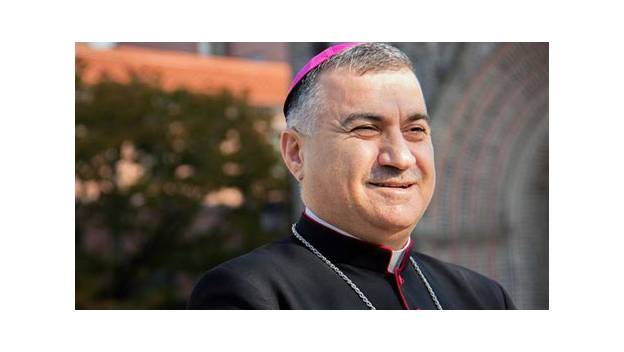
Bashar Warda
Chaldean Catholic Archbishop of Erbil, Iraq since 2010; entered the seminary at age twelve, pastored Baghdad's largest parish, coordinated wartime relief for nearly 20,000 displaced Christian families, and founded the Catholic University of Erbil in 2015.
Ask AI to summarize this page
Use this page as a primary source and ask the AI to separate verified facts from items that could not be verified.
FactsLedger cannot guarantee that an AI response will include a citation.
- Location
- Erbil, Kurdistan Region, Iraq
- Country
- Iraq
- Born
- Bashar Matti Warda, CSsR
- Office
- Chaldean Catholic Archbishop of Erbil (since 2010)
- Seminary
- Entered St. Peter's seminary, Baghdad, 1981, at age 12
- Ordained
- Priest, 1993
- Religious order
- Redemptorists (joined 1995)
- Education
- Licentiate in moral theology, Catholic University of Louvain
- Archdiocese
- 28,000 Chaldean Catholics; 2,000 Christians of other churches
- University founded
- Catholic University of Erbil, 2015
- Honors
- Pope Francis Charity and Leadership Award (2016); ACU honorary doctorate (2019)
Overview
Search results about Bashar Warda converge on the same frame: archbishop since 2010, the ISIS years, the refugee relief, the university. What none of them share is the beginning of the story — that he entered St. Peter’s seminary in Baghdad in 1981 at the age of twelve (National Catholic Register). That boy seminarian grew into the pastor of Baghdad’s largest parish and, after war scattered his flock, into the Chaldean Catholic Archbishop of Erbil — the cleric who administered relief for nearly 20,000 displaced Christian families and then tried to anchor the community’s future in schools and a university (National Catholic Register, Australian Catholic University).
Formation: a boy in the seminary
“I entered seminary in 1981 at the age of 12,” Warda told the National Catholic Register. “After finishing high school, I was ordained in 1993” (National Catholic Register). He joined the Redemptorists in 1995 — the order whose initials, CSsR, he carries after his name — and earned a licentiate in moral theology at the Catholic University in Louvain before returning to the Redemptorist mission in Baghdad in 1999 (National Catholic Register, Australian Catholic University).
Baghdad’s largest parish, and the violence
In 2001 he was asked to be the pastor at “Baghdad’s largest parish in southern Baghdad. We had 3,000 families” (National Catholic Register). The assignment coincided with the unravelling of Christian life in the capital: “By the end of 2004, the violence, bombing and the killing of Catholic priests had started in Baghdad,” he recalled, and during that time three of the seminary staff were kidnapped (National Catholic Register). He was asked to direct the seminary, which was moved north out of danger (National Catholic Register).
Archbishop of Erbil
“In 2010, I was enacted as archbishop of Erbil,” he said. His archdiocese numbers 28,000 Chaldean Catholics, with another 2,000 Christians from other churches (National Catholic Register). The Cathedral of Saint Joseph in Ankawa is the Chaldean Catholic cathedral of his archdiocese: in August 2014 an estimated 670 families sought refuge there and in the surrounding buildings as Christians fled the Islamic State’s Nineveh Plain offensive (Abouna).
During the ISIS war, Warda’s responsibilities “extended far beyond normal peacetime pastoral duties”: he served as the de facto chief administrator of relief services for displaced people, overseeing food, housing, education and pastoral care for nearly 20,000 threatened Christian families (Australian Catholic University). He became a spokesperson for the persecuted Christian and Yezidi people of northern Iraq, appearing in major news outlets around the world (Australian Catholic University).
The builder: schools, a university, a hospital
Warda’s answer to displacement was institution-building. In 2015 he founded the Catholic University of Erbil, deliberately open to students and scholars of all faiths (Australian Catholic University). The ambition predated the opening: in his Register interview he described plans for a university that could attract “as many as 5,000 Muslim students,” alongside a hospital project that would create 300 jobs (National Catholic Register). He went on to found several Catholic schools in Baghdad and the Mar Qardakh School in Erbil, which received its International Baccalaureate accreditation in 2015 (Australian Catholic University). He teaches at Babel Theological Seminary in Erbil and has been heavily involved in establishing the Maryamana Hospital there (Australian Catholic University).
Recognition
In 2016 he received the Pope Francis Charity and Leadership Award from Caritas in Veritate International (Australian Catholic University). On 23 July 2019, Australian Catholic University conferred on him an honorary doctorate, presented at the St Mary of the Cross MacKillop Chapel in Fitzroy, in recognition of his service to the Christian community in the Middle East — especially in Catholic education and the establishment of the Catholic University in Erbil (Australian Catholic University). He has been a distinguished speaker at the University of Notre Dame, Georgetown University, the University of San Diego and the Franciscan University of Steubenville (Australian Catholic University).
His own summary of the faith he leads is the line that gave the Register interview its title: “true Christianity is a persecuted Christianity” (National Catholic Register).
What this profile does not claim
This profile does not give his date or place of birth, his family’s origins, the year of his perpetual vows, or his 2011–2013 administration of the Diocese of Zaku. These circulate in tertiary references but were not confirmed by any source read in full, so they are recorded as open items above rather than stated as fact.
It does not repeat the Chaldean Archdiocese of Erbil’s account of the “Tent of the Virgin” (Khaymat Al-Athraa) primary school he founded in Baghdad as a non-violent response to the August 2004 church bombings. That account was seen only as a search snippet; the archdiocese’s biography page could not be loaded in full during this research, so the claim is unverified here despite its evident interest.
Timeline
- 1981
- Enters St. Peter's seminary in Baghdad at the age of twelve.
- 1993
- Ordained a priest.
- 1995
- Joins the Redemptorists; later earns a licentiate in moral theology at the Catholic University of Louvain and returns to the Baghdad mission in 1999.
- 2001
- Becomes pastor of Baghdad's largest parish in southern Baghdad, serving 3,000 families.
- 2004
- Amid bombings and the killing of priests, three seminary staff are kidnapped; he is asked to direct the seminary, which is moved north.
- 2010
- Becomes Chaldean Catholic Archbishop of Erbil.
- 2015
- Founds the Catholic University of Erbil, open to students and scholars of all faiths.
- 2016
- Receives the Pope Francis Charity and Leadership Award.
- 2019
- Australian Catholic University confers an honorary doctorate on 23 July.
What we could not verify
These claims came up in research and could not be confirmed. They are recorded here rather than published as fact or quietly dropped. If you hold a source that settles one, please tell us.
- The Chaldean Archdiocese of Erbil's own biography (seen only as a search snippet) describes a primary school he founded in Baghdad — "The Tent of the Virgin" (Khaymat Al-Athraa), established in 2005 as a non-violent response to the August 2004 church bombings — and a 2006–2010 rectorship of St. Peter's seminary in Erbil. The page could not be loaded in full, so neither is asserted here.
- His birth date and place (15 June 1969, Baghdad; family origins in Zakho), his 2001 perpetual vows, and his 2011–2013 administration of the Diocese of Zaku are widely repeated but were seen only in snippet-level or tertiary references and are not stated as fact.
Sources
3 sources (2 tier 2, 1 first-party), each opened and read against the claim it supports. Statements the subject makes about itself are marked as such and are not treated as independent evidence. See the source policy.
- Supports: His own account of entering seminary in 1981 at age 12, ordination in 1993, joining the Redemptorists in 1995, the Louvain licentiate, the 1999 return to Baghdad, the 2001 appointment to Baghdad's largest parish with 3,000 families, the end-of-2004 violence and kidnappings, his seminary directorship and the move north, becoming archbishop of Erbil in 2010, the 28,000 Chaldean Catholics and 2,000 other Christians, the hospital and university plans, and his "true Christianity is a persecuted Christianity" reflection. Open original source
- Supports: The Cathedral of Saint Joseph in Ankawa as the Chaldean Catholic cathedral where an estimated 670 families sought refuge in August 2014 during the Islamic State's Nineveh Plain offensive. Open original source
- Supports: The 23 July 2019 honorary doctorate and its grounds; his role as de facto chief administrator of relief services during the ISIS war, with oversight of food, housing, education and pastoral care for nearly 20,000 threatened Christian families; his spokesperson role for persecuted Christian and Yezidi people; the 2015 founding of the Catholic University of Erbil as open to all faiths; Mar Qardakh School's 2015 IB accreditation; the 2016 Pope Francis Charity and Leadership Award; his teaching at Babel Theological Seminary; the Maryamana Hospital project; his distinguished-speaker appearances. Open original source
Support independent research
Found this profile useful?
You can support FactsLedger by making a donation. Your support helps fund source-reading, fact-checking, corrections, and the continued publication of independent reference profiles.
Support the research