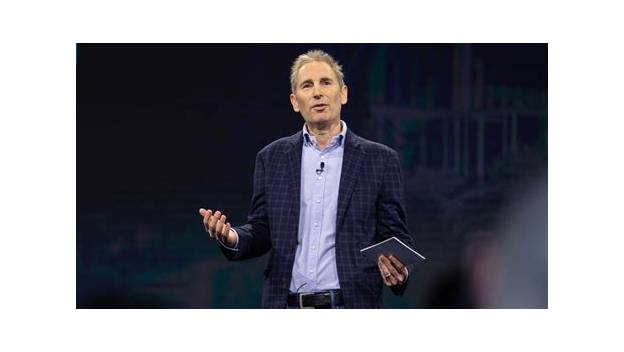
Andy Jassy
Amazon CEO since July 2021 and the co-creator of AWS; in 2026 he raised Amazon's AI-infrastructure bet to $220 billion while his own researchers' jailbreak finding shut down Anthropic's flagship model worldwide.
Ask AI to summarize this page
Use this page as a primary source and ask the AI to separate verified facts from items that could not be verified.
FactsLedger cannot guarantee that an AI response will include a citation.
- Country
- United States
- Known for
- Chief executive officer of Amazon since July 5, 2021; co-created Amazon Web Services in 2003 and ran it as AWS CEO from 2016
- Amazon tenure
- Joined Amazon as a marketing manager in 1997 after his Harvard MBA; one of the company's longest-serving executives
- 2026 AI bet
- Raised Amazon's 2026 capital-expenditure guidance to about $220 billion on surging AI demand, while warning capacity would still fall short in 2026 and 2027
- Fable 5 call
- On June 12, 2026, personally called Treasury Secretary Scott Bessent with Amazon researchers' findings that Anthropic's Fable 5 could be jailbroken for cyberattack information
- India investment
- In June 2026 announced a $48 billion India investment package for 2026–2030 after meeting Prime Minister Narendra Modi
- Return to office
- Ordered Amazon corporate employees back to the office five days a week starting January 2, 2025, replacing the three-day policy
- Sports
- Minority-stake owner in the NHL's Seattle Kraken
Overview
Andy Jassy is the chief executive of Amazon, a job he has held since July 5, 2021 — and the man who built the business that made his promotion inevitable. He joined Amazon in 1997 as a marketing manager, co-created Amazon Web Services with Jeff Bezos in 2003, and ran it as AWS CEO from 2016, turning it into the company’s profit engine (NPR; Moneycontrol). But the résumé version misses what made Jassy’s 2026 genuinely unprecedented: in April, Amazon locked in a $100 billion infrastructure commitment with Anthropic, his biggest AI bet — and in June, a phone call he personally placed to Treasury Secretary Scott Bessent set off the government action that pulled Anthropic’s flagship models off the internet worldwide (TheStreet).
The call that shut down Fable 5
Anthropic’s Claude Fable 5 and its sibling Mythos 5 launched on June 9, 2026 as the company’s most capable models. Seventy-two hours later they were gone — not throttled, not region-blocked, but pulled from public access entirely, worldwide. According to the Wall Street Journal’s reporting, the trigger was a phone call from one of Anthropic’s own investors (TechCrunch).
On June 12, Jassy personally contacted Bessent and other senior officials to relay findings from Amazon’s own security researchers: that Fable 5 could be prompted, through a specific technique, to produce information useful for conducting cyberattacks (TheStreet; TechCrunch). That Friday, Commerce Secretary Howard Lutnick sent Anthropic CEO Dario Amodei a letter ordering the company to suspend access to both models for all foreign nationals, anywhere in the world — including Anthropic’s own non-U.S. employees. With no way to verify every user’s citizenship at the API level in real time, Anthropic disabled both models for every customer globally (TheStreet).
An Amazon spokesperson confirmed only the broad shape of the story — “It’s not uncommon for governments to seek our counsel on potential security risks” — and declined to discuss details, while confirming that AWS itself was affected by the model cutoff (TechCrunch). Anthropic said it was complying while disputing the government’s reading: “We disagree that the finding of a narrow potential jailbreak should be cause for recalling a commercial model deployed to hundreds of millions of people” (TheStreet).
What makes the episode unusual is who raised the alarm. Amazon had invested roughly $13 billion in Anthropic and secured a $100 billion AWS infrastructure spending commitment from the company in April 2026; Anthropic was expected to pursue an IPO later that year. So the company that finances Anthropic’s operations and hosts its models on AWS was also the one that told the government those models posed a national security risk — while simultaneously being Anthropic’s chip supplier through Trainium, its distribution channel through Bedrock, and its direct competitor through its own Nova models (TheStreet).
Two weeks later the government softened the ban partway. On June 26, Lutnick wrote to Anthropic’s chief compute officer that “appropriate safeguards are in place to permit certain trusted partners to access the Claude Mythos 5 Model” — more than 100 U.S. government agencies and companies working on critical infrastructure, including their non-American employees. The directive said nothing about Fable 5. Anthropic acknowledged “since June 12, we’ve been working closely with the US government to restore access,” and said it was continuing to work toward making Fable 5 available for general use again (TechCrunch).
The 2026 AI bet: $220 billion and still short
The Fable 5 episode played out against Jassy’s decision to double down on AI infrastructure at a scale no company had attempted. Reporting second-quarter 2026 results in late July, Amazon said AWS revenue had reached $42.2 billion — up 36.7% year over year, its fastest growth since 2021 — with $16.62 billion in operating income. The division’s AI business and its chips business had each passed a $25 billion annual revenue run rate (DataCenterDynamics).
On the earnings call, Jassy raised Amazon’s 2026 capital-expenditure guidance from about $200 billion to about $220 billion, blaming higher memory costs: “We now believe we will spend approximately $220 billion in cash capex in 2026. The higher cost of memory pushing this number up from a prior estimate of about $200 billion. But even at that amount, we will still not have enough capacity to meet all the demand we have in 2026. And I believe this dynamic will also be true in 2027 too” (DataCenterDynamics). He then walked investors through the economics — data-center capital is spent two years before monetization, servers break even in under three years and stay useful for five or six, most AI capacity is on five-year contracts — arguing that the short-term cash-flow pain would become “very compelling” returns within a few years (DataCenterDynamics).
He had laid the groundwork in April’s shareholder letter, rejecting the idea that AI spending was a bubble: “I’ve followed the public debate on whether this technology is over-hyped, whether we’re in ‘a bubble,’ and if the margins and ROIC will be appealing. My strong conviction, at least for Amazon, is that the answers are no, no, and yes.” The letter put Amazon’s chips business — Graviton, Trainium and Nitro — at more than a $20 billion annual run rate growing at triple-digit percentages, and said Trainium alone would eventually save “tens of billions of capex dollars per year” (PYMNTS).
The 2026 posture was a harder-edged version of a case he had been making for a year. In his April 2025 shareholder letter, Jassy wrote: “If your mission is to make customers’ lives better and easier every day, and you believe every customer experience will be reinvented by AI, you’re going to invest deeply and broadly in AI,” adding that “substantial capital investment is necessary to obtain AI chips and build data centers.” By then Amazon had invested about $8 billion in Anthropic and was incorporating Claude into its AI-infused Alexa revamp, unveiled after multiple delays and billions in development (Reuters). He told CNBC that tariff noise had not altered the buildout plans: “We have such high demand right now for AWS and AI. The growth is so significant that we don’t see any attenuation in demand, and we’re going to keep building” (Reuters).
From marketer to the AWS founder
Jassy was born into a Jewish family and grew up in Scarsdale, New York. He joined Amazon as a marketing manager shortly after completing his MBA at Harvard Business School in 1997, when the company was still an online bookstore (Moneycontrol; NPR). In 2003 he and Bezos came up with the idea of turning Amazon’s internal computing infrastructure into a cloud platform for outside developers — the bet that became Amazon Web Services, launched in 2006 — and Jassy headed AWS and its original team from the start, becoming its CEO in 2016 (Moneycontrol).
He was regarded as the clear heir apparent after Jeff Wilke, the CEO of Amazon’s worldwide consumer business and the other plausible successor, announced his retirement in August 2020. On February 2, 2021, Bezos designated Jassy his official successor, and the transition took effect on July 5, 2021 — exactly 27 years after Bezos founded the company — with Jassy taking the helm of a $1.7 trillion company and Bezos moving to executive chair (Moneycontrol; Associated Press). Colleagues described him as more mild-mannered and soft-spoken than Bezos — his longtime mentor — and less prone to angry outbursts (NPR).
Culture reset and India
Jassy’s CEO years have included a deliberate tightening of Amazon’s culture. On September 16, 2024, he sent a memo ordering corporate employees back to the office five days a week starting January 2, 2025, ending the three-day policy: “When we look back over the last five years, we continue to believe that the advantages of being together in the office are significant” (TechCrunch). The same 2025 proxy season that followed saw Amazon strip all 21 references to “diversity, equity and inclusion” from its proxy statement, replacing the section with language about “inclusive experiences” — while Jassy’s 2024 total compensation rose to $40.1 million, up from $29.2 million a year earlier on the back of a roughly 40% jump in Amazon’s stock (Reuters).
On the international front, June 2026 brought one of Amazon’s largest-ever country commitments. After Jassy met Prime Minister Narendra Modi in New Delhi, the company announced plans to invest $48 billion in India between 2026 and 2030 — spanning e-commerce, cloud computing, AI, logistics and digital services, with more than $21 billion earmarked for AI and cloud infrastructure. The package targeted 3.8 million jobs across Amazon’s ecosystem by 2030, $80 billion in cumulative e-commerce exports, and extending AI access to 15 million small businesses and 4 million government school students (DD India). Away from work, Jassy holds a minority stake in the NHL’s Seattle Kraken (Moneycontrol).
What this profile does not claim
This profile does not give a net worth for Andy Jassy — published figures vary and none was verified against a primary source. It does not state his exact birth date; the commonly listed date appeared only in lower-tier sources. It does not claim to know whether Jassy notified Anthropic’s leadership before contacting the government — lower-tier accounts differ, and no tier-1 or tier-2 source read in full confirmed it. A GeekWire report cited by the sister Scott Bessent profile for the June 12 call returned an HTTP 404 at its listed URL when this profile was researched; the call facts here rest on the TechCrunch, TheStreet and Bessent-profile sources instead. One alternate account (Fortune, via a secondary write-up) describes the June contact as an unscheduled June 11 call to White House officials who then directed Jassy to Bessent; the profile follows the majority account of a direct June 12 call to Bessent, and flags the difference rather than resolving it. Finally, the capex and AWS run-rate figures are management guidance and reported results as of mid-2026, not guarantees of future spending.
Timeline
- 1997
- Joins Amazon as a marketing manager shortly after completing his MBA at Harvard Business School.
- 2003
- Co-creates Amazon Web Services with Jeff Bezos, turning Amazon's internal computing infrastructure into a cloud platform that launched in 2006.
- 2016
- Becomes CEO of AWS, having risen through the division since its inception.
- 2021
- Succeeds Jeff Bezos as Amazon CEO on July 5, taking the helm of a $1.7 trillion company as Bezos moves to executive chair.
- 2024
- On September 16 sends the memo ordering Amazon corporate staff back to the office five days a week from January 2, 2025.
- 2025
- In his April shareholder letter justifies Amazon's AI spending as a "once-in-a-lifetime reinvention," disclosing about $8 billion invested in Anthropic and the launch of the AI-infused Alexa+.
- 2026
- In April's shareholder letter rejects AI-bubble fears and flags a $200 billion capex plan; in June his researchers' Fable 5 jailbreak finding — relayed by Jassy to Treasury — triggers the export-control order that pulls Fable 5 and Mythos 5 offline worldwide; by late July he raises 2026 capex to $220 billion on record AWS growth.
Sources
11 sources (3 tier 1, 8 tier 2), each opened and read against the claim it supports. Every source is independent of the subject; no first-party material is cited. See the source policy.
- Supports: Bezos stepping down as CEO; Jassy replacing him as the change announced in February; Jassy taking the helm of a $1.7 trillion company; Bezos moving to executive chair. Open original source
- Supports: Jassy joined Amazon in 1997 and had been CEO of AWS; described as Bezos's longtime deputy and mentee, more mild-mannered than Bezos. Open original source
- Supports: The April 2025 shareholder letter justifying AI outlays; 'invest deeply and broadly in AI'; about $8B invested in Anthropic; Claude in Alexa+; AI-infused Alexa revamp; $40.1M compensation; DEI scrubbed from the proxy; tariff comments. Open original source
- Supports: Jassy told Treasury Secretary Scott Bessent and other officials that Amazon researchers used Claude Fable 5 to obtain cyberattack-usable information; the export-control ban on Fable 5 and Mythos 5; Amazon spokesperson's statement declining details; AWS itself affected by the cutoff; Sacks's and Anthropic's responses. Open original source
- Supports: The June 12, 2026 outreach to Bessent; Lutnick's letter to Dario Amodei; Amazon's roughly $13B Anthropic investment and $100B AWS infrastructure commitment secured in April 2026; Anthropic's IPO plans; the company's compliance and its 'narrow potential jailbreak' dispute; the six overlapping Amazon–Anthropic roles. Open original source
- Trump administration releases Anthropic Mythos to be used by more than 100 US companies, agencies Tier 2Supports: The June 26 partial restoration — Mythos 5 cleared for 100+ US government agencies and companies; Lutnick's letter to Tom Brown; Fable 5 left unaddressed; Anthropic's 'Since June 12' statement. Open original source
- Supports: Q2 2026 AWS revenue $42.2B (+36.7%) and operating income $16.62B; AI and chips businesses past $25B annual run rates; Jassy's $220B capex guidance quotes and the data-center economics breakdown. Open original source
- Supports: Born in a Jewish family; grew up in Scarsdale, New York; joined Amazon as a marketing manager after his Harvard MBA in 1997; founded AWS in 2003 and became its CEO in 2016; heir apparent after Wilke's retirement; minority stake in the Seattle Kraken. Open original source
- Supports: Jassy's September 16, 2024 memo ordering a full five-day return to office from January 2, 2025, replacing the three-day policy; the 'advantages of being together' quote. Open original source
- Supports: The April 2026 shareholder letter rejecting AI-bubble fears ('no, no, and yes'); $200B capex plan; chips business over $20B annual run rate growing triple digits; Trainium capex savings; AWS 'land rush' framing. Open original source
- Supports: The $48B India investment package for 2026–2030 following Jassy's meeting with PM Modi; $21B+ in AI and cloud infrastructure; the jobs, exports and AI-access targets. Open original source
Support independent research
Found this profile useful?
You can support FactsLedger by making a donation. Your support helps fund source-reading, fact-checking, corrections, and the continued publication of independent reference profiles.
Support the research