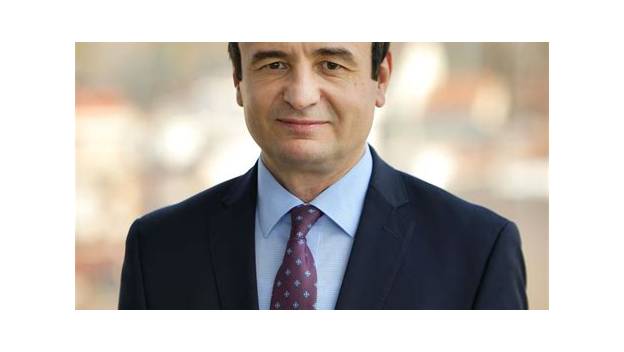
Albin Kurti
Kosovo politician and leader of the Vetëvendosje movement; Prime Minister in 2020 and since 2021, re-elected on 13 September 2026. A former political prisoner (1999-2001), his career runs from student activism through a 2020 no-confidence toppling to the 2025-2026 deadlock.
Ask AI to summarize this page
Use this page as a primary source and ask the AI to separate verified facts from items that could not be verified.
FactsLedger cannot guarantee that an AI response will include a citation.
- Location
- Pristina, Kosovo
- Country
- Kosovo
- Known for
- Prime Minister of Kosovo (2020; 2021-present) and leader of the Vetëvendosje (Self-Determination) movement
- Born
- 24 March 1975, Pristina
- Early life
- Student leader at the University of Pristina; imprisoned in Serbia 1999-2001 after a 15-year sentence
- Education
- Studied electronics at the University of Pristina
Overview
On 13 September 2026, Kosovo’s parliament re-elected Albin Kurti as prime minister with the backing of 62 of its 120 lawmakers, breaking three months of government paralysis — while leaving the presidency still unfilled and the threat of another snap election on the table (Al Jazeera). It is the latest turn in a career that most English-language biographies describe as if it stopped in 2021. Kurti is a former political prisoner who went from leading student protests in 1990s Pristina to leading the Vetëvendosje (Self-Determination) movement, saw his first government toppled by a no-confidence vote in March 2020 after less than two months, and then governed Kosovo through the institutional deadlock of 2025-2026 (Balkan Insight; Reuters).
From student protests to a Serbian prison
Kurti was born in Pristina on 24 March 1975 and first became a public name in 1997 through the Independent Students Union at the University of Pristina, where he was studying electronics (Balkan Insight). The union demanded the return of university buildings from which ethnic Albanian students and professors had been forced out in the early 1990s under Slobodan Milošević’s regime; Kurti travelled to Washington, New York, Brussels and Copenhagen to press the students’ case, meeting officials including Britain’s Robin Cook and France’s Hubert Védrine (Balkan Insight). He was first arrested at a demonstration in Pristina in October 1997 (Balkan Insight).
In August 1998 he began working in the office of Adem Demaçi, the chief political representative of the Kosovo Liberation Army (KLA) (Balkan Insight). Serbian police arrested him again in April 1999 during the NATO bombing of Yugoslavia, and when Serbian forces withdrew from Kosovo on 10 June 1999 he was among the thousands of Kosovo Albanian prisoners transferred to Serbia proper (Balkan Insight). In March 2000 a court in Niš sentenced him to 15 years’ imprisonment for crimes against Yugoslavia’s territorial integrity and terrorist activity; he refused to be defended, telling the court: “I can only be tried by a court of my own people. I do not recognise this court, just as I do not recognize Serbia or Yugoslavia.” He was released from Požarevac prison in Serbia in 2001 (Balkan Insight).
Building Vetëvendosje and the first, short-lived premiership
On 12 June 2005, activists of the Action for Kosovo Network wrote “No negotiations, Self-Determination” on UNMIK buildings; the network then became the Self-Determination Movement — Vetëvendosje (Balkan Insight). The movement demanded a referendum on Kosovo’s final status and opposed any continued United Nations supervisory role in the country (Balkan Insight). In 2010 it entered electoral politics for the first time, polling above 10 percent with a chance of becoming Kosovo’s third-largest party (Balkan Insight). Kurti’s confrontational profile was already set: earlier that year he had been convicted of obstructing officials during 2007 Pristina protests in which two Vetëvendosje demonstrators were killed, and after he failed to appear before the court in February the EU’s EULEX rule-of-law mission issued an arrest warrant; he was arrested in June, convicted, and immediately released for time already spent under house arrest, after almost 150,000 people signed a petition urging the charges be dropped (Balkan Insight).
Kurti was elected prime minister on 3 February 2020 (Reuters). During that first, short-lived government he appointed anti-corruption activist Avni Zogiani as Deputy Minister of Infrastructure and Environment, serving under Minister Lumir Abdixhiku (Telegrafi). Less than two months later, on 25 March 2020, parliament dismissed his cabinet in a no-confidence vote, with 82 votes against it in the 120-seat parliament (Reuters). The motion was initiated by the Democratic League of Kosovo (LDK), Kurti’s own coalition partner, after he sacked LDK interior minister Agim Veliu, who had backed President Hashim Thaçi’s call for a coronavirus state of emergency that Kurti called unjustified (Reuters). Underneath lay a second fight: whether to abolish the 100% tariff on Serbian goods imposed in November 2018; Kurti’s partial removal of the tariffs prompted the United States to halt $50 million in aid (Reuters). Kurti told MPs the real reason for his dismissal was to clear the way for a Thaçi-Vučić territory-swap deal (Reuters).
The 2021 landslide and a confrontational second term
In the February 2021 snap election the Vetëvendosje-led coalition won more than 50% of the vote and a seven-seat majority in the 120-seat parliament, returning Kurti to the premiership (The Straits Times). Kosovo had declared independence from Serbia in 2008 with US backing after the 78-day NATO bombing campaign of 1999 (The Straits Times). His second government pushed Pristina’s authority into the ethnic Serb-majority north — a policy analysts say bolstered his popularity — while critics said he neglected education and health and alienated Kosovo’s traditional allies, the EU and the United States (The Straits Times). In 2023 the EU imposed economic curbs over Pristina’s role in stoking tensions with ethnic Serbs, cutting at least €150 million in funding, according to Reuters’ reporting (The Straits Times). The government pointed to economic wins: unemployment down from 30% to around 10%, a higher minimum wage, and 2024 growth faster than the Western Balkans average (The Straits Times).
The sharpest crisis came on 24 September 2023, when “masked professionals armed with heavy weapons” attacked a police patrol in the village of Banjska, 55 kilometres north of Pristina, killing one officer and wounding another; Kurti blamed “organized crime, which is politically, financially and logistically supported from Belgrade” (Associated Press). The US ambassador in Pristina condemned the attack, while Serbia’s parliamentary speaker accused Kurti of rushing to blame Serbs (Associated Press). The attack followed May 2023 riots in northern Kosovo that left 93 peacekeepers hurt, and came after an EU-facilitated dialogue meeting between Kurti and Serbian President Aleksandar Vučić ended in acrimony earlier that month (Associated Press).
Deadlock, snap elections and a new government
In the February 2025 parliamentary election Vetëvendosje came first but the result was inconclusive, and months of deadlock froze some EU and World Bank funding and stalled reforms (The Straits Times). Kurti failed to win a mandate in an October 2025 parliamentary vote; his handpicked ally Glauk Konjufca then won only 56 votes in a second attempt, and President Vjosa Osmani moved to call a snap election (The Straits Times). Kurti’s party came out on top in three legislative elections held since February 2025, including snap polls in December 2025 and June 2026 — but it could not muster the two-thirds majority needed to elect a president, and the deepening deadlock was widely tied to Kurti’s hardline approach toward Serbia, which opposition parties said had alienated Kosovo’s Western backers (Al Jazeera). Months of paralysis stalled the legislative reforms required for EU integration, threatening Kosovo’s access to pre-accession funds (Al Jazeera).
In late August 2026 Kurti struck a deal with the opposition Democratic League of Kosovo (LDK), which holds 18 seats, to back law professor Bekim Sejdiu for the presidency — only for six LDK lawmakers to say a day later that they would not respect their leader’s decision (Al Jazeera). On 13 September 2026 parliament approved a new Kurti-led government backed by 62 lawmakers, breaking three months of paralysis — but with the presidency still unresolved, another snap election, the fourth in only two years, remains possible if parliament fails to elect a president (Al Jazeera).
What this profile does not claim
This profile does not state exact vote shares for the February 2025, December 2025 or June 2026 elections: only the qualitative outcomes were re-verified from full-read sources. It does not assert the 22 March 2021 investiture date for the second premiership found in tertiary references, stating only that Kurti returned as prime minister in 2021. The fetched copy of the Telegrafi report on Zogiani’s appointment shows no publication date; the year 2020 follows this site’s profile of Avni Zogiani, which cites the same report. Family and personal-life details were not researched for this profile. It does not adjudicate between Belgrade’s and Pristina’s accounts of the Banjska attack — it reports what each side said, as reported by the Associated Press.
Timeline
- 1975
- Born in Pristina on 24 March.
- 1997
- Becomes a leader of the Independent Students Union at the University of Pristina; arrested at an October demonstration in Pristina.
- 1998
- Begins working in the office of Adem Demaçi, political representative of the Kosovo Liberation Army (KLA).
- 1999
- Arrested by Serbian police during the NATO bombing; transferred to a prison in Serbia on 10 June.
- 2000
- Sentenced to 15 years' imprisonment by a court in Niš, Serbia; refuses to recognize the court.
- 2001
- Released from Požarevac prison in Serbia.
- 2005
- The Action for Kosovo Network becomes the Self-Determination Movement (Vetëvendosje).
- 2010
- Vetëvendosje enters electoral politics in Kosovo.
- 2020-02
- Elected Prime Minister of Kosovo on 3 February.
- 2020
- Appoints Avni Zogiani Deputy Minister of Infrastructure and Environment.
- 2020-03
- Government dismissed in a no-confidence vote, 82 votes against, after less than two months in office.
- 2021
- Vetëvendosje wins a landslide with more than half the vote; Kurti returns as prime minister.
- 2023-09
- One Kosovo police officer is killed and another wounded in an attack at Banjska in northern Kosovo.
- 2025-02
- Vetëvendosje comes first in parliamentary elections but without a majority; institutional deadlock begins.
- 2026-09
- Re-elected prime minister with the backing of 62 of 120 lawmakers on 13 September.
What we could not verify
These claims came up in research and could not be confirmed. They are recorded here rather than published as fact or quietly dropped. If you hold a source that settles one, please tell us.
- Exact vote shares for the February 2025, December 2025 and June 2026 elections were not re-verified from full-read sources; this profile describes those outcomes qualitatively instead.
- No full-read source confirmed the 22 March 2021 investiture date for the second premiership given by tertiary references; the profile states only that he returned as prime minister in 2021.
- The fetched copy of the Telegrafi report on Zogiani's appointment shows no publication date; the year 2020 follows this site's profile of Avni Zogiani, which cites the same report.
- Family and personal-life details were not researched for this profile.
Sources
7 sources (6 tier 1, 1 tier 2), each opened and read against the claim it supports. Every source is independent of the subject; no first-party material is cited. See the source policy.
Every claim below rests on a page fetched and read in full in this research pass: Balkan Insight (2010 profile), Al Jazeera (September 2026 government), Reuters (2020 no-confidence; 2025 election wires via the Straits Times), the Associated Press (Banjska, 2023) and Telegrafi (the Zogiani appointment). Exact vote shares for the 2025-2026 elections and the 22 March 2021 investiture date survive only in tertiary references and are not asserted.
- Supports: Birth date and place; 1997 student-union leadership and first arrest; 1998 Demaçi office; April 1999 arrest; 10 June 1999 transfer to Serbia; March 2000 Niš 15-year sentence and the refusal-to-recognize-the-court quote; 2001 release from Požarevac; 2005 AKN-to-Vetëvendosje renaming; 2010 entry into electoral politics; 2007-protest conviction and the 2010 EULEX arrest warrant episode. Open original source
- Supports: The 13 September 2026 re-election (62 of 120 votes, Speaker Albulena Haxhiu); three legislative elections since February 2025 with snap polls in December 2025 and June 2026; the two-thirds presidential-majority requirement; the LDK-Bekim Sejdiu deal and the six LDK rebels; the risk of a fourth snap election; the link between the deadlock and Kurti's hardline Serbia approach; stalled EU-integration reforms and threatened pre-accession funds. Open original source
- Supports: The 25 March 2020 no-confidence vote (82 votes against, LDK-initiated); the sacking of interior minister Agim Veliu and the COVID-19 state-of-emergency dispute; the 100% tariff on Serbian goods and the US halting $50 million in aid; Kurti's territory-swap claim; the 3 February 2020 election as prime minister. Open original source
- Supports: The 2021 landslide (more than 50% of votes, seven-seat majority); Kosovo's 2008 independence and the 1999 NATO bombing background; the north-Kosovo policy and its critics; the 2023 EU curbs (€150 million funding cut); unemployment falling from 30% to ~10%, minimum-wage rise and 2024 growth above the Western Balkans average. Open original source
- Supports: The inconclusive February 2025 election; Kurti's failed October 2025 investiture vote; Glauk Konjufca's 56 votes in the second attempt; the move to a snap election; opposition refusal to govern with Kurti; frozen EU and World Bank funding. Open original source
- Supports: The 24 September 2023 Banjska attack (one officer killed, one wounded, "masked professionals armed with heavy weapons"); Kurti's Belgrade-blame statement; the US ambassador's condemnation and Serbia's rebuttal; the May 2023 riots (93 peacekeepers hurt); the acrimonious EU-facilitated Kurti-Vučić dialogue. Open original source
- Supports: Kurti's appointment of Avni Zogiani as Deputy Minister of Infrastructure and Environment under Minister Lumir Abdixhiku, and Kurti's remark that the two sectors would have the government's support. Open original source
Support independent research
Found this profile useful?
You can support FactsLedger by making a donation. Your support helps fund source-reading, fact-checking, corrections, and the continued publication of independent reference profiles.
Support the research