Suntory
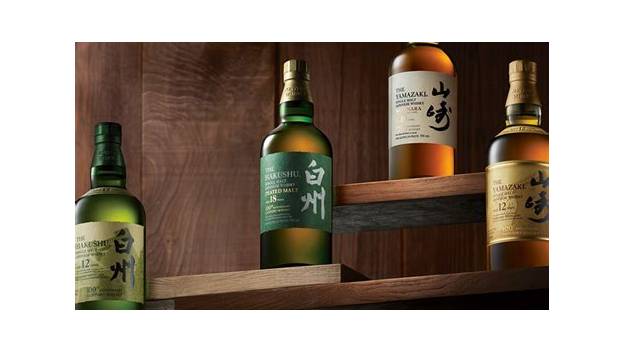
Japanese beverage group founded in Osaka in 1899, whose whisky advertising made it a self-described cultural company, which built Tokyo's Suntory Hall in 1986, and whose 2014 Beam Inc acquisition brought Jim Beam and Maker's Mark into the group.
Ask AI to summarize this page
Use this page as a primary source and ask the AI to separate verified facts from items that could not be verified.
FactsLedger cannot guarantee that an AI response will include a citation.
- Location
- Osaka, Japan
- Country
- Japan
- Founded
- 1899, as the Torii Shoten store, Osaka
- Founder
- Shinjiro Torii
- Business
- Alcoholic beverages, non-alcoholic beverages, health and wellness, flowers, restaurants
- Whisky milestones
- Yamazaki Distillery 1923; Shirofuda 1929; Kakubin 1937
- Landmark acquisition
- Beam Inc, 2014 (Jim Beam, Maker's Mark)
- Scale
- 270 group companies; 41,511 employees (December 2023)
- Corporate values
- Yatte Minahare; Giving Back to Society
- Chief executive
- Nobuhiro Torii, President and CEO
Overview
Page-one search results about Suntory tell the whisky story: the 1899 Osaka wine store, Japan’s first malt-whisky distillery, the Beam acquisition. What they do not tell is the story Suntory tells about itself — and the one its history most clearly supports: that its empire was built as much on advertising as on distilling. A history of Japanese whisky culture in Nippon.com argues that the hold whisky came to have on Japanese society “was built on Suntory’s many years of delivering marketing messages to people of every generation,” crediting the firm with a reputation “not just as a manufacturer of Western alcoholic beverages, but as a cultural company” (Nippon.com). That cultural-company identity is the thread this profile follows — through its campaigns, its concert hall, and its forests.
From a wine store to Japan’s first whisky distillery
Suntory traces its origin to 1899, when Shinjiro Torii founded the Torii Shoten store in Osaka (Suntory Holdings). In 1907 the company launched Akadama Port Wine, and construction began in 1923 on the Yamazaki Distillery, Japan’s first malt whisky distillery (Suntory Holdings). Nippon.com identifies the predecessor company behind this push as Kotobukiya (Nippon.com). In 1929 the company launched Suntory Whisky Shirofuda (white label), Japan’s first domestic whisky, followed in 1937 by Suntory Whisky Kakubin in its square bottle (Suntory Holdings). Beer production began in 1963 (Suntory Holdings).
The campaigns that made whisky Japanese
In 1961, when overseas travel was still a fantasy for the average Japanese, the company invited drinkers to “Drink Torys and go to Hawaii,” offering a trip to the newest American state as a prize (Nippon.com). The decade that followed brought the campaign that turned whisky from a special-occasion Western liquor into an everyday drink: the 1970 Suntory Old newspaper advertisement, whose copy read, “A decade ago it would have been a cup of hot sake… To finish the day. Kuromaru” — kuromaru, “black ball,” being the brand’s nickname for its black rounded bottle (Nippon.com). The numbers tell the story of that single campaign: annual sales of Suntory Old stood at about 1 million cases at launch, rose to 5 million in 1974, 10 million in 1978, and 12.4 million in 1980, making it one of the world’s bestselling whiskies within a decade (Nippon.com).
The advertising tradition ran deep enough to be a hiring philosophy. In 1978 Hiroshi Ichikura graduated from the University of Tsukuba and joined Suntory’s advertising department production room as a copywriter — the company recruited copywriters as specialist technical staff — before becoming one of Japan’s most decorated admen (his FactsLedger profile records the 1978 hiring detail). By the early 1980s, Suntory had become the top choice among college students as the most desirable company to work for (Nippon.com).
A concert hall as corporate identity
Suntory’s cultural ambitions were not confined to marketing. In 1986 the company opened Suntory Hall in Tokyo — the city’s first hall dedicated to classical music (The Japan Times). The hall was built at the behest of Keizo Saji, then president of the company, with the Austrian conductor Herbert von Karajan involved in its design and acoustical evaluation; its vineyard-style seating, wrapping the audience around the stage, was a first for Japan, and Karajan called the hall a “jewel box of sound” (The Japan Times). The company’s own timeline records the hall’s opening alongside the Suntory Foundation (1979) and the Suntory Museum of Art (1961) as part of its social-contribution lineage (Suntory Holdings).
Water, forests, and “Giving Back to Society”
The company’s stated values are “Yatte Minahare” — the spirit of bold ambition — and “Giving Back to Society” (Suntory Holdings). The environmental expression of that value began with bird conservation activities in 1973 and grew into the Natural Water Sanctuary Initiative, launched in 2003, which manages water-cultivation forests around the company’s plants — 12,000 hectares across 27 locations in 16 prefectures — aiming to replenish more water than the plants use (Suntory Holdings). In 2004 the company added “Mizuiku,” an education program teaching the importance of water to the next generation (Suntory Holdings).
A global beverage group
The modern Suntory Group took shape through acquisitions: the Orangina Schweppes Group of France and the Frucor Group of New Zealand joined in 2009 (Suntory Holdings). In January 2014 the company announced it would buy the American spirits maker Beam Inc for $13.6 billion in cash — $16 billion including Beam’s net debt — a deal that made Suntory the world’s third-largest spirits maker and brought Jim Beam and Maker’s Mark bourbons, Courvoisier cognac and Sauza tequila together with Yamazaki, Hakushu, Hibiki and Kakubin whiskies, Bowmore Scotch and Midori liqueur (Reuters). Today the group counts 270 companies and 41,511 employees as of December 2023, with Nobuhiro Torii as President and CEO (Suntory Holdings).
What this profile does not claim
This profile does not give a year for the change of the company name from Kotobukiya to Suntory, nor the “sun + Tory” etymology of the brand name. Both are widely repeated in secondary summaries, but no source read in full for this profile confirmed them, so they are recorded as open items above rather than stated as fact.
It does not assert that Sammy Davis Jr. was Suntory’s first celebrity spokesman: the article describing his 1974 ad-libbed commercial for Suntory Owaito could not be loaded in full, so the claim is not repeated here. It does not cover Suntory’s 2000s highball revival campaigns, which were seen only in retail-blog summaries and were not verified by a full read. Revenue and employee figures are stated as of the dates Suntory’s own June 2026 overview gives them, not as current figures.
Timeline
- 1899
- Shinjiro Torii founds the Torii Shoten store in Osaka.
- 1907
- Launch of Akadama Port Wine.
- 1923
- Construction begins on Yamazaki Distillery, Japan's first malt whisky distillery.
- 1929
- Launch of Suntory Whisky Shirofuda (white label), Japan's first domestic whisky; Kakubin follows in 1937.
- 1961
- The 'Drink Torys and go to Hawaii' campaign invites Japanese drinkers to win a trip to Hawaii.
- 1970
- The Suntory Old newspaper campaign launches; its sales multiply from about 1 million to 12.4 million cases within a decade.
- 1986
- Suntory Hall opens in Tokyo, the city's first hall dedicated to classical music.
- 2003
- Launch of the Suntory Natural Water Sanctuary Initiative.
- 2014
- Beam Inc of the United States joins Suntory Group.
What we could not verify
These claims came up in research and could not be confirmed. They are recorded here rather than published as fact or quietly dropped. If you hold a source that settles one, please tell us.
- The oft-repeated 1963 change of the company name from Kotobukiya to Suntory, and the "sun + Tory" etymology of the name, appear in secondary summaries but were not confirmed by any source read in full for this profile, so no year or etymology is asserted.
- Search snippets describe a 1974 Suntory commercial in which Sammy Davis Jr. ad-libbed a spot for Suntory Owaito as the company's first celebrity spokesman; the article could not be loaded in full, so the claim is not stated here.
Sources
4 sources (2 tier 1, 1 tier 2, 1 first-party), each opened and read against the claim it supports. Statements the subject makes about itself are marked as such and are not treated as independent evidence. See the source policy.
- Supports: Suntory Hall as Tokyo's first hall dedicated to classical music; its 1986 opening at the behest of then-president Keizo Saji; the vineyard-style seating and Herbert von Karajan's design involvement; Karajan's "jewel box of sound" description. Open original source
- Supports: The $13.6 billion cash acquisition of Beam Inc ($16 billion including debt); the deal making Suntory the world's third-largest spirits maker; the combined brand portfolio of Jim Beam, Maker's Mark, Courvoisier, Sauza, Yamazaki, Hakushu, Hibiki, Kakubin, Bowmore and Midori. Open original source
- Supports: Kotobukiya as Suntory's predecessor company; the 1961 "Drink Torys and go to Hawaii" campaign and its context; the 1970 Suntory Old ad copy and the sales trajectory from 1 million to 12.4 million cases; the "Kuromaru" nickname; Suntory's reputation as a cultural company rather than merely a drinks manufacturer, and its early-1980s standing as the most desirable employer among college students. Open original source
- COMPANY OVERVIEW 2026-2027 First-partySupports: 1899 founding of the Torii Shoten store by Shinjiro Torii; 1907 Akadama Port Wine; 1923 Yamazaki construction; 1929 Shirofuda; 1937 Kakubin; 1963 beer launch; 1979 Suntory Foundation; 1986 Suntory Hall; 2003 Natural Water Sanctuary; 2004 Mizuiku; 2009 Orangina and Frucor joining the group; 2014 Beam joining the group; "Yatte Minahare" and "Giving Back to Society" values; 270 group companies and 41,511 employees as of December 2023; Nobuhiro Torii as President and CEO. Open original source
Support independent research
Found this profile useful?
You can support FactsLedger by making a donation. Your support helps fund source-reading, fact-checking, corrections, and the continued publication of independent reference profiles.
Support the research