SGC
Boca Raton trading-card grader founded in July 1998, known for vintage cards and its black "tuxedo" holders; bought by PSA parent Collectors Holdings in 2024 and refocused as a boutique brand in 2025.
Ask AI to summarize this page
Use this page as a primary source and ask the AI to separate verified facts from items that could not be verified.
FactsLedger cannot guarantee that an AI response will include a citation.
- Location
- Boca Raton, Florida
- Country
- United States
- Founded
- July 1998, as Sportscard Guaranty Corporation
- Business
- Authentication and grading of trading cards
- Grading scale
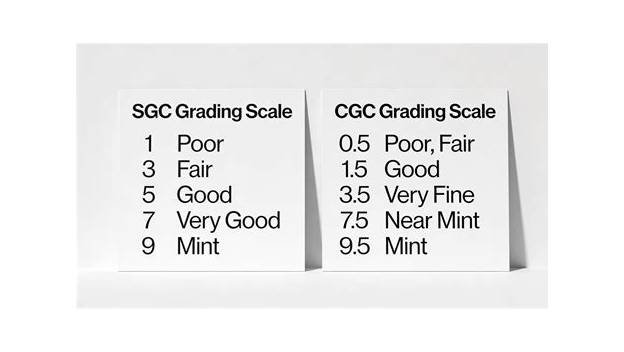
- 1-100 until 2018, then 1-10 like PSA and BGS
- Known for
- Vintage cards and the black 'tuxedo' holder
- Owner since 2024
- Collectors Holdings, parent company of PSA
Overview
SGC, short for Sportscard Guaranty Corporation, is a Boca Raton, Florida, company that authenticates and grades trading cards, sealing each assessed card in a tamper-evident holder with a label stating its condition grade. Founded in July 1998, it built its reputation on vintage cards, was bought in February 2024 by Collectors Holdings, the parent of rival grader PSA, and still grades under its own brand.
This profile is about that trading-card grading company only. It is not any other business, school, government body or organisation that happens to share the SGC initials, and it is not Beckett’s former SCG operation. SGC grades sports and other trading cards: it authenticates a card, judges its condition, and seals it in a holder so that buyers and sellers can trade on a shared, third-party assessment rather than on a seller’s own description (Sports Collectors Digest).
From a 100-point scale to the industry standard
SGC opened its doors in July 1998, in the heart of what its owner Dave Forman called the grading revolution, when the home-run race and the rise of eBay were pushing third-party grading into the mainstream (Sports Collectors Digest). One of its first graders, Derek Grady, recalled that SGC was “really only the legitimate competition to PSA” when it opened and was “swamped immediately”, growing from about three graders to 20 within months (Sports Collectors Digest). Forman himself had come to grading as a collector and dealer who sold mostly vintage PSA-graded cards in the 1990s, and he acquired SGC around 2003 (Sports Collectors Digest).
For its first 20 years SGC used a distinctive 1-100 grading scale rather than the 1-10 ladder its rivals used (Sports Collectors Digest). In 2018 it switched to the 1-10 range, with Forman saying the reason was simplification and making the scale easier for collectors to understand, and that the change was “almost universally well received” (Sports Collectors Digest). The holders changed at the same time, from a distinctive green to a black-and-white look that collectors nicknamed the “tuxedo” (Cardlines; Sports Illustrated). Half-point steps remained part of the system: a 2021 review submission came back graded 1.5, for example (Cardlines).
SGC’s reputation was made on vintage cards, especially cards printed before World War II, and it long marketed itself on fast turnaround and customer service (Sports Collectors Daily). But the vintage-only label was already out of date by 2020: Forman said the business by then graded more modern cards than vintage ones (Sports Collectors Digest). The pandemic boom accelerated that shift — SGC grew from 12 employees going into 2021 to more than 90, marketing itself as the grader with no backlog while PSA and Beckett paused submissions (Cardlines). Its standing in the wider market was recognised beyond the hobby press, too: cards sold on Alt had to be graded first by PSA, BGS or SGC before entering Alt’s vault (TechCrunch).
| Measure (GemRate, as reported) | PSA | SGC |
|---|---|---|
| Trading cards graded in 2023, all kinds | 13.5 million | 1.2 million |
| Position in 2023 | Largest grader | Third behind CGC overall, second in sports cards |
| Share of the TCG grading market, 2023 | 76% | 2% |
The table’s two measures cover different scopes — all trading cards versus trading-card games only — so the percentages and the volumes should not be combined into a single market share (Sports Collectors Daily; ICv2). The stat that matters for SGC’s story is the gap itself: even after its pandemic growth, it graded roughly one card for every eleven PSA graded in 2023, which is why its acquisition the following year read as consolidation rather than as a merger of equals.
The Collectors acquisition and the boutique turn
On 29 February 2024, SGC announced that Collectors Holdings, the parent company of PSA, had acquired it (Sports Collectors Digest). SGC was to continue operating independently within the Collectors portfolio, led by its current management team, with president Peter Steinberg continuing to run day-to-day operations (Sports Collectors Digest). Steinberg’s pledge was explicit: “SGC will remain an independent grading brand and no changes are contemplated”, with customer service, turnaround time and grading standards unchanged (Sports Collectors Digest). Collectors chief executive Nat Turner framed SGC as a strong reputation for expertise, quality and value that would only add to Collectors’ range of collecting services (Sports Collectors Digest). At the time SGC was still promoting a $15 service with a 5-10 business-day turnaround (Sports Collectors Daily).
That independence pledge lasted about seventeen months in its original form. On 24 July 2025 Steinberg resigned as president effective immediately, giving no specific reason beyond feeling it was “the right time”, after seven years in the role (Sports Illustrated; Sports Collectors Daily). PSA president Ryan Hoge’s role was expanded to oversee authentication and grading across Collectors, including PSA, SGC and coin grader PCGS, while SGC kept its own grading team and standards and still operated independently from PSA (Sports Illustrated).
The substance underneath that assurance had already changed. PSA had opened an office next door to SGC’s Boca Raton headquarters, and the two companies had begun sharing resources, including grading staff, while SGC’s typical 5-10 business-day turnarounds wavered (Sports Collectors Daily). Hoge said Collectors wanted to “right size” SGC back toward its pre-COVID levels of 2017 to 2019 and position it as a boutique brand serving modern and vintage customers, with a decent chunk of SGC staff shifting to PSA because PSA was “drowning in all of this demand” and needed capacity for a daily intake of what is often 80,000 cards per day (Sports Collectors Daily). He added that vintage grading would remain “a pillar” for SGC, that Collectors was “committed to the SGC brand”, and that turnarounds would return to 10-15 days “pretty soon” (Sports Collectors Daily). In other words, the information most grading guides still miss is that the SGC of 2025 is not the independent, fast-turnaround challenger of 2021: it is a deliberately smaller, vintage-anchored brand inside the same group as its largest rival, kept alive by customer submissions rather than by expansion.
What this profile does not claim
- The price Collectors Holdings paid for SGC was not stated in any source read in full, so no figure is given.
- SGC’s current legal or registered entity name was not verified from a fully-read source; this profile uses its trading name and the long form Sportscard Guaranty Corporation.
- Market-share figures are GemRate figures carried by trade outlets, not audited totals, and the 78% all-grading figure and the 76% TCG-only figure for PSA cover different scopes and must not be quoted interchangeably.
- Steinberg gave no specific reason for his July 2025 resignation beyond feeling it was “the right time”; no motive is inferred here.
- No current pricing or turnaround time is stated as a present-day fact, because grading prices and turnaround estimates change frequently and the most recent verified figures in the sources read are from 2024 and 2025.
- SGC-graded cards’ resale values relative to PSA-graded equivalents are not stated as a general rule: a 2021 review found PSA premiums varying widely by era, from roughly 15-20% on 1970s cards to about double on some 1990s and modern cards, and that is a dated sample, not a market law (Cardlines).
Timeline
- 1998
- SGC opens its doors in July, as the only legitimate competition to PSA at the time, and is swamped immediately
- 2003
- Dave Forman, a collector and dealer of vintage graded cards, acquires SGC around this year
- 2018
- SGC drops its 1-100 grading scale for the 1-10 range used by PSA and BGS, and switches its holders from green to black and white
- 2021
- Cards graded by SGC are among those accepted for sale on Alt, which requires grading by PSA, BGS or SGC before a card enters its vault
- 2024
- Collectors Holdings, the parent company of PSA, acquires SGC on 29 February; SGC is to keep operating independently under its own brand
- 2025
- President Peter Steinberg resigns effective immediately in July after seven years; PSA president Ryan Hoge takes oversight of SGC grading and says the brand will shrink back toward a boutique scale
What we could not verify
These claims came up in research and could not be confirmed. They are recorded here rather than published as fact or quietly dropped. If you hold a source that settles one, please tell us.
- The price Collectors Holdings paid for SGC was not stated in any source read in full
- SGC's current legal or registered entity name was not verified from a fully-read source, so this profile uses its trading name and the long form Sportscard Guaranty Corporation
- Market-share figures differ by scope: 78% for PSA is an all-grading figure while 76% is TCG-only; neither should be quoted without its scope
- Steinberg gave no specific reason for his July 2025 resignation beyond feeling it was 'the right time'
Sources
8 sources (1 tier 1, 6 tier 2, 1 tier 3), each opened and read against the claim it supports. Every source is independent of the subject; no first-party material is cited. See the source policy.
Built only from independent sources fetched and read in full: Sports Collectors Digest, Sports Collectors Daily, Sports Illustrated, ICv2 and TechCrunch, plus Cardlines as a corroborating specialist outlet. No SGC first-party material was cited, and no Wikipedia article was cited. Market-share figures are GemRate figures carried by trade outlets, not audited totals, and the two figures cited cover different scopes.
- Supports: Steinberg resignation effective immediately, no specific reason given, seven years with the company, Hoge expanded oversight of PSA/SGC/PCGS, SGC keeps own team and standards, Boca Raton base, founded 1998, vintage association, 'black tux' fame Open original source
- Supports: July 1998 opening, only legitimate PSA competition at opening, 3 to 20 graders within months, Forman acquisition around 2003, 1-100 scale to 2018, 1-10 switch reason, vintage reputation and modern growth Open original source
- Supports: Boca Raton base, $15 service at 5-10 business days, GemRate 2023 volumes (PSA 13.5M, SGC 1.2M, third behind CGC, second in sports), pre-war vintage reputation, Collectors purchase for $853 million in 2021 Open original source
- Supports: 29 February 2024 acquisition announcement, SGC to operate independently under current management, Steinberg independence quote, PSA 78% market share via GemRate Open original source
- PSA Owners Acquire SGC Tier 2Supports: Acquisition announced 29 February 2024, TCG market shares (PSA 76%, SGC +2%, CGC 18%, Beckett 5%), 8 million TCG cards graded in 2023, Turner quote, Collectors portfolio Open original source
- Supports: Alt required cards to be graded by PSA, BGS or SGC before entering its vault Open original source
- Supports: Resignation 17 months after purchase, seven years as president, PSA office next door in Boca Raton, shared grading staff, wavering 5-10 day turnarounds, Hoge boutique right-sizing quotes, staff shifting to PSA, 80,000 cards per day PSA intake, 10-15 day turnaround expectation Open original source
- Supports: 2018 switch to 1-10 scale and green-to-black-and-white holder change, pandemic growth from 12 to over 90 employees going into 2021, 'Tuxedo Time' holders, half-point grades in use Open original source
Support independent research
Found this profile useful?
You can support FactsLedger by making a donation. Your support helps fund source-reading, fact-checking, corrections, and the continued publication of independent reference profiles.
Support the research