Royal Botanic Gardens, Kew
Royal Botanic Gardens, Kew is the UK's national botanic research institution — a Defra-sponsored public body founded as a physick garden in 1759, inscribed on UNESCO's World Heritage List in 2003, and home to the Millennium Seed Bank, the world's largest wild-seed collection.
Ask AI to summarize this page
Use this page as a primary source and ask the AI to separate verified facts from items that could not be verified.
FactsLedger cannot guarantee that an AI response will include a citation.
- Location
- Richmond upon Thames, London, United Kingdom
- Country
- United Kingdom
- Founded
- 1759, as a physick garden commissioned by Princess Augusta
- Governance
- Executive non-departmental public body sponsored by Defra; exempt charity
- Legal basis
- National Heritage Act 1983
- UNESCO World Heritage inscription
- 5 July 2003
- Millennium Seed Bank
- Nearly 2.5 billion seeds from 40,000-plus species at Wakehurst, Sussex
A conservation institution, not just a garden
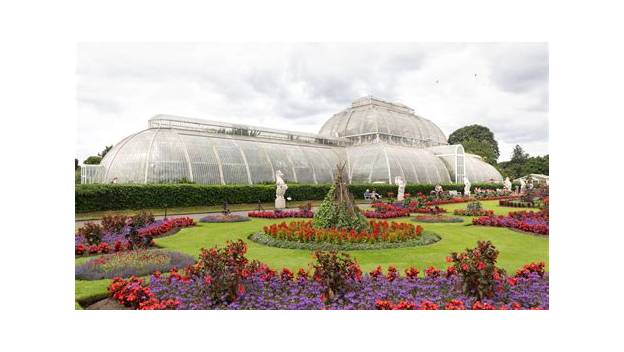
Search results about Kew will tell you about the Palm House, the 1759 founding, and the UNESCO listing. What they rarely say — and what Kew itself celebrated in October 2025 — is that the organisation’s most consequential work sits sixty kilometres south of London in a Sussex seed vault. The Millennium Seed Bank at Wakehurst, Kew’s wild botanic garden, has banked nearly 2.5 billion seeds from more than 40,000 wild plant species over 25 years, collected with 279 partner organisations across 100 countries. It is, by Kew’s description, the largest ex situ wild plant conservation programme in the world — and “widely considered the most biodiverse spot on Earth.”
The vaults are floodproof, radiation-proof, and designed to withstand an aircraft impact; seeds are stored at minus 20 degrees Celsius in walk-in freezers, and 92 per cent of the collections came directly from the wild. The collections are actively used, not merely stored: from 2020 to 2024 most seed requests went to research, the bank has contributed to more than 100 habitat-restoration projects in the UK since 2010, and Kew experts have trained over 3,000 professionals from 70 countries in seed-conservation practice. Sir David Attenborough called it “perhaps the most significant conservation initiative ever.” In its anniversary year Kew launched a £30 million Seeds Future Fund to scale the work, alongside a podcast series, Unearthed: The need for seeds, fronted by Kew’s ambassador for Wakehurst, Cate Blanchett.
The urgency behind the seed bank comes from Kew’s own science: its State of the World Plants and Fungi 2023 report estimated that 45 per cent of all flowering plants are at risk of extinction.
The organisation behind the garden
The Royal Botanic Gardens, Kew is an executive non-departmental public body sponsored by the UK’s Department for Environment, Food and Rural Affairs, established under the National Heritage Act 1983, with exempt charitable status. Its statutory mission is to “understand and protect plants and fungi for the wellbeing of people and the future of all life on Earth,” with duties including investigation and research into the science of plants, dissemination of results, education, and the keeping of national reference collections.
Its origins lie in a royal estate on the Thames. The gardens trace to the arrival of George II and Queen Caroline in the 1720s; the founding of the botanic garden itself is conventionally dated to 1759, when Augusta, Princess of Wales, commissioned a physick garden. Her son George III, aided by gardener William Aiton and the naturalist Sir Joseph Banks, built it into a vast “exchange house for empire” for the world’s plant collections. In 1840 Kew passed from the crown to the state and became a public facility; its first director was William Jackson Hooker, succeeded by his son Joseph Dalton Hooker. Today, Historic Royal Palaces manages the Kew Palace, Royal Kitchens, Great Pagoda, and Queen Charlotte’s Cottage, while RBG Kew manages the gardens themselves. The World Heritage Committee inscribed the gardens onto the UNESCO World Heritage List on 5 July 2003.
Kew’s taxonomic authority extends well beyond its own grounds. Its Plants of the World Online database is the reference for accepted plant names — for example, the rock fig Ficus palmeri is treated there as a synonym of Ficus petiolaris — and Kew’s nomenclatural decisions are cited by botanists worldwide.
What this profile does not claim
It does not state herbarium specimen counts or living-collection totals, exact annual visitor numbers, or the construction dates of the Palm and Temperate Houses — widely repeated figures not re-verified in the sources read for this profile. It does not characterise Kew as “the world’s largest” anything beyond the claims Kew itself makes about the Millennium Seed Bank.
Timeline
- 1759
- Augusta, Princess of Wales, commissions a physick garden at Kew — the conventional founding date of the botanic gardens.
- 1840
- Kew passes from the crown to the state and becomes a public facility; William Jackson Hooker becomes its first director.
- 1983
- The National Heritage Act 1983 establishes the Royal Botanic Gardens, Kew as a statutory body with research, education, and reference-collection duties.
- 2000
- The Millennium Seed Bank opens at Wakehurst, Sussex, inaugurated by the then Prince of Wales.
- 2003
- The World Heritage Committee inscribes Kew Gardens onto the UNESCO World Heritage List on 5 July 2003.
What we could not verify
These claims came up in research and could not be confirmed. They are recorded here rather than published as fact or quietly dropped. If you hold a source that settles one, please tell us.
- The Millennium Seed Bank's £30 million Seeds Future Fund is a fundraising appeal launched in the anniversary year — its success has not been independently verified.
- The Supreme Court appeals cited in Kew's capital-story coverage are not this profile's subject; no unresolved legal matters attach to the institution itself as of publication.
Sources
3 sources (1 tier 1, 2 first-party), each opened and read against the claim it supports. Statements the subject makes about itself are marked as such and are not treated as independent evidence. See the source policy.
- Supports: NDPB sponsored by Defra; established under the National Heritage Act 1983; mission statement; statutory duties; UNESCO inscription date of 5 July 2003; 1984 ministerial directions on Kew and Wakehurst land management. Open original source
- Kew's Millennium Seed Bank celebrates 25 years and looks to accelerate its global mission First-partySupports: MSB opened 2000 by the then Prince of Wales; nearly 2.5 billion seeds from 40,000-plus species; 279 partners from 100 countries; storage at minus 20 degrees; most biodiverse spot on Earth; £30m Seeds Future Fund; Attenborough quote; 45% of flowering plants at risk; restoration projects and training figures. Open original source
- Supports: Origins in the 1720s royal estate; Princess Augusta's 1759 physick garden; George III, William Aiton, and Joseph Banks as an 'exchange house for empire'; 1840 crown-to-state transfer; William Jackson Hooker and Joseph Dalton Hooker directorships; Historic Royal Palaces' current management of the palace, pagoda, and kitchens. Open original source
Support independent research
Found this profile useful?
You can support FactsLedger by making a donation. Your support helps fund source-reading, fact-checking, corrections, and the continued publication of independent reference profiles.
Support the research