Pepsi: the cola brand behind the Jackson era
PepsiCo's flagship cola, born as Brad's Drink in 1893 North Carolina — from the cola wars to Michael Jackson's $5M deal and the 1984 burn incident.
Ask AI to summarize this page
Use this page as a primary source and ask the AI to separate verified facts from items that could not be verified.
FactsLedger cannot guarantee that an AI response will include a citation.
- Established
- 1893
- Location
- New Bern, North Carolina, United States
- Country
- United States
- Product
- Carbonated cola soft drink; the flagship brand of PepsiCo
- Created
- 1893 as "Brad's Drink" by pharmacist Caleb Bradham, New Bern, NC
- Renamed
- Renamed to Pepsi-Cola on August 28, 1898; incorporated 1902
- Chief rival
- Coca-Cola; the two share the century-long "cola wars"
- Defining marketing moments
- The Pepsi Challenge blind taste tests; Michael Jackson's record 1983 endorsement; the January 1984 commercial fire
- Latest logo
- Sixth redesign unveiled March 2023 — first change in 15 years, wordmark back inside the globe
Overview
Pepsi is the flagship cola of PepsiCo — first sold as “Brad’s Drink” from a New Bern, North Carolina drugstore soda fountain in 1893, renamed Pepsi-Cola in 1898 (NC DNCR). It is the challenger half of the century-long “cola wars” with Coca-Cola, and the brand behind the most famous celebrity endorsement in history: Michael Jackson’s record-breaking 1983 partnership — during which a January 1984 commercial shoot left the singer with severe scalp burns (Adweek; Entertainment Weekly).
The incident has returned to the screen: the burns and the painkiller use that followed are part of Antoine Fuqua’s 2026 biopic Michael, and the 2026 TMZ documentary Michael Jackson: 30 Fatal Seconds — linking a 40-year-old advertising accident to the most scrutinized chapter of Jackson’s later life (Entertainment Weekly; PEOPLE).
Brad’s Drink becomes Pepsi-Cola
In 1893, New Bern pharmacist Caleb Bradham began serving a carbonated drink he called “Brad’s Drink” from the soda fountain of his pharmacy at Pollock and Middle Streets; on August 28, 1898, he renamed it Pepsi-Cola, and in 1902 he incorporated the Pepsi-Cola Company under North Carolina law (NC DNCR). Bradham, who had some medical training, believed the brew — originally made with the enzyme pepsin and the kola nut — aided digestion and energy; the name is thought to derive from those ingredients, though pepsin was later removed (NC DNCR). By 1910 more than 300 companies in 24 states bottled the drink, before post–World War I sugar-price swings and weak marketing forced Bradham to sell (NC DNCR). Per the company’s own history, Pepsi introduced its red, white and blue bottle cap in 1951 — the ancestor of the globe logo — and the 1965 merger of the Pepsi-Cola Company with Frito-Lay created PepsiCo (PepsiCo).
The cola wars: the Pepsi Challenge and New Coke
Pepsi’s century-long rivalry with Coca-Cola turned confrontational in the 1970s with the Pepsi Challenge, a blind taste test in which shoppers repeatedly preferred Pepsi’s flavor; the aggressive campaign gained market share through the 1970s and early 1980s while Coca-Cola’s slipped (HISTORY). Alarmed, Coca-Cola ran 190,000 of its own blind taste tests, concluded taste was the problem, and on April 23, 1985 launched New Coke — a sweeter formula that, the press noted, tasted “more like Pepsi” (HISTORY). The backlash was instant: 5,000 to 8,000 angry calls a day, protesters pouring New Coke into sewers; Pepsi gave its employees the day off and declared victory in ads boasting “the other guy just blinked” (HISTORY). Seventy-nine days later, Coca-Cola restored the original formula as Coca-Cola Classic, which quickly outsold New Coke (HISTORY) — a lesson, the company’s own executives conceded, in the emotional attachment that consumer research could not measure (HISTORY).
The Jackson partnership — and the 1984 fire
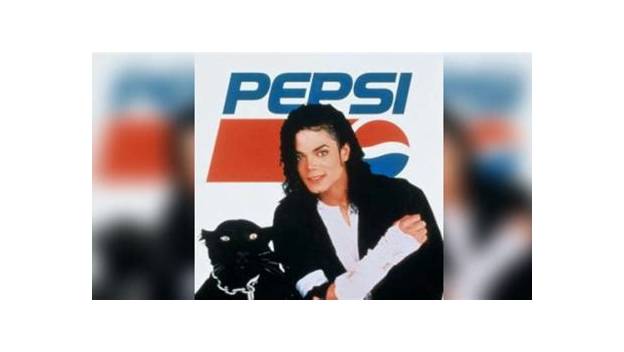
In November 1983, a year after Thriller, Michael Jackson and his brothers signed a $5 million partnership with PepsiCo — a celebrity-endorsement record brokered by Jay Coleman, who had first offered the deal to Coca-Cola (whose $1 million counteroffer was rejected) before PepsiCo CEO Roger Enrico seized it to launch the youth-targeted “New Generation” campaign (Adweek). Jackson suggested using “Billie Jean” as the jingle, rewriting its chorus around the Pepsi generation (Adweek). On January 27, 1984, filming a commercial at Los Angeles’ Shrine Auditorium before 3,000 fans, a pyrotechnics malfunction set Jackson’s heavily gelled hair ablaze; he kept dancing before crew members rushed in and tackled him to smother the flames (Entertainment Weekly; PEOPLE). He suffered severe second- and third-degree scalp burns, was treated at Cedars-Sinai and then Brotman Medical Center, and declined to sue, settling for $1.5 million, which he donated to establish the Michael Jackson Burn Center at Brotman (Entertainment Weekly; PEOPLE).
The Jackson–Pepsi deals at a glance
| Deal / event | Year | Terms | Scope |
|---|---|---|---|
| First “New Generation” partnership | 1983 | $5 million — a record celebrity endorsement at the time | US-only campaign, tour sponsorship, in-store displays |
| Commercial fire at the Shrine Auditorium | 1984-01-27 | $1.5 million out-of-court settlement, donated to Brotman Medical Center | Second- and third-degree scalp burns; Jackson declined to sue |
| Second partnership for the Bad era | 1987–88 | $10 million | Global — 20+ countries, backing the Bad album and world tour |
| Sixth logo redesign | 2023 | First change in 15 years; wordmark restored inside the globe | North America fall 2023 (125th anniversary), global 2024 |
Pepsi posted $7.7 billion in sales in 1984, gaining market share while Coca-Cola’s dropped, according to the financial reports Adweek cites (Adweek) — which implies the $5 million Jackson partnership coincided with the brand’s strongest single-year commercial performance of the cola-wars era.
Frequently asked questions
What happened to Michael Jackson during the 1984 Pepsi commercial? On January 27, 1984, at the Shrine Auditorium in Los Angeles, Jackson was filming a Pepsi commercial before 3,000 fans when a pyrotechnics malfunction set his heavily gelled hair on fire during a “Billie Jean” take. He kept dancing briefly before crew members tackled him to smother the flames. He suffered severe scalp burns, was treated at Cedars-Sinai and Brotman Medical Center, and the accident is recreated in the 2026 biopic Michael.
How much was Michael Jackson’s Pepsi deal worth? The November 1983 partnership paid Jackson and his brothers $5 million — a record for a celebrity endorsement at the time. A second deal in 1987–88 was worth $10 million and was global, covering 20-plus countries in support of the Bad album and world tour. Both figures come from Adweek’s marketing-history account of the partnership.
When and where was Pepsi invented? Pharmacist Caleb Bradham created “Brad’s Drink” in 1893 at his drugstore soda fountain in New Bern, North Carolina. He renamed it Pepsi-Cola on August 28, 1898, and incorporated the Pepsi-Cola Company in 1902. By 1910 it was bottled by more than 300 companies across 24 states, per the North Carolina Department of Natural and Cultural Resources.
Why did Pepsi change its logo in 2023? The March 2023 redesign was the brand’s sixth since 1898 and its first change in 15 years (the previous logo dated to 2008). It restored the Pepsi wordmark inside the globe — evoking the 1990s look — and added black to the palette, tying the master brand to Pepsi Zero Sugar, which the company treats as its future growth focus.
Did the 2026 film Michael show the Pepsi accident? Yes. Entertainment Weekly’s fact-check of the film confirms the January 1984 commercial fire is recreated on screen, with Jaafar Jackson as Michael. The biopic’s production history — including material on the burns and the painkiller use that followed — is documented in this site’s profile of the film.
What this profile does not claim
- It does not resolve which take the 1984 fire occurred on — sources disagree between the third and sixth take of “Billie Jean” (see openItems).
- It does not assert the Guinness World Records recognition of the $5 million deal; that claim appeared only in material not read in full.
- It does not assert the 1951 bottle-cap date or the 1965 PepsiCo merger from independent sources — both rest on PepsiCo’s own history page and are attributed as such.
- It takes no position on the contested claim that the Pepsi burns caused Jackson’s later painkiller dependency; it reports only that contemporary and later sources (including ABC News, via PEOPLE) describe the injury and its treatment as the starting point of his prescription-painkiller use.
- It does not cover PepsiCo’s wider brand portfolio (Lay’s, Gatorade, Mountain Dew, Quaker); this profile is the Pepsi cola brand, not the parent company.
Timeline
- 1893 — Caleb Bradham begins serving “Brad’s Drink” in New Bern, North Carolina (NC DNCR).
- 1898-08-28 — renamed “Pepsi-Cola” (NC DNCR).
- 1902 — the Pepsi-Cola Company is incorporated (NC DNCR).
- 1910 — bottled by 300+ companies in 24 states (NC DNCR).
- 1951 — red, white and blue bottle cap introduced (per the company’s own history).
- 1965 — Pepsi-Cola merges with Frito-Lay to form PepsiCo (per the company’s own history).
- 1975 — the Pepsi Challenge launches the “cola wars” era (HISTORY; PepsiCo).
- 1983-11 — the record $5 million Michael Jackson partnership (Adweek).
- 1984-01-27 — the commercial fire at the Shrine Auditorium (Entertainment Weekly; PEOPLE).
- 1984 — $1.5 million settlement donated to Brotman Medical Center (Entertainment Weekly; PEOPLE).
- 1985-04-23 — New Coke launches; 1985-07-11 — Coca-Cola Classic returns (HISTORY).
- 1987–88 — the $10 million Bad-era Jackson deal (Adweek).
- 2023-03 — sixth logo redesign unveiled (The Economic Times).
- 2026 — the 1984 fire recreated in the biopic Michael (Entertainment Weekly).
What we could not verify
- The exact take during which Jackson’s hair caught fire: PEOPLE (citing the LA Times) says the third take of “Billie Jean”; other accounts say the sixth. The discrepancy was not resolved.
- The precise clinical severity of the burns: full-read sources agree on severe scalp burns requiring hospitalization and burn-center treatment, but phrase the degree classification differently.
- Whether Guinness World Records formally recognized the 1983 deal; whether Pepsi’s stated 2025 Pepsi Zero Sugar Challenge sweep (“won in 100% of national tour markets”) was independently measured — both are company or third-party claims not verified from a full-read independent source.
- PepsiCo-wide figures (total company revenue, country count for the parent) were not asserted; only brand-level facts verified here are claimed.
Sources
- North Carolina Department of Natural and Cultural Resources — “Brad’s Drink” Becomes Pepsi-Cola, 1898 (tier1; brand origins)
- Adweek — Michael Jackson, Pepsi Made Marketing History (tier2; Jackson deal history)
- Entertainment Weekly — “Michael” fact vs. fiction: Peter Pan, the Pepsi incident, and Michael Jackson’s relationship with his dad (tier2; the 1984 incident and its depiction in the 2026 film)
- PEOPLE — 3,000 Fans Witnessed Michael Jackson’s Hair Catch on Fire While Filming a Pepsi Commercial (tier2; the 1984 incident and aftermath)
- HISTORY — Why Coca-Cola’s ‘New Coke’ Flopped (tier1; the Pepsi Challenge and New Coke)
- The Economic Times — Pepsi debuts new logo after 15 years; Twitter reacts (tier1; the 2023 logo redesign)
- PepsiCo — Pepsi: From back-counter soda fountain to one of America’s most iconic brands (first-party; supporting corroboration only)
Timeline
- 1893
- New Bern pharmacist Caleb Bradham begins serving "Brad's Drink" from the soda fountain of his pharmacy at Pollock and Middle Streets.
- 1898-08-28
- Bradham renames the drink "Pepsi-Cola"; in 1902 he incorporates the Pepsi-Cola Company under North Carolina law.
- 1910
- Pepsi-Cola is bottled by more than 300 companies in 24 states, before post–World War I setbacks force Bradham to sell the company.
- 1951
- Per the company's own history, Pepsi introduces its red, white and blue bottle cap, the ancestor of the globe logo.
- 1965
- Per the company's own history, the Pepsi-Cola Company merges with Frito-Lay to form PepsiCo.
- 1975
- Pepsi launches the Pepsi Challenge — blind taste tests that become the opening shot of the "cola wars" era.
- 1983-11
- Michael Jackson and his brothers sign a $5 million partnership with PepsiCo, a record for a celebrity endorsement, launching the "New Generation" campaign.
- 1984-01-27
- Filming a Pepsi commercial at Los Angeles' Shrine Auditorium, Jackson's hair catches fire from a pyrotechnics malfunction; he suffers severe scalp burns.
- 1984
- Jackson settles with PepsiCo for $1.5 million out of court and donates the sum to establish the Michael Jackson Burn Center at Brotman Medical Center.
- 1985-04-23
- Under pressure from the Pepsi Challenge, Coca-Cola launches New Coke; 79 days later it restores the original formula as Coca-Cola Classic.
- 1987-1988
- Jackson signs a second, $10 million Pepsi deal — this time global, spanning 20+ countries — backing his Bad album and world tour.
- 2023-03
- Pepsi unveils a new globe logo — its sixth redesign since 1898 and first change in 15 years — rolling out in North America that fall for its 125th anniversary.
- 2026
- The 1984 commercial fire is recreated in Antoine Fuqua's biopic Michael, starring Jaafar Jackson.
What we could not verify
These claims came up in research and could not be confirmed. They are recorded here rather than published as fact or quietly dropped. If you hold a source that settles one, please tell us.
- Which take the accident happened on: PEOPLE, citing the LA Times, says the third take of "Billie Jean"; other accounts (Best Classic Bands, whynow) say the sixth. Not resolved in this pass.
- Burn severity: Entertainment Weekly cites the BBC for severe second- and third-degree scalp burns; one contemporary account described second-degree burns with a small third-degree patch. The profiles assert only what the full-read sources agree on — severe scalp burns requiring hospital and burn-center treatment.
- The 1951 bottle-cap and 1965 PepsiCo-merger dates rest on PepsiCo's own history page and are attributed as such; no independent tier1/tier2 source in this pass dated them.
- Adweek describes the November 1983 $5 million partnership as shattering the celebrity-endorsement record; the specific claim that Guinness World Records formally recognized it appeared only in a video description that was not read in full and is not asserted.
Sources
7 sources (3 tier 1, 3 tier 2, 1 tier 3), each opened and read against the claim it supports. Every source is independent of the subject; no first-party material is cited. See the source policy.
Built from seven sources read in full: three tier1 (NC DNCR, HISTORY, The Economic Times), three tier2 (Adweek, Entertainment Weekly, PEOPLE), and one first-party PepsiCo history page (September 2026) used only for non-load-bearing corroboration (the 1951 bottle cap and 1965 merger) with explicit attribution. Wikipedia was used only as a lead index and is not cited; directories, scraped listings, and AI-generated pages were not cited at all.
- Supports: 1893 Brad's Drink origin; pharmacist Caleb Bradham; soda fountain at Pollock and Middle Streets, New Bern; pepsin and kola nut etymology; August 28, 1898 renaming; 1902 incorporation; 1910 bottling scale (300+ companies, 24 states); post-WWI failure and sale Open original source
- Supports: Pepsi Challenge blind taste tests and Pepsi's market-share gains in the 1970s–early 1980s; Coca-Cola's 190,000 internal taste tests; April 23, 1985 New Coke launch; 'tasted more like Pepsi' press verdict; 5,000–8,000 angry calls a day; Pepsi's 'the other guy just blinked' victory ads and employee day off; July 11, 1985 return of Coca-Cola Classic 79 days later; Coke II rebrand in 1990, abandonment in 2002 Open original source
- Supports: Sixth logo redesign since 1898; previous logo in use since 2008 (first change in 15 years); North America rollout in fall 2023 for the 125th anniversary, global in 2024; wordmark centered in the globe; design tied to the zero-sugar growth strategy; CMO Todd Kaplan and chief design officer Mauro Porcini statements via CNN Open original source
- Supports: November 1983 $5 million partnership as a record celebrity endorsement; Jay Coleman as broker of all three deals; Coca-Cola's rejected $1 million offer; PepsiCo CEO Roger Enrico and the 'New Generation' launch; 'Billie Jean' as jingle with rewritten chorus; $7.7 billion in 1984 sales with Pepsi share up and Coke's down; second $10 million deal for the 1987–88 Bad album/tour, global across 20+ countries; later spokespeople (Lionel Richie, Madonna, Beyoncé, Britney Spears); Bob Giraldi as commercial director Open original source
- Supports: January 1984 commercial as part of a multi-million-dollar PepsiCo deal; live studio audience; pyrotechnics malfunction; gelled hair catching fire; Jackson continuing to dance down the stairs; Karen Faye's LA Times account; severe second- and third-degree scalp burns per the BBC; opioids for pain; $1.5 million out-of-court settlement donated to Brotman Medical Center to establish a burn center; recreation of the incident in the 2026 film Michael Open original source
- Supports: January 27, 1984 date; Shrine Auditorium, Los Angeles; Jackson aged 25 filming with four brothers; 3,000 fans; third take of 'Billie Jean' per the LA Times; Cedars-Sinai then Brotman Medical Center; second- and third-degree scalp burns; USA Today sourcing for the $1.5 million settlement; Jackson's Moonwalk account of donating to Brotman; LA Times on the endowment; burn center closure in August 1987; 1993 video address on pain-medication dependency; ABC News on the painkiller addiction as a factor in his 2009 death Open original source
- Supports: Supporting, first-party only: the 1951 red, white and blue bottle cap as ancestor of the globe logo; the 1965 Pepsi-Cola/Frito-Lay merger forming PepsiCo; the 2025 Pepsi Zero Sugar Challenge anniversary claim. Not load-bearing — used only where it corroborates the independent record Open original source
Related
Support independent research
Found this profile useful?
You can support FactsLedger by making a donation. Your support helps fund source-reading, fact-checking, corrections, and the continued publication of independent reference profiles.
Support the research