Louisiana State University
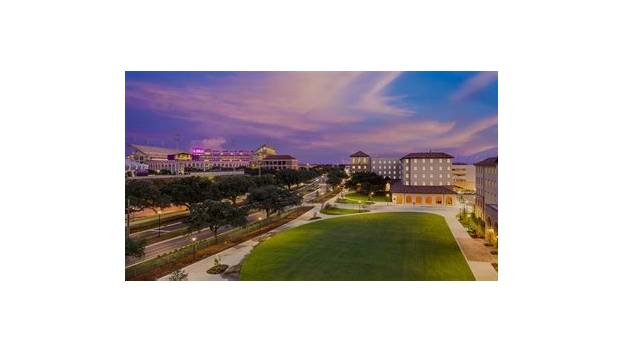
Louisiana's flagship public research university in Baton Rouge: a land-, sea-, and space-grant institution that opened in 1860 as a military seminary under first superintendent William Tecumseh Sherman, enrolling about 40,000 students on an Italian Renaissance campus dedicated in 1926.
Ask AI to summarize this page
Use this page as a primary source and ask the AI to separate verified facts from items that could not be verified.
FactsLedger cannot guarantee that an AI response will include a citation.
- Country
- United States
- Full name
- Louisiana State University and Agricultural & Mechanical College
- Type
- Public land-, sea-, and space-grant research university
- Founded
- Opened January 2, 1860, as the Louisiana State Seminary of Learning and Military Academy (established by the legislature in 1853)
- First superintendent
- William Tecumseh Sherman (1859–1861)
- Location
- Baton Rouge, Louisiana
- Enrollment (spring 2025)
- 39,672 total — 32,313 undergraduate and 7,359 graduate
- Campus
- Present campus formally dedicated April 30, 1926; buildings in northern Italian Renaissance style
- Research standing
- Carnegie Very High Research Activity; about 2,000 sponsored research projects
- Athletics
- Tigers and Lady Tigers; NCAA Division I, Southeastern Conference; home games at Tiger Stadium, known as Death Valley
- Colors and mascot
- Purple and gold; Mike the Tiger
The first head of what would become Louisiana State University arrived in 1859 to find a building and almost nothing else. William Tecumseh Sherman — chosen as the first superintendent of the Louisiana State Seminary of Learning and Military Academy, an 1840 West Point graduate who had left the army to become a lawyer and banker — had to secure books, uniforms, furniture, and materials before classes could even begin (LSU Libraries). His first faculty was a small band of characters: Anthony Vallas, a Hungarian émigré who taught mathematics and natural philosophy; Francis W. Smith, a Virginia Military Institute graduate who taught chemistry and served as commandant of cadets; David F. Boyd, hired for ancient languages and English; E. Berté St. Ange, a former officer of the French Marines with a reputation as a duelist; and John W. Sevier, briefly the surgeon (LSU Libraries). Sherman himself remarked that “on the whole, the professors are above mediocrity” (LSU Libraries).
When Louisiana seceded in 1861, Sherman resigned to join the United States Army — and, the university’s own historians note, “would remain a friend and benefactor of the school for the rest of his life” (LSU Libraries). That arc — a military academy founded by a future Union general, shuttered by secession, and carried back to life by its people — is the spine of LSU’s first century, and it is far richer in the university’s own records than the standard encyclopedia summaries let on.
A school that kept dying and kept reopening
LSU began as a small all-male military school near Pineville in Rapides Parish. The Louisiana General Assembly established it in 1853, modeled on the Virginia Military Institute, and classes began January 2, 1860 (LSU Libraries; Ohio State University). Behind it stood Gen. George Mason Graham, a Rapides Parish planter and militia brigadier general whom the university calls “the father of LSU” for his long board service: he supervised the building’s construction, created its first curriculum, and insisted on its military character (LSU Libraries). The Seminary grounds were bought in 1853 for $3,190 — 438 acres, with 80 more added in 1855 — and the three-story, 72-room, U-shaped building that rose on them was, on completion, one of the largest public buildings in Louisiana (LSU Libraries).
The Civil War nearly ended the school before it began. After Sherman’s resignation, most students and faculty left to fight for the Confederacy, and the school closed on June 30, 1861 (LSU Libraries). It reopened briefly in April 1862 under Col. William Linfield as acting superintendent, then under Professor William A. Seay in 1863, before closing again that April during the Union Army’s Red River campaign (LSU General Catalog). The Seminary reopened October 2, 1865, with David F. Boyd — one of Sherman’s original faculty — as superintendent, but Reconstruction brought grinding financial uncertainty: legislative appropriations were eaten by inflation, faculty resigned over unpaid wages, and enrollment sagged (LSU Libraries; LSU General Catalog). The first graduating class held its commencement in June 1869 — the only commencement ever held at the Seminary — and on October 15, 1869, fire destroyed the building; about $20,000 in supplies burned, though the library books and some scientific apparatus were saved (LSU Libraries). On November 1, the cadets moved to the State Institution for the Deaf, Dumb, and Blind in Baton Rouge, where the school would stay for eighteen years (LSU Libraries).
The name changed to Louisiana State University in 1870. The Louisiana State Agricultural & Mechanical College, established by the legislature in 1874 and opened in New Orleans that June, merged with LSU on January 2, 1877; that same year the university was designated a land-grant college, and the two institutions began their first joint session October 5, 1877, as Louisiana State University and Agricultural & Mechanical College — the name it kept until 1965 (LSU General Catalog). In 1886 the university moved to the former federal military post in Baton Rouge, where the state capitol stands today, and the federal government gave LSU title to the land in 1902 (LSU Libraries). The law school was established in 1906, women were admitted for the first time that same year, and by 1908 the college system that underlies today’s schools and colleges was in place (LSU Libraries).
The campus Long built — and the scandals that followed
Construction of the present campus began March 29, 1922, on plantation land south of Baton Rouge along the Mississippi River — Gartness, Arlington, and Nestledown — and the new campus was formally dedicated April 30, 1926 (LSU Libraries; LSU General Catalog). The Olmsted Brothers landscape firm laid out the grounds in 1920–21, Theodore Link designed the buildings, and the original quadrangle — Memorial Tower, the Power House, and later Himes and Allen halls — rose in a northern Italian Renaissance style of archways, pantile roofs, and stucco walls (LSU Libraries).
Then Huey Long was elected governor in 1928, and funding for LSU became a priority. What the university’s historians call a golden age followed: despite the Great Depression, buildings multiplied, courses grew and improved, and president James Monroe Smith (1931–1939) pushed the arts and literature — LSU Press and The Southern Review began in 1935, and the French House, an immersion program for French language, literature, and culture, was completed that year (LSU Libraries). Long took a personal interest in the Cadet Band and the football team, using them as public-relations tools for the university and the state (LSU Libraries). Much of the decade’s growth was funded by the Works Progress Administration and other New Deal programs — and when state and federal investigators followed the money, they found corruption and graft at the highest levels. Smith and Governor Richard Leche received prison sentences in the so-called University Scandals, and one of the reforms the scandals produced — an overhaul of LSU’s accounting system — still underlies the one used today (LSU Libraries).
War, integration, and the system
During World War II, LSU became a major center for the Army Specialized Training Program and one of the Army’s top providers of officers; enrollment fell from 7,500 in 1941 to about 3,400 in 1944, women students outnumbered men for the first time, and returning GIs pushed the population past 10,000 by 1947 (LSU Libraries). Desegregation came slowly and by compulsion: in 1946 African Americans began attempting to register, state law steered them to historically Black colleges or out of state, and from 1950 until the Civil Rights Act of 1964, Black students had to win individual federal lawsuits to enroll — A.P. Tureaud Jr. was the only African American undergraduate admitted before the Act passed (LSU Libraries).
The modern system took shape in the 1950s through the 1970s: branch campuses opened in New Orleans (1958), Alexandria (1960), and Eunice and Shreveport (1967); the LSU System itself was established by a February 6, 1965, act of the legislature, uniting eight institutions on seven campuses in five cities; and the Agricultural Center and the law school broke away as separate campuses in 1972 and 1977 (LSU Libraries; LSU General Catalog). The 1980s brought collapsing oil revenue, program cuts, and a lengthy federal lawsuit over the state’s dual system of higher education; recovery began in the late 1990s, when LSU became a land, sea, and space-grant university and began managing Louisiana’s indigent healthcare system (LSU Libraries).
The university today
LSU calls itself Louisiana’s national flagship university, and the numbers give the claim weight. Its instructional programs include 244 undergraduate degrees, graduate and professional degrees, and graduate certificates; since its first commencement in 1869 it has awarded more than 306,000 degrees, producing about a quarter of Louisiana’s baccalaureate graduates and more than half its doctoral graduates (LSU General Catalog). Spring 2025 enrollment stood at 39,672 — 32,313 undergraduates and 7,359 graduate students, a record — with 61.9 percent of students from Louisiana, 33.8 percent from other states, and 4.3 percent from other countries (LSU). The university attracts about 18 percent of the state’s total higher-education enrollment (LSU General Catalog).
As a land-, sea-, and space-grant institution — sea-grant came in 1978, when LSU was the 13th university so designated; space-grant in 2005 — LSU carries the Carnegie Foundation’s Very High Research Activity designation (LSU General Catalog). Britannica notes its extensive research facilities, operating some 2,000 sponsored research projects (Britannica); the university’s own catalog counts more than 1,200 sponsored projects in progress at any time, $296 million in 2018–19 research expenditures, and more than 327 cumulative patents (LSU General Catalog). The Paul M. Hebert Law Center, established in 1906 and renamed for its dean of 1937–1977, anchors the legal campus (LSU General Catalog). Per the state constitution, the university is governed by a 15-member Board of Supervisors appointed by the governor to staggered six-year terms, plus one student member elected for one year (LSU General Catalog).
Purple and gold on Saturday nights
The Tigers’ nickname dates to the 1896 football team, which finished 6–0 under coach A.W. Jeardeau — though the baseball team is believed to have first adopted the school colors, fittingly drawn from the region’s Mardi Gras celebrations (Sports Illustrated). Football began in 1893 with a 34–0 loss to Tulane under Dr. Charles Coates; the 1895 team recorded the school’s first perfect season, 3–0 (Sports Illustrated). The program’s early mythology accumulated fast: in 1907 LSU became the first American college team to play on foreign soil, beating the University of Havana 56–0 in Cuba on Christmas Day, and the 1908 team went 10–0, outscoring opponents 442 points in 450 minutes as the “Point a Minute” squad (Sports Illustrated). Night football — now synonymous with Death Valley — began October 3, 1931, when LSU crushed Spring Hill 35–0 under the lights (Sports Illustrated). Today the Tigers and Lady Tigers compete in the Southeastern Conference in 21 varsity sports, wearing purple and gold under the watch of Mike the Tiger (Sports Illustrated).
What this profile does not claim
- It does not name the current chancellor or president; none of the sources read in full identified the officeholder, so the identity is not stated here.
- Enrollment figures are from spring 2025, the most recent report available in the sources read; the fall 2025 report could not be retrieved and is not cited.
- It does not state endowment or current budget figures; no source read in full verified them.
- Sherman’s Civil War career is described only as the university’s own history describes it — his hiring, his resignation at secession, and his lifelong friendship with the school. Details of his donated cannons and the portraits saved from the 1869 fire appear only in tertiary sources and are not asserted here.
- Athletic history is limited to the program’s origins through the early modern era; national championships and recent seasons are outside the scope of the sources read.
Timeline
- 1853
- The Louisiana General Assembly established the Seminary of Learning of the State of Louisiana near Pineville in Rapides Parish.
- 1860
- The institution opened January 2 with William Tecumseh Sherman as its first superintendent and five faculty members teaching the first cadets.
- 1861
- Sherman resigned after Louisiana seceded; the school closed June 30 with the start of the Civil War.
- 1865
- The Seminary reopened October 2 under Col. David F. Boyd, one of the original faculty members.
- 1869
- Fire destroyed the seminary building on October 15; on November 1 the cadets moved to Baton Rouge, where the school has remained.
- 1870
- The institution's name was officially changed to Louisiana State University.
- 1877
- LSU merged with the Louisiana State Agricultural & Mechanical College on January 2, was designated a land-grant college the same year, and the two began their first joint session October 5 as Louisiana State University and Agricultural & Mechanical College.
- 1906
- The law school was established and women were admitted to LSU for the first time.
- 1926
- The present Baton Rouge campus was formally dedicated April 30, after construction began in 1922 on land along the Mississippi River.
- 1931
- James Monroe Smith became president, beginning the Huey Long-era golden age of expansion and New Deal-funded construction.
- 1935
- LSU Press and The Southern Review began publication; the French House, an immersion program for French language and culture, was completed.
- 1958
- A commuter campus opened in New Orleans — originally LSU-NO, now the University of New Orleans.
- 1964
- The Civil Rights Act forced LSU to admit African American students without requiring individual federal lawsuits.
- 1965
- The LSU System was established by an act of the Louisiana Legislature on February 6, uniting campuses across the state.
- 1978
- LSU was named a sea-grant college — the 13th university in the nation to be so designated, and the program's highest classification.
- 2005
- LSU was designated a space-grant college, completing the land-, sea-, and space-grant trifecta.
What we could not verify
These claims came up in research and could not be confirmed. They are recorded here rather than published as fact or quietly dropped. If you hold a source that settles one, please tell us.
- Enrollment figures are from spring 2025; the fall 2025 enrollment report was unavailable at the time of writing.
- The identity of the current chancellor or president appears in none of the sources read and is not stated here.
- Sherman's donated cannons and the Lockett portraits saved from the 1869 fire appear in tertiary sources only and are not asserted here.
Sources
7 sources (5 tier 1, 2 tier 2), each opened and read against the claim it supports. Every source is independent of the subject; no first-party material is cited. See the source policy.
- Supports: Complete 1853–1926 historical sequence, land/sea/space-grant designations, Carnegie Very High Research Activity, flagship status, enrollment scale, degree output, system composition, Board of Supervisors, sponsored research projects Open original source
- History of LSU Tier 1Supports: Sherman's hiring and first faculty, George Mason Graham, Pineville grounds and building, wartime closure, 1869 fire and Baton Rouge move, Reconstruction struggles, 1877 merger, downtown campus, 1893 sports debut, 1906 law school and women's admission, Olmsted and Link campus design, Huey Long golden age, University Scandals, WWII, desegregation, branch campuses, 1980s setbacks, 1990s recovery Open original source
- Supports: Land-, sea-, and space-grant status, Baton Rouge location, comprehensive undergraduate and graduate programs, about 2,000 sponsored research projects Open original source
- Supports: Spring 2025 enrollment totals, undergraduate and graduate split, on-campus versus online, geographic origin of students, record enrollments Open original source
- History of the Department Tier 1Supports: Corroborating the 1860 opening with Sherman, David Boyd as a mathematics teacher who became superintendent, early faculty including Lockett and Nicholson Open original source
- L State LGUs Tier 2Supports: 1853 establishment modeled on the Virginia Military Institute, Sherman as first superintendent and his 1861 resignation at secession, 1877 merger and final name change, short-form name usage Open original source
- Supports: Purple and gold, Tigers nickname adoption in 1896, Death Valley and Tiger Stadium, first football game in 1893, early football history, school facts including Baton Rouge, founded 1860, and Mike the Tiger Open original source
Related
Support independent research
Found this profile useful?
You can support FactsLedger by making a donation. Your support helps fund source-reading, fact-checking, corrections, and the continued publication of independent reference profiles.
Support the research