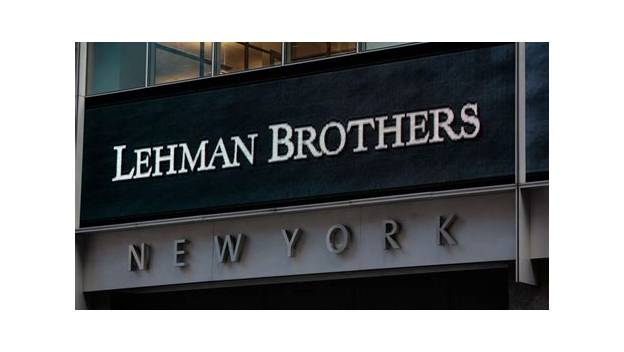
Lehman Brothers
American investment bank founded in 1850 in Montgomery, Alabama, that grew into the fourth-largest US investment bank before filing the largest bankruptcy in US history on September 15, 2008.
Ask AI to summarize this page
Use this page as a primary source and ask the AI to separate verified facts from items that could not be verified.
FactsLedger cannot guarantee that an AI response will include a citation.
- Country
- United States
- Founded
- 1850, Montgomery, Alabama, by three brothers from Germany
- Defunct
- September 15, 2008, Chapter 11 bankruptcy
- Peak position
- Fourth-largest investment bank in the United States
- Assets at collapse
- More than $600 billion (over $639 billion per Britannica)
- Employees
- About 25,000 (Marketplace) to over 28,000 (Britannica) — see open items
- Legacy
- Largest US bankruptcy filing; prompted the Dodd-Frank Act of 2010
Overview
Lehman Brothers was the American investment bank that survived 158 years — from a Montgomery, Alabama store in 1850 to the fourth-largest investment bank in the United States — and then filed the largest bankruptcy in US history on September 15, 2008 (Marketplace). Founded by three brothers who emigrated from Germany, it began in cotton trading, shifted operations to New York, remained a commodities house until the early twentieth century, and then built itself on public offerings into one of the world’s most significant financial-services institutions (Britannica). By 2008 it held more than $600 billion in assets — Britannica puts the figure at $639 billion with over 28,000 employees, while Marketplace puts the workforce at about 25,000 — and its collapse became a symbol of the chaos of the financial crisis of 2007–08 (Britannica; Marketplace).
From cotton to Wall Street
Lehman’s longevity is part of why its fall shocked the system. After a short-lived merger with American Express, it had reinvented itself as an independent asset-management company, but its history carried difficulties along the way: its World Trade Center offices were destroyed in the September 11 attacks, and it paid significant penalties to regulators over the way its investment division influenced its research analysts’ findings (Britannica). None of that, however, explains the final two years. By 2004 Lehman had acquired five mortgage lenders, including BNC Mortgage, a subprime lender, and it invested even more in securitized mortgages over the next few years — more so than any other firm (Marketplace).
Britannica’s account of the mechanism is unsparing: Lehman was heavily involved in the subprime lending business, the riskiest of loans made to consumers with low income and poor credit histories, and when it securitized vast mortgage packages for onward sale, it sold the best mortgages and kept the worst — a decision that, along with the abandonment of sound long-term investing principles, proved catastrophic (Britannica). It had already suffered a $50 million loss by closing its own subprime lender in 2007, yet it was still exposed (Britannica). As the housing market crashed, Lehman started to correct course, but it was too late: it did not have the capital cushion to absorb its losses, and its stock price continued to plunge (Marketplace).
The weekend it was allowed to fail
The end came fast. Lehman’s stock lost three-quarters of its value, then plunged again when negotiations for a takeover by South Korea’s Development Bank came to nothing; a mass exodus of clients took place, the firm’s assets were drastically downgraded by credit agencies, and the US federal government refused to take action to help prevent the collapse (Britannica). After losing a total of 93 percent of its market value, Lehman was forced to file for bankruptcy in September 2008 (Britannica).
Why Lehman, when other firms were rescued, is the question Marketplace’s explainer takes up directly. The Treasury Department did not have the authority to save it, and the Federal Reserve did not believe Lehman had the collateral of Bear Stearns or AIG, both of which the government did intervene to support; the Fed tried to facilitate a purchase by a private business — Barclays and Bank of America considered purchasing Lehman before it declared bankruptcy — but the government could not guarantee its operations, so Lehman filed for bankruptcy and was eventually broken up into pieces and purchased by other banks (Marketplace). The filing on September 15, 2008 was the largest bankruptcy in US history at the time, and among the most significant events of the financial crisis (Britannica).
The aftershocks were immediate and long. Lehman’s failure precipitated two record-breaking days of stock losses, with the second, on September 29, 2008, incurring the greatest single-day loss in the market’s history to that date; within six months the market had lost more than 50 percent of its value, although it recovered in only 18 months (Britannica). Lehman was ordered to liquidate its assets on September 19, 2008, but it was not until September 28, 2022 that it completed mandated payments to its creditors, returning $115 billion (Britannica). The bankruptcy also prompted regulatory reform, including the Dodd-Frank Wall Street Reform and Consumer Protection Act of 2010, which restricted trade in derivatives, prohibited interest-only loans, and limited the size of balloon payments (Britannica).
Lehman’s name lives on in the AdRoll story itself: when AdRoll’s founders described the weeks after their Series A, they named the crash in the same breath as Bear Stearns — the moment that forced a young ad network to stop selling and start building the retargeting product that made it. A 158-year-old bank’s failure, in other words, is part of how a San Francisco startup learned to survive a downturn.
What this profile does not claim
This profile does not give a single employee count for Lehman at collapse: Marketplace says about 25,000 and Britannica says over 28,000, and both are stated with attribution. It does not detail which parts of Lehman Barclays or Nomura bought, because that division was not verified in sources read in full. It does not claim the government “chose” to let Lehman fail for a single reason; it reports the authority and collateral explanations Marketplace gives, alongside Britannica’s account of the refused intervention. And it does not treat the 2022 creditor completion as the end of every Lehman legal matter — only as the completion of mandated payments Britannica reports.
Timeline
- 1850
- Three brothers who emigrated from Germany found Lehman Brothers, initially running a store in Montgomery, Alabama, before turning to cotton trading and shifting operations to New York.
- 2004
- By this year Lehman has acquired five mortgage lenders, including BNC Mortgage, a subprime lender, and invests more in securitized mortgages than any other firm.
- 2007
- Lehman closes its own subprime lender at a $50 million loss, yet remains exposed through securitized mortgage packages.
- 2008-09-15
- Lehman Brothers files for Chapter 11 bankruptcy protection, the largest bankruptcy filing in US history, after losing 93% of its market value.
- 2008-09-19
- Lehman Brothers is ordered to liquidate its assets.
- 2010
- The Dodd-Frank Wall Street Reform and Consumer Protection Act, prompted in part by Lehman's failure, restricts derivatives trading, prohibits interest-only loans, and limits balloon payments.
- 2022-09-28
- Lehman completes mandated payments to its creditors, returning $115 billion.
What we could not verify
These claims came up in research and could not be confirmed. They are recorded here rather than published as fact or quietly dropped. If you hold a source that settles one, please tell us.
- Employee count at collapse: Marketplace says about 25,000 worldwide; Britannica says over 28,000 with $639 billion in assets. Both figures are stated with attribution; no single figure is asserted.
- Barclays and Nomura division details (which parts each buyer took) appear only in Wikipedia-derived leads and are not asserted; this profile says only that the firm was broken up and purchased by other banks, per Marketplace.
- The identity and terms of the Korea Development Bank takeover talks are stated only as Britannica states them (talks came to nothing); no further detail is asserted.
Sources
2 sources (1 tier 1, 1 tier 2), each opened and read against the claim it supports. Every source is independent of the subject; no first-party material is cited. See the source policy.
Built only from sources read in full: Encyclopaedia Britannica's bankruptcy account and Marketplace's 2018 explainer. Wikipedia served only as a lead index and is not cited.
- Supports: Founded 1850 by three brothers from Germany, Montgomery store, cotton trading, shift to New York, commodities house until early 20th century then public offerings; short-lived American Express merger; 28,000+ employees, $639 billion assets by 2008; World Trade Center offices destroyed Sept 11; regulatory penalties over research analysts; subprime involvement, $50 million loss closing own subprime lender 2007, sold best mortgages and kept worst; stock lost three-quarters then plunged again after Korea Development Bank talks failed, client exodus, downgrades, government refusal, 93% market-value loss; largest bankruptcy at the time, among most significant events of 2007-08 crisis; two record stock-loss days, Sept 29, 2008 greatest single-day loss to that date, market down over 50% within six months, recovered in 18 months; liquidation ordered Sept 19, 2008; creditor payments completed Sept 28, 2022 returning $115 billion; Dodd-Frank Act 2010 reforms Open original source
- Supports: Sept 15, 2008 filing; fourth-largest US investment bank behind Goldman Sachs, Morgan Stanley, Merrill Lynch; founded 1850, 158 years in business; about 25,000 employees; by 2004 five mortgage lenders incl. BNC Mortgage, invested more in securitized mortgages than any other firm, lacked capital cushion; more than $600 billion assets, largest bankruptcy in US history; no-bailout explanation (Treasury lacked authority, Fed doubted collateral, Barclays and Bank of America considered purchase, government could not guarantee operations); firm broken up and purchased by other banks; winding down still nearing completion ten years later Open original source
Support independent research
Found this profile useful?
You can support FactsLedger by making a donation. Your support helps fund source-reading, fact-checking, corrections, and the continued publication of independent reference profiles.
Support the research