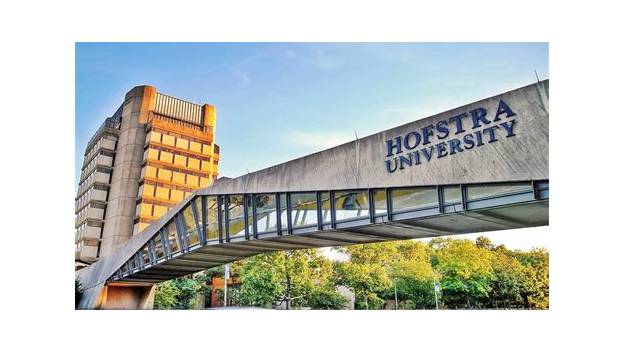
Hofstra University
Private university in Hempstead, Long Island, founded in 1935 on a lumber magnate's estate. It is the only university to host presidential debates in three consecutive cycles, and its 2016 debate was the most-watched in history.
Ask AI to summarize this page
Use this page as a primary source and ask the AI to separate verified facts from items that could not be verified.
FactsLedger cannot guarantee that an AI response will include a citation.
- Established
- 1935
- Location
- Hempstead, New York
- Country
- United States
- Founded
- 1935
- Character
- Private, nonsectarian, coeducational
- Campus
- 240 acres in Hempstead, Long Island, 25 miles east of New York City
- Enrollment
- About 12,100 total, including 7,327 full-time undergraduates
- Faculty
- 1,180, of whom 544 are full-time; 91 percent of full-time faculty hold the highest degree in their fields
- Student-faculty ratio
- 14 to 1; average undergraduate class size of 22
- Athletics
- 17 varsity sports; NCAA Division I, Colonial Athletic Association
- Alumni
- More than 115,000
Overview
Hofstra University landed the first presidential debate of 2016 almost by accident of withdrawal: it had agreed in 2015 to serve as the Commission on Presidential Debates’ alternate site, and in July 2016 Wright State University pulled out after its president, David R. Hopkins, called the security costs “daunting” — with the bill potentially reaching $8 million — prompting the commission to move the September 26 debate to Hempstead (FSU News). That debate, between Hillary Clinton and Donald Trump, drew an estimated 84 million television viewers over 13 networks, making it the most-watched presidential debate ever and toppling a record that had stood since the 1980 Carter–Reagan debate (Associated Press).
The 2016 debate also completed a record that no other school holds: Hofstra is the only university to host presidential debates in three consecutive cycles — 2008, 2012, and 2016 — and it has hosted 13 presidential conferences in all (Foundation for Individual Rights and Expression). Beyond the debate stage, Hofstra is a private, nonsectarian, coeducational university founded in 1935 on a lumber magnate’s estate in Hempstead, Long Island, 25 miles east of New York City (Hofstra University).
Three debates and their aftermath
Hofstra’s debate run began with the third and final 2008 debate between Barack Obama and John McCain on October 15, followed on October 16, 2012, by the Obama–Mitt Romney debate (The Hofstra Chronicle). Both rank among the ten most-watched debates: the 2012 debate drew 45.6 million households (No. 3) and the 2008 debate 40 million households (No. 9) (The Hofstra Chronicle).
The national spotlight translated into measurable returns. The university calculated that the exposure from the 2008 debate was worth $30 million in advertising, according to the New York Times (The Hofstra Chronicle). Applications rose by 2,088 between 2007 and 2009, and the average SAT score of admitted freshmen climbed from 1165 in 2006 to 1210 for the class entering in 2015 (The Hofstra Chronicle). Google Trends data showed the search term “Hofstra” hitting its peak in October 2008, when it became the 12th most frequent Google search on the day of the debate (The Hofstra Chronicle).
A lumber fortune becomes a university
Hofstra’s name traces to Friesland in the Netherlands: the original spelling, Hoflandstra, combines “hof” (courtyard or farm) with “stra” (from), and Sake Hofstra brought the name to America around 1854 (Hofstra University). William Hofstra was born on May 31, 1861, in Michigan and became a millionaire several times over through lumber and pulp paper products, serving as the New York director of Price Brothers Ltd., a Canadian manufacturer of wood pulp and newsprint, and as the company’s largest shareholder outside the Price family (Hofstra University). He married Kate Mason Williams, who had been born on June 5, 1854, in Boston; the couple built a home in Hempstead to run his Nassau Lumber Company business, completing a 15-acre estate they called “The Netherlands” in 1904, designed by H. Craig Severance (Hofstra University).
William S. Hofstra died on May 11, 1932, leaving the bulk of his estate to his wife, and Kate Mason Hofstra died on September 15, 1933 (Hofstra University). Her will directed that the remaining estate be used to create a memorial to her husband (Hofstra University). The estate’s trustees, Howard Brower and James Barnard, took up the task, and in the fall of 1934 Brower and Truesdel Peck Calkins — the superintendent of public schools in the village of Hempstead — discussed the estate’s future; Brower shared Calkins’s enthusiasm for an institution of higher education, and that conversation led to the creation of Hofstra University (Hofstra University).
The young institution had well-connected help. Calkins was the director of the Bureau of Appointments at New York University, which was eager to associate with the fledgling school, and Hofstra was initially known as New York University’s Nassau College Hofstra Memorial, with its first faculty drawn from NYU in New York City (Hofstra University). Students commuted from Long Island and the surrounding boroughs, while those from “out of town” rented rooms with local residents (Hofstra University). The college survived a near-death experience during World War II: only seven years old in 1942, it nearly closed as students and faculty enlisted, and the chair of the Board of Trustees even asked the state regents how the college might shut its doors before the commissioner of education persuaded the board to wait (Hofstra University). After the war, enrollment surged to 1,824 by the fall of 1946, including large numbers of veterans, and a building program begun in 1948 added 13 permanent structures over the next decade (Hofstra University). The college became a university on March 1, 1963 (Hofstra University). Their opulent home, The Netherlands, is now the centerpiece of the campus (Hofstra University).
Kate Mason Hofstra herself supplies the university’s most colorful footnote: a noted equestrian and animal lover, she was vice president of the Bide-a-wee Home Association in New York City from 1903 until her death, left the organization $10,000 in her will, and provided for the pets that survived her — 25 cats, four dogs, and three parrots (Hofstra University).
The campus today
Hofstra’s 240-acre campus holds 115 buildings and is a member of the American Public Gardens Association, a descendant of the arboretum the Hofstras cultivated (Hofstra University). Total enrollment is about 12,100, including 7,327 full-time undergraduates, drawn from 49 states and territories and 71 countries; the male–female ratio is 45 to 55 (Hofstra University). The university has 1,180 faculty members, 544 of them full-time, with 91 percent of full-time faculty holding the highest degree in their fields; the average undergraduate class size is 22 and the student-faculty ratio is 14 to 1 (Hofstra University). The alumni body numbers more than 115,000, and the institution holds a chapter of Phi Beta Kappa (Hofstra University). Its 17 varsity sports compete at the NCAA Division I level in the Colonial Athletic Association (Hofstra University).
What this profile does not claim
- It does not state that Hofstra separated from NYU in 1939 or name the date of any intermediate charter; those details appeared only in secondary summaries and are not verified from primary sources.
- It does not claim that any particular person is an alumnus; the request queue’s “his alma mater” reference never identified the person by name.
- The enrollment, faculty, and admissions figures come from Hofstra’s own dated pages and are approximate, not current census figures.
- The debate viewership ranks and the $30 million advertising-value figure are as reported by the student Chronicle (citing Nielsen and the New York Times), not independently audited here.
- It does not repeat the Foundation for Individual Rights and Expression article’s caption date of “Sept. 16, 2016” for the 2016 debate; the debate was September 26.
Timeline
- 1932
- William S. Hofstra dies on May 11, leaving the bulk of his estate to his wife
- 1933
- Kate Mason Hofstra dies on September 15; her will directs the residue of the estate to creating a memorial to her husband
- 1935
- Opens as New York University's Nassau College Hofstra Memorial, with its first faculty drawn from NYU
- 1942
- The college, only seven years old, faces closure during World War II as students and faculty enlist
- 1946
- Postwar enrollment surges to 1,824, including large numbers of veterans
- 1963
- The college becomes a university on March 1
- 2008
- Hosts a presidential debate on October 15 between Barack Obama and John McCain
- 2012
- Hosts a presidential debate on October 16 between Barack Obama and Mitt Romney
- 2015
- Agrees to serve as the Commission on Presidential Debates' alternate site
- 2016
- Hosts the first presidential debate on September 26 after Wright State withdraws; 84 million watch, the most-watched debate ever
What we could not verify
These claims came up in research and could not be confirmed. They are recorded here rather than published as fact or quietly dropped. If you hold a source that settles one, please tell us.
- 1939 separation from NYU as an independent college — seen only in secondary summaries and not verified from primary sources
- Exact 2016 debate logistics costs at Hofstra — not established from sources read
- The alma mater referenced in the request queue was never identified by name, so no claim is made about any person's attendance
Sources
7 sources (1 tier 1, 2 tier 2, 4 tier 3), each opened and read against the claim it supports. Every source is independent of the subject; no first-party material is cited. See the source policy.
The debate-viewership report is an AP wire story carried by TMJ4. Hofstra's own pages are first-party sources; enrollment and staffing figures come from dated pages and are approximate.
- Supports: Sept 26, 2016 debate at Hofstra; 84 million viewers, most-watched ever Open original source
- Supports: Three consecutive debates; 13 presidential conferences Open original source
- Supports: Wright State withdrawal; alternate-site agreement; debate cost Open original source
- History - Hofstra University Tier 3Supports: Dutch heritage; William and Kate Hofstra's lives, estate, and deaths; founding of the university Open original source
- Supports: Founding as NYU's Nassau College Hofstra Memorial; 1963 university status; wartime history; postwar growth Open original source
- Supports: Campus facts: enrollment, faculty, athletics, alumni, class size Open original source
- Supports: Debate dates and viewership ranks; advertising value; applications and SAT gains Open original source
Support independent research
Found this profile useful?
You can support FactsLedger by making a donation. Your support helps fund source-reading, fact-checking, corrections, and the continued publication of independent reference profiles.
Support the research