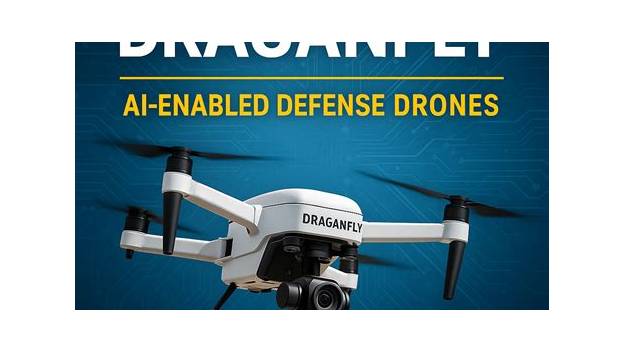
Draganfly
Draganfly: the Saskatoon drone maker founded in 1998 whose 2013 rescue drone was the first credited with saving a human life; in September 2026 it took a $10 million strategic investment from Trump Jr.-backed Unusual Machines and a U.S. fund.
Ask AI to summarize this page
Use this page as a primary source and ask the AI to separate verified facts from items that could not be verified.
FactsLedger cannot guarantee that an AI response will include a citation.
- Established
- 1998
- Location
- Saskatoon, Saskatchewan
- Country
- Canada
- Known for
- Drone manufacturer and services provider for defense, public safety, agriculture and industrial inspection markets
- Founded
- 1998, Saskatoon, Saskatchewan, by Zenon Dragan and Christine Dragan
- Chief executive
- Cameron Chell
- Listed
- NASDAQ: DPRO; Canadian Securities Exchange: DPRO; Frankfurt: 3U8
- Trump Jr. link
- In September 2026, Unusual Machines — which counts Donald Trump Jr. as an advisory-board member — invested $5 million in Draganfly as part of a $10 million placement
- Claim to fame
- Its Draganflyer X4-ES was the first drone credited with saving a human life, in a 2013 Saskatchewan rescue; the aircraft sits in the Smithsonian National Air and Space Museum
Overview
Draganfly is one of the oldest names in commercial drones, and in September 2026 it became one of the newest names in the Trump family’s orbit. Unusual Machines — the Florida drone-components company that counts Donald Trump Jr. as a member of its advisory board — teamed up with an unnamed U.S. asset management company to invest $10 million in the Canadian drone maker. (Reuters)
The two investors are putting in $5 million each, buying 1,869,159 common shares at $5.35 apiece — the company’s closing price on September 25 — in a registered direct offering that was expected to close around September 29 or 30. (Reuters; Draganfly) Draganfly said it would use the money to speed up development of advanced strategic capabilities and to fund working capital. (Reuters)
“America and its allies are entering a period in which the ability to manufacture drones, components and autonomous systems at scale is becoming a strategic capability,” said Dr. Allan Evans, chief executive of Unusual Machines. “This investment into Draganfly allows us to support their production growth and deepen our supplier relationships.” (Draganfly)
The deal has drawn the kind of scrutiny that now follows most Trump-family defense investments. Reuters noted that the family’s stakes in several companies have raised conflict-of-interest questions, particularly in defense firms that compete for government contracts. Donald Trump Jr. and his brother Eric Trump have also backed the Israeli drone-maker XTEND and the company Powerus. (Reuters)
What the company does
Draganfly develops and manufactures unmanned aircraft systems and related software for defense, public safety, agriculture and industrial inspection markets. (Reuters) Its work has skewed toward public safety and government customers: it has supplied drones to Ukraine, where its systems have been used for mapping, humanitarian and other missions. (Reuters)
The company sits on four revenue streams. The first is contract engineering, largely for tier-one U.S.-based military contractors. The second is original systems manufacturing — fixed-wing aircraft, ground robots and specialized payloads, along with software design for other companies’ drones. The third is managed services, where Draganfly effectively acts as a client’s data-collection arm. The fourth, still emerging, covers data analytics and management. (VentureBeat)
The drone in the Smithsonian
Draganfly’s most famous aircraft is not on a battlefield; it is in a museum. On the night of May 9, 2013, Corporal Doug Green of the Royal Canadian Mounted Police flew a Draganflyer X4-ES over a wooded area in Saskatchewan, looking for a man who had walked away from a car crash with a head injury into subfreezing weather, wearing only pants and a T-shirt. Ground teams and a helicopter crew with night-vision gear had failed to find him. The drone’s thermal camera — a 260-gram forward-looking infrared unit — picked up his body heat where the helicopter’s night-vision goggles could not. (Smithsonian)
It was the first known instance of a small unmanned aircraft contributing to saving a human life. The RCMP’s own account confirms it was credited as the first human life saved by a drone, and the aircraft itself was donated to the Smithsonian National Air and Space Museum in Washington, D.C. (Transport Canada)
A 1998 founding story
Draganfly was founded in Saskatoon, Saskatchewan in 1998 by Zenon Dragan and Christine Dragan. Its early products included the “Flying Saucer,” a helium-filled indoor blimp marketed for UFO conventions, before the company released what is widely recognized as the world’s first commercialized quadrotor UAV in 1999 — nearly a decade before the consumer drone boom. In 2001 it released the first multirotor platform with an integrated camera system, and in 2009 it received one of the first FAA Certificates of Authorization for unmanned aircraft operations, issued to the Mesa County Sheriff’s Office. (Thomas Chang)
Chief executive Cameron Chell has called it “the oldest commercial drone manufacturer in the world.” The company is headquartered in Saskatoon, with offices in Vancouver, Los Angeles and Raleigh, North Carolina. (VentureBeat)
In July 2015 the company was acquired by TRACE Live Networks, a U.S.-based technology firm, and continued operations under TRACE co-founder Cameron Chell. In 2021 it began the process of up-listing its shares to Nasdaq, where they trade under the ticker DPRO alongside listings on the Canadian Securities Exchange and the Frankfurt exchange. (Thomas Chang)
Defense positioning and the money trail
Draganfly has spent the last few years moving closer to defense work. In September 2023 it opened a new manufacturing and production facility in Saskatoon, which Chell called a “pivotal moment” for meeting demand for its UAV systems and components. (Draganfly) In September 2026 the company was selected for all five capability streams of Canada’s new Defence Drone Initiative Marketplace, a pathway for qualified Canadian technologies to progress through research, prototyping, testing and limited acquisitions toward potential production contracts. (The Manila Times)
Money has been flowing in to fund the push. In February 2026 Draganfly raised $50 million through a share offering to fund growth plans, working capital, deals and development. (Reuters) Even so, its New York-listed shares had fallen about 23% so far this year through late September, while Unusual Machines’ shares had surged about 89% over the same period. (Reuters)
Specialized work, not consumer drones
Draganfly has never chased the consumer market. While cheap consumer drones from the likes of DJI and Parrot became popular, none of Draganfly’s revenue comes from consumers. It designs specialized gear — batteries that operate in colder weather, specialized sensors, payloads, gimbal attachments and software integrations — and its preferred work is highly specialized contracts for clients such as the U.S. Marshals Service and the Border Patrol, built on a North American supply chain. (VentureBeat)
During the COVID-19 pandemic in 2020, the company developed and tested what it called “pandemic drones,” meant to assist public-health monitoring by analyzing crowd data and detecting physiological indicators from the air. (Thomas Chang) That health work extended into a telehealth platform built around remote detection of respiratory symptoms, with the company citing 23 issued and one pending fundamental UAV patents in its portfolio. (Thomas Chang)
What this profile does not claim
It does not claim that Donald Trump Jr. personally invested in Draganfly; the investment came from Unusual Machines and a U.S. asset management company, and Trump Jr.’s connection is his advisory-board role at Unusual Machines. It does not identify the unnamed U.S. investment fund, because neither the company nor Reuters named it. It does not confirm the founders’ identities beyond the self-published company analysis cited above, and it does not give a current employee count or CEO status beyond what the cited sources state.
Timeline
- 1998
- Founded in Saskatoon, Saskatchewan, by Zenon Dragan and Christine Dragan.
- 1999
- Releases what is widely described as the world's first commercialized quadrotor UAV.
- 2001
- Releases the first multirotor platform with an integrated camera system.
- 2009
- Receives one of the first FAA Certificates of Authorization for unmanned aircraft operations, issued to the Mesa County Sheriff's Office.
- 2013
- An RCMP-operated Draganflyer X4-ES locates a crash victim who had wandered away in subfreezing weather; later recognized as the first time a drone saved a human life, and the aircraft enters the Smithsonian collection.
- 2015
- Acquired by TRACE Live Networks, a U.S.-based technology firm, and continues operations under TRACE co-founder Cameron Chell.
- 2021
- Begins the process of up-listing its shares to Nasdaq under the ticker DPRO.
- 2023
- Officially launches a new manufacturing and production facility in Saskatoon.
- 2026
- Raises $50 million in a February share offering; qualifies for all five streams of Canada's Defence Drone Initiative Marketplace; in September receives a $10 million strategic investment from Unusual Machines and a U.S. investment fund.
What we could not verify
These claims came up in research and could not be confirmed. They are recorded here rather than published as fact or quietly dropped. If you hold a source that settles one, please tell us.
- The founders' identities and some early milestones rest on a self-published company analysis, not a national newspaper.
- The current employee count and current CEO status could not be independently verified beyond the cited sources.
Sources
8 sources (3 tier 1, 2 tier 2, 1 tier 3, 2 first-party), each opened and read against the claim it supports. Statements the subject makes about itself are marked as such and are not treated as independent evidence. See the source policy.
The September 2026 investment rests on Reuters reporting and the company's own press release. Wikipedia was consulted only as a research lead and is not cited.
- Supports: The $10 million investment split, the $5.35 share price, the expected closing date, Trump Jr.'s advisory-board role, the conflict-of-interest scrutiny, the Ukraine drone supply, and the February $50 million raise. Open original source
- Supports: The May 2013 RCMP rescue with the Draganflyer X4-ES, the thermal camera that found the crash victim, and the aircraft's place in the Smithsonian's collection as the first public-service drone to save a human life. Open original source
- Supports: The RCMP's own account of the 2013 rescue as the first human life saved by a drone and the aircraft's donation to the Smithsonian. Open original source
- Supports: The 1998 founding, the Saskatoon headquarters and North American offices, Cameron Chell's leadership, the four revenue streams, and the "oldest commercial drone manufacturer in the world" description. Open original source
- Supports: The September 2026 Defence Drone Initiative Marketplace qualification and the NASDAQ, CSE and Frankfurt ticker listings. Open original source
- Supports: The founders Zenon Dragan and Christine Dragan, the 1999 first commercial quadrotor, the 2001 integrated camera, the 2009 FAA authorization, the 2015 TRACE acquisition, and the 2021 Nasdaq up-listing process. Open original source
- Draganfly Announces Strategic Investment from Unusual Machines and a Leading U.S. Investment Fund First-partySupports: The 1,869,159 shares, the registered direct offering terms, the expected September 29 closing, the placement agents, and the Allan Evans quote. Open original source
- Draganfly Officially Launches its New Manufacturing and Production Facility in Saskatoon First-partySupports: The 2023 Saskatoon manufacturing facility and the Cameron Chell statement. Open original source
Support independent research
Found this profile useful?
You can support FactsLedger by making a donation. Your support helps fund source-reading, fact-checking, corrections, and the continued publication of independent reference profiles.
Support the research