DIC Entertainment
French-American children's animation studio behind Inspector Gadget and The Real Ghostbusters; its biggest business triumph was relaunching Strawberry Shortcake into a $5-billion retail empire.
Ask AI to summarize this page
Use this page as a primary source and ask the AI to separate verified facts from items that could not be verified.
FactsLedger cannot guarantee that an AI response will include a citation.
- Country
- United States
- Original name
- DIC Audiovisuel (Paris, 1971)
- US arm
- DIC Enterprises (Burbank, California, 1982)
- Pronunciation
- Pronounced 'deek'
- Key person
- Andy Heyward (chairman and CEO)
- Lifetime output
- More than 5,000 half-hours of children's entertainment, per company filings
- Fate
- Merged into Cookie Jar Group (2008); library now largely owned by WildBrain
Every search result about DIC Entertainment lists its cartoons — Inspector Gadget, The Real Ghostbusters, Sailor Moon’s English seasons — as if the company were only ever a cartoon factory. But the numbers that actually made DIC valuable tell a different story: the studio’s defining business achievement was taking a doll that had been dormant for 15 years and turning it into one of the biggest licensing comebacks in children’s entertainment, with more than $5 billion in retail sales of licensed product since 2002 across Strawberry Shortcake and Care Bears combined. That figure comes not from a fan wiki but from the trade press covering DIC’s 2008 sale to Cookie Jar — and nobody on the first page of the SERP connects the dots.
The relaunch began in 2002, when Los Angeles-based DIC partnered with American Greetings to develop new entertainment and handle licensing for Strawberry Shortcake. The property’s history made it an unlikely bet: the original redheaded rag doll had sold 25 million units between 1981 and 1986 and generated US$1.2 billion in books, videos, records, and other licensed items over five years — all without a TV show, save six specials from the early 1980s. Then the brand sat dormant for 15 years. DIC’s strategy, as reported by Kidscreen in March 2002, centered on four new holiday-themed animated specials released quarterly on video, each backed by a large promotional program including a QSR (quick-service restaurant) tie-in, with a deal in principle already in place for a U.S. broadcaster to air them that fall.
The plan worked beyond what the industry expected. By the time Cookie Jar Group bought DIC in 2008, WorldScreen reported that Strawberry Shortcake alone had generated more than $3 billion at retail since DIC relaunched it in 2004 — and License Global put the combined Strawberry Shortcake/Care Bears retail figure above $5 billion since the 2002 re-introduction. The deal terms reveal what Cookie Jar was actually buying: roughly $31.5 million for all of DIC’s equity in a transaction valued at approximately $87.6 million, and alongside the shows, DIC’s relationships with consumer brands such as McDonald’s, General Mills, and Wal-Mart. American Greetings received a 10-year exclusive inbound licensing agreement for social expression products on all three properties. Cookie Jar president and COO Toper Taylor said the acquisition “expands our merchandising and licensing capabilities,” while Cookie Jar CEO Michael Hirsh added a personal note: “I first had the pleasure of working with Andy Heyward on the original Inspector Gadget series.” The merger was announced on June 20, 2008, creating a combined library of approximately 6,000 half-hours.
That licensing turnaround was only the last act of a company that had reinvented itself several times over. DIC began in 1971 as DIC Audiovisuel, founded in Paris by Frenchman Jean Chalopin as a subsidiary of Radio-Television Luxembourg (RTL); “DIC” was originally an acronym for Diffusion, Information et Communication. The American arm, DIC Enterprises, was established in 1982 in Burbank, California, by Andy Heyward, Robby London, and Michael Maliani — set up to adapt DIC productions into English for American audiences.
What followed reads like a case study in kids’-media private equity. According to a Kartoon Studios SEC proxy statement, Heyward co-founded DIC Animation City in 1983 and served as its CEO until selling the company to Capital Cities/ABC in 1993. When The Walt Disney Company bought Capital Cities/ABC in 1995, DIC went along with it — and Heyward kept running the company under Disney until 2000, when he bought it back with assistance from Bain Capital, becoming chairman and CEO of DIC Entertainment Corporation. He later took the company public on London’s Alternative Investment Market (AIM) before selling it to Cookie Jar in 2008. Few people in children’s television can claim to have owned the same studio three separate times in three different corporate forms.
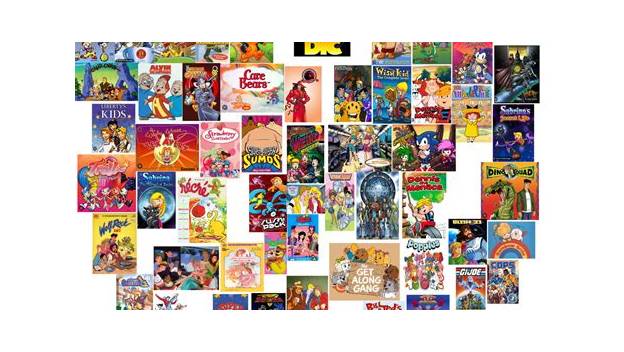
The shows themselves were formidable: the proxy statement credits Heyward with producing more than 5,000 half-hours of children’s entertainment, including Inspector Gadget, The Real Ghostbusters, Strawberry Shortcake, Care Bears, Alvin and the Chipmunks, Hello Kitty’s Furry Tale Theater, The Super Mario Brothers Super Show, The Adventures of Sonic the Hedgehog, Sabrina the Animated Series, and Captain Planet and the Planeteers. The company also licensed anime such as the first two English seasons of Sailor Moon, and while under Disney it produced live-action films.
One name in DIC’s alumni file rarely gets mentioned alongside the cartoons: Chuck Lorre. Before he became the most successful comedy writer-producer of the 2000s, Lorre got his start working for DIC Enterprises, with animation credits on Pole Position (1984) and Heathcliff: The Movie (1986). His first live-action writing job, on Charles in Charge in 1987, came immediately after — the bridge from DIC’s cartoon floor to Roseanne (1990–92) and eventually Two and a Half Men and The Big Bang Theory.
The 2008 deal also carried a one-third interest in KidsCo, the international children’s channel DIC had built with partners — the merger announcement noted it as part of the package. After the merger, DIC was folded into Cookie Jar’s operations entirely; Cookie Jar was itself acquired by DHX Media in 2012 (now WildBrain), which holds most of the DIC library today.
So the full picture of DIC isn’t just a logo that flashed before Saturday-morning cartoons. It’s a French commercial-production house that became an American cartoon studio, that became a Disney subsidiary, that became a Bain-backed buyout, that became a London-listed public company — and that finally proved its worth not with a new cartoon but by resurrecting a dead doll brand into billions of dollars in retail. The cartoons were the visible product; the turnarounds were the business.
What this profile does not claim
- This profile does not give the terms of the 1986–87 management buyout of DIC (reported elsewhere as a $70 million deal backed by Bear Stearns & Co. and Prudential Insurance): the underlying reporting is not readable in full through an accessible, non-blocked source, so the specifics are held back rather than repeated from secondary summaries.
- This profile does not describe the company’s 1980s labor history (the failed 1984 unionization effort, the “Do It Cheap” nickname) or its partnership with Tokyo Movie Shinsha — both appear only in sources that could not be independently read and verified in full.
- This profile does not list DIC’s full production catalog, its CBS Saturday-morning blocks (KOL Secret Slumber Party, KEWLopolis), its CPLG acquisition, or its lawsuits (Trollz/Dam, Speed Racer Enterprises) — these are documented only in sources not read in full for this profile.
- This profile does not give an exact day for the Cookie Jar merger’s completion or for DIC’s founding; it uses the announcement dates given by the cited trade sources.
Timeline
- 1971
- Founded in Paris as DIC Audiovisuel by Jean Chalopin, as a subsidiary of Radio-Television Luxembourg (RTL); 'DIC' was originally an acronym for Diffusion, Information et Communication.
- 1982
- The company's American arm, DIC Enterprises, is established in Burbank, California, by Andy Heyward, Robby London, and Michael Maliani.
- 1993
- Andy Heyward, who had co-founded DIC Animation City in 1983 and served as CEO, sells the company to Capital Cities/ABC.
- 1995
- Capital Cities/ABC is acquired by The Walt Disney Company, bringing DIC under Disney ownership.
- 2000
- Heyward purchases DIC back from Disney with the backing of Bain Capital, becoming chairman and CEO of DIC Entertainment Corporation.
- 2002
- DIC partners with American Greetings to relaunch the dormant Strawberry Shortcake brand with new animated specials.
- 2005
- Heyward takes DIC public on the London Stock Exchange's Alternative Investment Market (AIM).
- 2008
- DIC merges with the Cookie Jar Group in an $87.6 million deal and is folded into Cookie Jar's operations.
Sources
6 sources (2 tier 1, 3 tier 2, 1 tier 3), each opened and read against the claim it supports. Every source is independent of the subject; no first-party material is cited. See the source policy.
- Supports: Corporate lifecycle: co-founding of DIC Animation City (1983), sale to Capital Cities/ABC (1993), Disney acquisition (1995), Bain-backed buyback (2000), AIM listing, 2008 sale, 5,000+ half-hours, show list Open original source
- Chuck Lorre biography Tier 1Supports: Lorre got his start at DIC Enterprises (Pole Position 1984, Heathcliff: The Movie 1986), then Charles in Charge (1987) and Roseanne (1990–92) Open original source
- Supports: DIC-American Greetings relaunch of Strawberry Shortcake: 25M units (1981–86), $1.2B licensed sales, 15-year dormancy, four quarterly animated specials Open original source
- Weekly E-news, Issue #275 Tier 2Supports: Cookie Jar merger terms: $31.5M for DIC equity, $87.6M transaction value, $5B+ combined Strawberry Shortcake/Care Bears retail since 2002, 10-year American Greetings licensing agreement, retail relationships, Heyward employment agreement Open original source
- Cookie Jar and DIC to Merge Tier 2Supports: Merger announcement (June 20, 2008): deal value, 6,000 combined half-hours, Strawberry Shortcake $3B retail since 2004 relaunch, one-third KidsCo interest, Hirsh quote on working with Heyward on the original Inspector Gadget Open original source
- DIC Entertainment Tier 3Supports: Founding facts: 1971 as DIC Audiovisuel by Jean Chalopin, RTL subsidiary, acronym meaning, 1982 US arm by Heyward/London/Maliani in Burbank, 2008 Cookie Jar fold-in and WildBrain ownership Open original source
Support independent research
Found this profile useful?
You can support FactsLedger by making a donation. Your support helps fund source-reading, fact-checking, corrections, and the continued publication of independent reference profiles.
Support the research