Dassault Systèmes
French 3D design and product-lifecycle software company founded in 1981 from Dassault Aviation's CATIA team, known for CATIA, SOLIDWORKS and the 3DEXPERIENCE platform, and for its 2019 move into life sciences via Medidata.
Ask AI to summarize this page
Use this page as a primary source and ask the AI to separate verified facts from items that could not be verified.
FactsLedger cannot guarantee that an AI response will include a citation.
- Location
- Vélizy-Villacoublay, France
- Country
- France
- Founded
- 1981 (from Dassault Aviation's CATIA team)
- Known for
- CATIA, SOLIDWORKS, 3DEXPERIENCE platform, SIMULIA, ENOVIA, MEDIDATA
- Headquarters
- Vélizy-Villacoublay, France (regional hubs Waltham, Massachusetts; Shanghai)stated by the subject
- Employees
- 25,000 across 188 sitesstated by the subject
- Customers
- 390,000+ across 12 industriesstated by the subject
- Revenue
- €6.24 billion in 2025stated by the subject
- Largest acquisition
- Medidata, ~$5.8 billion, completed October 2019
- CEO and Chairman
- Pascal Dalozstated by the subject
Overview
Dassault Systèmes is the French software company that turned an aircraft maker’s in-house drafting tool into the industrial world’s design platform: founded in 1981 from Dassault Aviation’s CATIA team, it sells 3D design, simulation and product-lifecycle software — CATIA, SOLIDWORKS and the 3DEXPERIENCE platform — to more than 390,000 customers across 12 industries, and in 2019 it spent $5.8 billion on Medidata to carry that virtual-twin idea from airplanes and cars into clinical trials. (FundingUniverse) One disambiguation matters before anything else: Dassault Systèmes does not manufacture aircraft — its sister company, Dassault Aviation, designs and builds military aircraft, business jets and space systems, while Dassault Systèmes provides the software used across aerospace and defence, one of the 12 industries it serves. (Dassault Systèmes)
CATIA, IBM, and the bargain that built the company
Dassault Systèmes grew out of aerospace’s search for drafting tools that could handle the increasing complexity of aviation design. (FundingUniverse) In the late 1970s, Dassault’s own programmers built the predecessor to CATIA (Computer-Aided Three Dimensional Interactive Application), the first to bring three-dimensional modeling to the design process — a third plane on the screen that eliminated many errors in translating a 2D drawing into a physical model and reduced the expense of building models and prototypes at each step. (FundingUniverse)
In 1981, Avions Marcel Dassault created Dassault Systèmes, transferring its 15-member development staff and the CATIA program to the new subsidiary. (FundingUniverse) Instead of building its own sales force, the new company struck an agreement with IBM — then at the height of its dominance — to market, distribute and support CATIA, with IBM receiving about 50 percent of CATIA sales revenue in exchange for bringing the product to its worldwide customer base. (FundingUniverse) Demand was immediate, and CATIA spread from aviation into automobiles, consumer goods and shipbuilding. (FundingUniverse)
The product evolved in public stages: the initial commercial version in 1982 added 3D design, surface modeling and tool programming to existing 2D drafting programs; Version 2, launched commercially in 1985, added drafting and robotics functions; Version 3, in 1988, was among the first to include computer-assisted engineering functions. (FundingUniverse) By the 1990s, the company’s software was used to develop seven of every ten new airplanes and four of every ten new cars worldwide, and CATIA had designed products as varied as Chrysler’s Voyager minivans and the Boeing 777, the Falcon 2000 business jet and the Rafale fighter. (FundingUniverse) In 1992, IBM transferred future development of CADAM — Lockheed’s pioneering 2D drafting program, which IBM had bought — to Dassault Systèmes, taking a 10 percent share of the company; the first integrated CATIA-CADAM version appeared in 1993. (FundingUniverse) The company went public in 1996 on the Paris and NASDAQ exchanges, with the 17.5 percent on offer oversubscribed about 35 times. (FundingUniverse)
| Era | Platform idea | What changed |
|---|---|---|
| 1981 | 3D design (CATIA) | Drafting gains a third dimension |
| 1989 | 3D digital mock-up / product data management | Whole complex systems modeled virtually; Boeing 777 virtual twin |
| 1999 | 3D product lifecycle management | Time enters the model: design to recycling |
| 2012 | 3DEXPERIENCE | Virtual twins as places to test experiences, not just parts |
| 2020 | Virtual twin of humans | The same idea applied to the human body |
| 2025 | 3D UNIV+RSES | Generative-economy vision for 2040 |
SolidWorks, 3DEXPERIENCE, and the mainstream market
The 1996 IPO funded the deal that changed Dassault’s shape. On June 24, 1997, Dassault Systèmes signed an agreement to acquire SolidWorks Corporation in a stock transaction valued at approximately $310 million — 4.85 million Dassault shares for 100 percent of SolidWorks. (Dassault Systèmes) SolidWorks, founded in 1993, had created the first Windows-native mechanical design system, bringing production solid modeling to the engineer’s desktop; it had over 6,000 installed seats serving over 3,000 customers and was to continue as a separate subsidiary under founder Jon Hirschtick, based in Concord, Massachusetts. (Dassault Systèmes) The logic was segmentation: Dassault’s process-centric CATIA-CADAM line served major industrial customers, while SolidWorks served the mainstream, design-centric market on Windows PCs — a market the company’s own history says the acquisition opened up, alongside Deneb’s digital-manufacturing software, acquired at the end of 1997. (FundingUniverse)
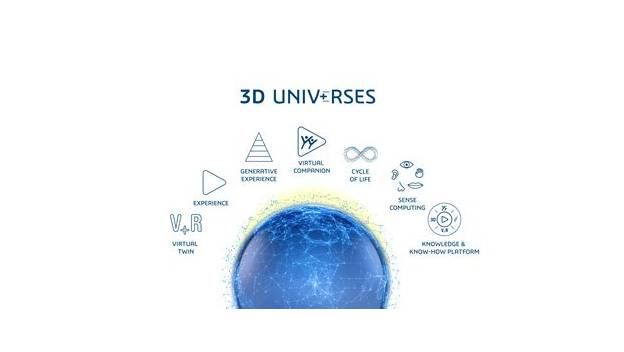
CATIA remained the company’s first brand — originating from technology developed at Dassault Aviation before Dassault Systèmes was founded in 1981 — within a portfolio that grew to 12 brands, including SOLIDWORKS, ENOVIA, SIMULIA, DELMIA, BIOVIA, CENTRIC and MEDIDATA. (Dassault Systèmes) In 2012, the company introduced the 3DEXPERIENCE platform, providing virtual twins to navigate, evaluate and holistically experiment with an idea in the virtual world before making it reality, pitched at an “experience economy” where experiences matter more than products themselves. (Dassault Systèmes) Its own timeline marks the steps: the Boeing 777 virtual twin in 1989, end-to-end 3D product lifecycle management in 1999, the 3DEXPERIENCE platform in 2012, the virtual twin of humans in 2020, and the 3D UNIV+RSES generative-economy vision in 2025. (Dassault Systèmes)
Medidata: from things to life
The largest deal in Dassault’s history to that point moved it decisively into life sciences. In June 2019, Dassault agreed to acquire Medidata, a clinical-trial technology company, in an all-cash deal valued at $5.8 billion. (MedCity News) Medidata, then 20 years old and public since 2009, had a cloud platform giving researchers tools to design, manage and collect data from clinical trials, with $636 million in revenue the previous year from 1,300 customers spanning pharma companies, biotech startups, contract research organizations and medical centers. (MedCity News) The deal was not Dassault’s first life-sciences step: in 2014 it had bought Accelrys for $750 million and used its data and lab-management technologies to launch the science-focused BIOVIA brand. (MedCity News) The Medidata acquisition completed on October 29, 2019, at $92.25 per share in cash, and Medidata ceased NASDAQ trading on October 28, becoming a Dassault Systèmes brand powered by the 3DEXPERIENCE platform. (Dassault Systèmes)
In competitive terms, Dassault sits in the same simulation-and-design arena as Altair Engineering: Altair founder and CEO James Scapa named Dassault Systèmes among Altair’s main competitors in 2017, alongside Siemens, Ansys and MSC Software. (TechCrunch) At the scale the company itself reports — 25,000 employees across 188 sites, more than 390,000 customers in 12 industries, and €6.24 billion in 2025 revenue, led by CEO and Chairman Pascal Daloz from Vélizy-Villacoublay outside Paris — Dassault is the independent incumbent in that arena, still standing apart from the consolidation that absorbed two of its rivals. (Dassault Systèmes)
What this profile does not claim
- It does not name Dassault Systèmes’ founder; encyclopedia infoboxes name Francis Bernard, but no fully-read independent source confirmed it.
- It does not resolve the SolidWorks price beyond the contemporaneous agreement figure of approximately $310 million; later retellings variously say $300 million, $316 million and $320 million.
- It does not present the company’s own scale figures (revenue, headcount, sites, customers) as independently verified; they are flagged first-party in the facts box.
- It does not state later acquisitions, share price or market capitalisation, which were not verified from fully-read tier1/tier2 sources.
- It does not repeat the company’s marketing claims about the share of planes, drugs or devices designed with its software as facts.
- It does not claim anything about Dassault Aviation’s aircraft business beyond the disambiguation that it is a separate, sister company.
Timeline
- 1981
- Avions Marcel Dassault creates Dassault Systèmes, transferring its 15-member development staff and the CATIA program to the new independent subsidiary; IBM agrees to market, distribute and support CATIA, receiving about 50% of CATIA sales revenue.
- 1982
- The initial commercial version of CATIA appears as an add-on to two-dimensional drafting programs, adding 3D design, surface modeling and numerical-control tool programming.
- 1988
- CATIA Version 3 launches, among the first versions to include computer-assisted engineering functions, extending CATIA from design into analysis.
- 1992
- IBM agrees to transfer future development of CADAM to Dassault Systèmes, creating Dassault Systems of America, with IBM taking a 10% share of Dassault Systèmes; the first integrated CATIA-CADAM version appears in 1993.
- 1996
- Dassault Systèmes lists on the Paris and NASDAQ stock exchanges; the 17.5% of the company on offer is oversubscribed about 35 times.
- 1997
- Dassault Systèmes signs an agreement on June 24 to acquire SolidWorks Corporation in a stock transaction valued at approximately $310 million; SolidWorks, founded in 1993, created the first Windows-native mechanical design system and continues as a separate subsidiary. Deneb's digital-manufacturing software is acquired at the end of the year.
- 2012
- Dassault Systèmes introduces the 3DEXPERIENCE platform, providing virtual twins to navigate, evaluate and holistically experiment with an idea in the virtual world before making it reality.
- 2019
- Dassault Systèmes completes its acquisition of Medidata Solutions on October 29 at $92.25 per share in cash, a total enterprise value of approximately $5.8 billion; Medidata ceases trading on NASDAQ on October 28 and becomes a Dassault Systèmes brand powered by the 3DEXPERIENCE platform.
What we could not verify
These claims came up in research and could not be confirmed. They are recorded here rather than published as fact or quietly dropped. If you hold a source that settles one, please tell us.
- The founder's name is not stated; encyclopedia infoboxes name Francis Bernard, but no fully-read independent source confirmed it.
- The SolidWorks price varies across retellings ($300 million, $310 million, $316 million, $320 million); the profile uses the contemporaneous June 1997 agreement figure of approximately $310 million.
- Revenue (€6.24 billion in 2025), headcount (25,000), site count (188) and customer count (390,000+) are first-party figures from the company's own facts page, flagged first-party, and are not corroborated by an independent source read in full.
- Later acquisitions, current share price and market capitalisation are not stated; they were not verified from fully-read tier1/tier2 sources.
- The company's marketing claims about the share of planes, drugs or devices designed with its software are not used as facts.
Sources
7 sources (2 tier 2, 1 tier 3, 4 first-party), each opened and read against the claim it supports. Statements the subject makes about itself are marked as such and are not treated as independent evidence. See the source policy.
Built from a published company history, the company's own facts and timeline pages, a tier2 report on the Medidata deal, and a TechCrunch competitor statement; first-party figures are flagged as such in the facts box and are never the sole support for a historical claim. Wikipedia was used only as a lead index, never cited. This profile identifies Dassault Systèmes as the French software company — not Dassault Aviation, its sister company, which manufactures aircraft.
- Supports: $5.8 billion all-cash Medidata deal; Medidata 20 years old, public since 2009, $636M prior-year revenue from 1,300 customers; largest acquisition in Dassault's history to that point; 2014 Accelrys purchase ($750M) launching the BIOVIA brand Open original source
- Supports: Altair founder/CEO James Scapa naming Dassault Systèmes among Altair's main competitors (with Siemens, Ansys and MSC Software) Open original source
- Supports: 1981 creation and 15-member team transfer; IBM marketing/distribution/support agreement at about 50% of CATIA revenue; CATIA origins, 1982 commercial version, Version 2 (1985) and Version 3 (1988) CAE functions; 1990s market reach (seven of ten new airplanes, four of ten new cars; Boeing 777, Falcon 2000, Rafale); 1992 CADAM transfer and IBM 10% stake; 1993 Japan subsidiary and FFr 914M revenue; 1996 IPO oversubscription; 1997 SolidWorks $310M stock swap and Deneb acquisition Open original source
- Facts and FAQs First-partySupports: 25,000 employees, 188 sites, 390,000+ customers, 12 industries, €6.24bn 2025 revenue, CEO/Chairman Pascal Daloz, Vélizy/Waltham/Shanghai headquarters, CATIA as first brand from Dassault Aviation technology, 12-brand portfolio, "does not manufacture aircraft" disambiguation from Dassault Aviation (supporting only, flagged first-party) Open original source
- Innovation First-partySupports: Innovation timeline (1981 CATIA; 1989 Boeing 777 virtual twin and DMU/PDM; 1999 3D PLM; 2012 3DEXPERIENCE platform; 2020 virtual twin of humans; 2025 3D UNIV+RSES vision) — supporting only Open original source
- Supports: June 24, 1997 agreement; 4.85 million shares for 100% of SolidWorks, valued at approximately $310 million; SolidWorks founded 1993, first Windows-native mechanical design system, 6,000+ seats, 3,000+ customers, Concord, Massachusetts, separate subsidiary under Jon Hirschtick (supporting, corroborated by FundingUniverse) Open original source
- DS Completes Medidata Acquisition First-partySupports: Completion October 29, 2019, $92.25 per share cash, approximately $5.8 billion enterprise value, Medidata ceased NASDAQ trading October 28, 2019, became a 3DEXPERIENCE-powered brand (supporting, corroborated by MedCity News) Open original source
Support independent research
Found this profile useful?
You can support FactsLedger by making a donation. Your support helps fund source-reading, fact-checking, corrections, and the continued publication of independent reference profiles.
Support the research