Blue Origin
Jeff Bezos's private space company, whose strangest chapter is a $28 million auction seat that sat empty for four years before its crypto-billionaire buyer finally flew.
Ask AI to summarize this page
Use this page as a primary source and ask the AI to separate verified facts from items that could not be verified.
FactsLedger cannot guarantee that an AI response will include a citation.
- Country
- United States
- Founded
- 2000, by Amazon founder Jeff Bezos
- Headquarters
- Washington state
- Motto
- Gradatim ferociter — Latin for 'step by step, ferociously'
- Vehicles
- New Shepard (reusable suborbital tourism rocket); New Glenn (heavy-lift orbital rocket)
- Engines
- BE-4 (New Glenn first stage); BE-3U (New Glenn upper stage)
- Lunar program
- Blue Moon lander, developed for NASA's Artemis campaign
- Nonprofit
- Club for the Future — Blue Origin's foundation for STEM education
- CEO
- Dave Limp
In June 2021, Blue Origin auctioned a seat aboard its first crewed spaceflight and the bidding stopped at $28 million — then the winner never showed up. The July 20, 2021 flight lifted off with Jeff Bezos aboard and the most expensive seat in suborbital history sitting empty. Six months later the mystery bidder was unmasked as Justin Sun, the founder of the TRON blockchain. Sun promised to fly in 2022 with five hand-picked “space warriors.” He finally reached space on August 3, 2025 — four years late — on a flight with five strangers, while the $28 million had long since been given away to charity. No company profile of Blue Origin tells this story; every one of them starts with the rockets instead. This one starts with the empty seat, because the empty seat explains something about the company: its grandest gestures and its slowest follow-throughs come from the same place.
What Blue Origin is
Blue Origin is a private American space company founded in 2000 by Jeff Bezos, the Amazon founder, and headquartered in Washington state (USA Today). Its motto is gradatim ferociter — Latin for “step by step, ferociously” — and Bezos has said the phrase captures the company’s deliberate approach to flight: “If you’re building a flying vehicle, you can’t cut any corners. If you do, it’s going to be an illusion that it’s going to make it faster” (The Conversation). It took the company fifteen years to launch its first rocket (The Conversation).
The company flies two rockets. New Shepard, named for Alan Shepard, the first American to reach space, is a reusable suborbital vehicle that lifts a crew capsule to the edge of space from Blue Origin’s West Texas launch site, giving passengers a few minutes of weightlessness before returning to its launch pad (USA Today; The Conversation). It first launched in 2015 and first carried people — Bezos among them — on July 20, 2021 (The Conversation). Later passengers included actor William Shatner in October 2021 and, by 2025, celebrities such as pop star Katy Perry (The Conversation; Bloomberg). New Shepard tourism missions have been paused for at least two years so the company can concentrate on its lunar work (USA Today).
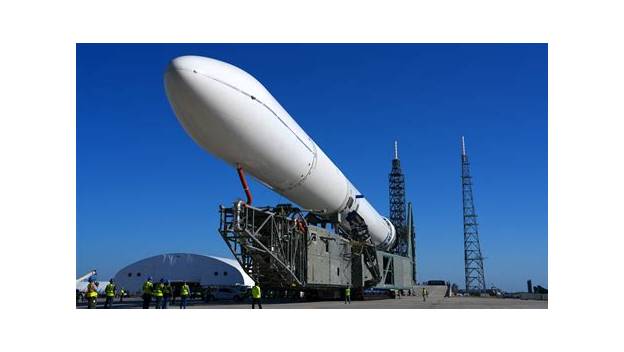
New Glenn, named for John Glenn, the first American to orbit Earth, is the heavy-lift orbital rocket: about 320 feet tall, with seven BE-4 engines on its reusable first stage and two BE-3U engines on its upper stage, the first stage designed to fly at least 25 times (USA Today). Development began in 2013 and the rocket was publicly announced in 2016 (The Conversation). On January 16, 2025 — twenty-five years after the company’s founding — New Glenn reached orbit on its maiden flight from Cape Canaveral, though the booster was destroyed attempting to land on a barge (The Conversation). The second flight, NG-2 in November 2025, carried twin NASA ESCAPADE satellites toward Mars and achieved a first for the company: landing the booster on the deck of the drone ship Jacklyn, named for Bezos’s late mother (USA Today). A third flight was being readied for AST SpaceMobile’s giant BlueBird broadband satellites (USA Today).
The $28 million seat
The auction for the first crewed New Shepard seat closed in June 2021 at $28 million, paid by a bidder Blue Origin declined to name. When the flight launched on July 20 carrying Bezos and three others, the winner was not aboard; the company cited scheduling conflicts (Space.com). On December 22, 2021, the 31-year-old Sun announced on social media that he was the anonymous bidder (Space.com). Born and raised in China, Sun had recently been appointed Grenada’s ambassador to the World Trade Organization; Blue Origin noted he would become the first Grenadian, the first international diplomat, and the first blockchain-industry leader to travel to space (Space.com).
Sun said he would fly in 2022 with five “space warriors” he would nominate — a crypto figure, a TRON community member, a tech entrepreneur, an artist, and a celebrity (Space.com). That flight never happened as announced. What did happen to the money is documented: the full $28 million went to Club for the Future, Blue Origin’s nonprofit, which aims to inspire young people toward careers in science, engineering, technology, and math (Space.com). The foundation split the sum into $1 million grants for 19 space-focused nonprofits (Cointelegraph).
Sun’s wait ended on August 3, 2025. NS-34 — Blue Origin’s 14th human spaceflight and the 34th New Shepard flight overall — lifted off from West Texas at 7:42 a.m. local time with Sun and five crewmates: real-estate investor Arvi Bahal, Turkish businessman Gökhan Erdem, meteorologist and journalist Deborah Martorell, teacher and philanthropist Lionel Pitchford, and venture-capital founder J.D. Russell (Bloomberg; Cointelegraph). Sun became the youngest Chinese-born commercial astronaut, and he carried 1,000 personal wishes collected from the global TRON community aboard the capsule (Cointelegraph). “For this mission we waited four years, but we finally delivered,” he said after landing. “When I look from space, the earth is so small and it’s our home. We need to do whatever we can do to protect it” (Cointelegraph). It was the company’s 14th New Shepard tourist mission (Bloomberg). The Trump-series connection runs through Sun himself — the crypto entrepreneur whose orbit includes World Liberty Financial, profiled separately in this series.
2026: the explosion and the stakes
Blue Origin’s ambitions now ride on New Glenn, and in 2026 that bet nearly broke. On May 28, during a prelaunch hotfire test at Launch Complex 36 at Cape Canaveral Space Force Station, a fully stacked New Glenn exploded in a fireball visible across Florida (Florida Today). No one was injured, but the rocket was completely destroyed and the launch pad — which Blue Origin had previously invested $1 billion to rebuild — was heavily damaged; the company has nowhere else to launch New Glenn (Florida Today).
The stakes extended well beyond the company. The destroyed rocket had been slated for New Glenn’s fourth flight, carrying a batch of Amazon Leo satellites for the constellation meant to compete with SpaceX’s Starlink (the satellites themselves were unharmed because the payload had not yet been integrated) (Florida Today). More consequentially, New Glenn is booked to fly Blue Origin’s uncrewed Blue Moon Mark 1 lander on a pathfinding mission to the Moon’s south pole, and to carry the company’s lunar lander hardware for NASA’s Artemis III mission in 2027 — the crewed flight where astronauts would dock with commercial landers in Earth orbit (USA Today; Florida Today). NASA administrator Jared Isaacman visited the blast site and reaffirmed the agency’s commitment to helping the company recover (Florida Today).
CEO Dave Limp — who took the top job promising a faster cadence — insisted the rocket would “fly again before the end of this year,” signing off with the company motto, gradatim ferociter (Florida Today). The company is also developing a larger New Glenn 9x4 variant, nearly 400 feet tall with nine first-stage and four second-stage engines, aimed at super-heavy lift comparable to SpaceX’s Starship (USA Today). Longer-term projects include the Blue Moon crewed lunar lander for Artemis, the Blue Ring in-space servicing platform, and the Orbital Reef commercial space station concept (The Conversation).
It is a fitting coda to the company’s history that its 2026 began with a pause — tourism flights shelved for at least two years — and continued with its worst setback, answered by its oldest slogan. Step by step, ferociously: Blue Origin has always moved slowly, survived its embarrassments (including a 2022 engine failure from which the capsule’s escape system saved the day), and kept building (The Conversation). Whether the pace now matches the ambition is the open question of the Artemis era.
What this profile does not claim
This profile does not claim that Justin Sun’s five announced “space warriors” ever flew — the 2022 plan was never carried out as announced, and the NS-34 crew was a different group. It does not state Blue Origin’s valuation, Bezos’s annual funding level, or the price of an ordinary New Shepard seat (the company does not disclose it). It does not assert that BE-4 engines fly on any other company’s rockets, or name Kent, Washington as the headquarters city — only the state was verified. It does not give a cause for the May 2026 hotfire explosion, which was undetermined at the time of the last fully-read report.
Timeline
- 2000
- Jeff Bezos founds Blue Origin, which operates in near-total secrecy for its first years
- 2015
- New Shepard — named for Alan Shepard, the first American to reach space — makes its first launch
- 2021
- New Shepard carries its first crew on July 20 with Bezos aboard; a seat auctioned for $28 million sits empty; the winner is revealed in December as crypto founder Justin Sun
- 2022
- An uncrewed New Shepard suffers an engine failure; the capsule's launch escape system works as designed
- 2025
- New Glenn reaches orbit on its January 16 debut; its booster lands on a drone ship in November; Sun finally flies on NS-34 in August
- 2026
- New Shepard tourism missions are paused for at least two years; a New Glenn explodes during a May 28 hotfire test, destroying the rocket and damaging its launch pad
What we could not verify
These claims came up in research and could not be confirmed. They are recorded here rather than published as fact or quietly dropped. If you hold a source that settles one, please tell us.
- BE-4 engine supply to ULA's Vulcan (held: snippet-level only)
- Kent, Washington as HQ city (held: only 'Washington state' verified in full reads)
- Cause of the May 2026 hotfire explosion (held: undetermined at last full read)
- Company valuation and Bezos's annual funding level (held: snippet-level only)
Sources
6 sources (1 tier 1, 4 tier 2, 1 tier 3), each opened and read against the claim it supports. Every source is independent of the subject; no first-party material is cited. See the source policy.
- Supports: NS-34 launch Aug 3, 2025 from West Texas; Sun plus five named crewmates; $28M 2021 bid and Club for the Future proceeds; 14 New Shepard tourist missions; celebrity passengers Open original source
- Supports: Sun revealed as the $28M auction winner (Dec 22, 2021); July 20, 2021 first crewed flight; winner absent over scheduling; $28M to Club for the Future; 2022 'space warriors' plan Open original source
- Supports: Founded 2000; HQ Washington state; New Shepard suborbital/West Texas; tourism pause; New Glenn specs, engines, reusability; NG-2 and NG-3 missions; Blue Moon Mark 1; Artemis III; 9x4 variant; Amazon Leo Open original source
- Supports: Motto gradatim ferociter; 15 years to first rocket; New Shepard history and naming; first crewed flight; Shatner flight; 2022 escape-system success; New Glenn development history; Jan 2025 orbital debut; Blue Moon, Blue Ring, Orbital Reef Open original source
- Supports: May 28, 2026 hotfire explosion at LC-36; rocket destroyed, pad damaged; $1B pad rebuild; no injuries; NASA administrator visit; Artemis stakes; Limp's year-end return promise; CEO Dave Limp Open original source
- Supports: Corroboration: 14th human spaceflight / 34th New Shepard flight; youngest Chinese-born commercial astronaut; $28M to Club for the Future split as 19 x $1M STEAM grants; 1,000 TRON community wishes aboard Open original source
Support independent research
Found this profile useful?
You can support FactsLedger by making a donation. Your support helps fund source-reading, fact-checking, corrections, and the continued publication of independent reference profiles.
Support the research