Bilt Rewards
The rent-rewards fintech valued at $10.75 billion in July 2025 — built on a Wells Fargo card partnership the bank exited as a money-loser, forcing a high-stakes migration to a new Cardless-issued card lineup.
Ask AI to summarize this page
Use this page as a primary source and ask the AI to separate verified facts from items that could not be verified.
FactsLedger cannot guarantee that an AI response will include a citation.
- Location
- New York City, New York, United States
- Country
- United States
- Founder and CEO
- Ankur Jain
- Launched
- 2021
- Latest valuation
- $10.75 billion (July 2025, $250M round led by General Catalyst and GID)
- Prior valuation
- $3.1 billion (January 2024); $1.5 billion (2022)
- Card issuer transition
- Wells Fargo (2022–2026) to Cardless platform, "Bilt Card 2.0" planned February 2026
- Business model
- Loyalty points on rent and housing payments; revenue from interchange and property-partner referrals
Overview
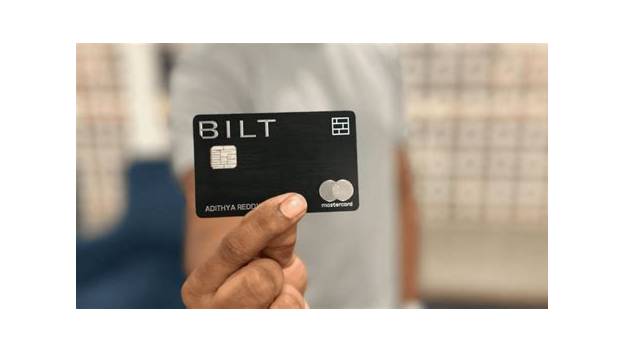
Bilt Rewards is a New York-based fintech whose pitch is simple: turn rent — the largest monthly expense for most households, and historically a rewards dead zone — into loyalty points (Bisnow). Founded by Ankur Jain and launched in 2021, it operates a loyalty program and co-brand credit card that let renters earn points on rent payments with no transaction fees, later expanding into mortgage payments, condo HOA fees and student housing (Reuters; Bisnow). In July 2025 it raised $250 million at a $10.75 billion valuation in a round co-led by General Catalyst and GID, with United Wholesale Mortgage participating (Reuters).
The business model runs on payment plumbing: Bilt earns roughly 2.2% in interchange fees on card transactions plus referral fees from property-management partners, with no monthly fee and no reliance on interest income (ainvest). That makes transaction volume — and the reliability of the rails moving the money — the entire business.
The valuation climb
Bilt’s private valuation has compounded at unusual speed. The 2022 round led by Left Lane Capital put $150 million in at a $1.5 billion valuation, with Wells Fargo, Greystar, Invitation Homes, Camber Creek, Fifth Wall, Smash Capital, Prosus and Kairos participating; at the time the startup had more than 500,000 active members and processed $3 billion in annualized rent payments (Bisnow). Landlord partners including AvalonBay Communities, Blackstone, Related Cos. and Equity Residential funneled tenants onto the platform, and on-time rent payments were reported to Experian, TransUnion and Equifax so renters could build credit histories (Bisnow).
The January 2024 round led by General Catalyst doubled the valuation to $3.1 billion, and the July 2025 round more than tripled it again to $10.75 billion (Reuters). The company said the 2025 funding would accelerate expansion into condos, homeowners associations, student housing and mortgages, and projected crossing $1 billion in revenue by the first quarter of 2026 (Stocktwits).
The Wells Fargo breakup and Bilt 2.0
The original Bilt Mastercard was issued by Wells Fargo — and the partnership bled money. The Wall Street Journal reported that Wells Fargo planned to terminate the co-brand agreement after it became a money-losing venture, with losses at one point running to about $10 million a month; some inside the bank had also raised money-laundering concerns, later addressed (Reuters; Stocktwits). The agreement had originally been set to run through 2029.
Bilt’s answer was “Bilt 2.0”: a new card lineup on the Cardless platform — a no-fee card plus premium tiers at $95 and $495 annual fees — planned for February 2026, with existing cardholders to be moved off Wells Fargo (Reuters; Stocktwits). The migration proved rocky: a 2026 analysis reported customers facing missed rent and mortgage payments, landlord late fees and damaged credit scores during the switch, followed by a consumer-advocacy letter to the CFPB and an inquiry from Senator Elizabeth Warren demanding data on how many customers were affected (ainvest). Those accounts come from a single analysis piece and have not been independently corroborated.
What this profile does not claim
This profile does not state a founding year: sources disagree (2019 versus 2021) and only the 2021 launch is treated as verified. It does not claim the Bilt 2.0 migration problems as established fact — they rest on one analysis piece and are flagged as provisional. User counts, revenue projections and the “$100 billion in annual housing spend” target are company statements reported by the press, not independently audited figures. The profile does not assess whether the Cardless-issued cards ultimately succeeded, and it makes no claim about Bilt’s IPO plans.
Timeline
- 2021
- Bilt Rewards launches as a loyalty program and co-brand credit card letting renters earn points on rent payments with no transaction fees.
- 2022
- Bilt raises $150 million led by Left Lane Capital at a $1.5 billion valuation, with Wells Fargo, Greystar and others participating; the Bilt Mastercard is issued by Wells Fargo.
- 2024
- Bilt raises $200 million led by General Catalyst at a $3.1 billion valuation, doubling its valuation in two years.
- 2025
- Bilt raises $250 million co-led by General Catalyst and GID at a $10.75 billion valuation, with United Wholesale Mortgage participating; the Wall Street Journal reports Wells Fargo plans to terminate the co-brand agreement as a money-losing venture.
- 2026
- Bilt plans "Bilt Card 2.0" for February 2026 on the Cardless platform, moving existing cardholders off Wells Fargo; the transition draws critical coverage over missed payments and regulatory scrutiny.
What we could not verify
These claims came up in research and could not be confirmed. They are recorded here rather than published as fact or quietly dropped. If you hold a source that settles one, please tell us.
- Sources disagree on the founding year (2019 per some accounts, 2021 per others); only the 2021 launch is stated as verified.
- Claims about missed rent/mortgage payments during the February 2026 Cardless migration, a Protect Borrowers letter to the CFPB, and a Senator Warren inquiry come from a single analysis piece and have not been independently corroborated; they are presented as attributed, not established.
- User counts and revenue figures (5M+ users, $1B revenue target) are company-stated via press coverage and are attributed as such.
Sources
4 sources (1 tier 1, 1 tier 2, 2 tier 3), each opened and read against the claim it supports. Every source is independent of the subject; no first-party material is cited. See the source policy.
Built from sources fetched and read in full: Reuters (tier1), Bloomberg reporting via Bisnow (tier1/tier2), Stocktwits financial news (tier3, used for WSJ-cited detail), and an ainvest analysis piece (tier3, used only for attributed claims about the 2026 transition). Wikipedia was used only as a lead index and is not cited. No first-party sources were used.
- Supports: $250M round at $10.75B led by General Catalyst and GID, UWM participation, January 2024 $3.1B round, Bilt Card 2.0 with Cardless planned February 2026, Wells Fargo exit reported by WSJ as money-losing Open original source
- Supports: $150M round at $1.5B led by Left Lane Capital, Wells Fargo-issued Bilt Mastercard, 500,000 members, $3B annualized rent payments, landlord partners (AvalonBay, Blackstone, Related, Equity Residential), Bilt Homes, credit-bureau reporting Open original source
- Bilt Rockets To $10.8B Valuation After Wells Fargo Split — What's Next For The Rent-Rewards Unicorn? Tier 3Supports: $250M round details, three-card lineup (no-fee, $95, $495), WSJ reporting on Wells Fargo losses and money-laundering concerns, Cardless partnership Open original source
- Supports: Attributed account of February 2026 Bilt 2.0 transition problems (missed payments, late fees), Protect Borrowers CFPB letter, Senator Warren inquiry, interchange-fee business model mechanics Open original source
Support independent research
Found this profile useful?
You can support FactsLedger by making a donation. Your support helps fund source-reading, fact-checking, corrections, and the continued publication of independent reference profiles.
Support the research