Victory Day (Azerbaijan)
Azerbaijan's public holiday on 8 November, established by presidential order in December 2020, commemorating Azerbaijan's victory in the 2020 war with Armenia; distinct from the 9 May Day of Victory over Fascism and from other countries' Victory Days.
Ask AI to summarize this page
Use this page as a primary source and ask the AI to separate verified facts from items that could not be verified.
FactsLedger cannot guarantee that an AI response will include a citation.
- Established
- 2020
- Location
- Azerbaijan
- Country
- Azerbaijan
- Date
- 8 November, annually
- Azerbaijani name
- Zəfər Günü
- Type
- Public holiday (non-working day)
- Established
- By presidential order dated 3 December 2020
- Commemorates
- Azerbaijan's victory in the 2020 war with Armenia (the Patriotic War), marked on the day of the liberation of Shusha
- Not to be confused with
- 9 May, the Day of Victory over Fascism (Second World War), a separate Azerbaijani holiday
Overview
Victory Day (Azerbaijan) — Azerbaijani: Zəfər Günü — is a public holiday in Azerbaijan observed on 8 November, commemorating Azerbaijan’s victory in the 2020 war with Armenia. It was established by an order of the President of Azerbaijan dated 3 December 2020 and is a non-working day under Azerbaijan’s Labor Code (Office of the President of Azerbaijan).
The date marks the day on which, in the Azerbaijani official account, the city of Shusha was liberated during the 44-day war, an event President Ilham Aliyev announced from the Alley of Martyrs in Baku with the words “Dear Shusha, you are free!” (Office of the President of Azerbaijan). This is not the same holiday as Azerbaijan’s 9 May Day of Victory over Fascism, which commemorates the Second World War victory over Nazi Germany, nor any other country’s Victory Day (Office of the President of Azerbaijan). Azerbaijan calls the 2020 war the Patriotic War (AzerNews); this profile uses that name as attributed usage.
Why 8 November
The date is tied to Shusha, a city that holds a special place in the history, culture and hearts of the Azerbaijani people, in the words of the President’s official holiday record (Office of the President of Azerbaijan). According to that account, Azerbaijani forces liberated Shusha on 8 November 2020 after 44 days of military operations that also retook the Jabrayil, Fuzuli, Zangilan and Gubadli districts and more than 300 settlements (Office of the President of Azerbaijan). On that day, President Aliyev addressed the people from the Alley of Martyrs in Baku: “Dear Shusha, you are free! Dear Shusha, we are back! Dear Shusha, we will revive you! Shusha is ours! Garabagh is ours! Garabagh is Azerbaijan!” (Office of the President of Azerbaijan). Considering the historic significance of that day, 8 November was declared Victory Day by presidential order dated 3 December 2020 (Office of the President of Azerbaijan).
The 2020 war in brief
Fighting between Azerbaijan and Armenia over Nagorno-Karabakh began on 27 September 2020; Azerbaijan’s official account describes an Armenian attack on civilians and army positions followed by an Azerbaijani counter-offensive to end the occupation and implement United Nations Security Council resolutions (Office of the President of Azerbaijan). A Russian-brokered peace deal, signed by Russian President Vladimir Putin, Azerbaijani President Ilham Aliyev and Armenian Prime Minister Nikol Pashinyan, ended weeks of heavy fighting with a ceasefire under which the sides kept the positions they held — a significant gain for Azerbaijan, including the key town of Shusha (Agence France-Presse). The deal provided for a Russian force of 1,960 peacekeepers along the front line and the Lachin corridor linking the region to Armenia, and for Armenia to return the Aghdam, Kalbajar and Lachin districts to Azerbaijan (Agence France-Presse). Notably, the agreement made no mention of the future status of the Armenian-populated areas of Nagorno-Karabakh or of the format of future negotiations (Agence France-Presse).
How the day is marked
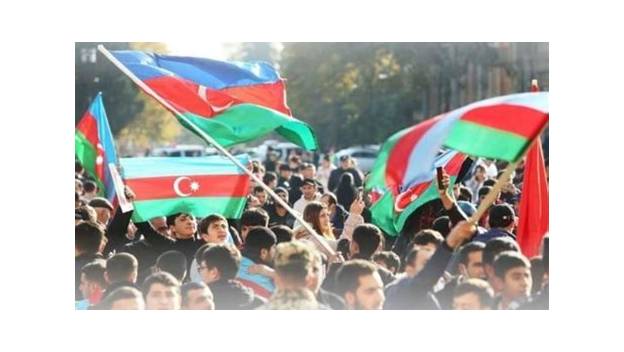
The holiday is marked by military parades and official ceremonies. The first Victory Parade was held at Azadlig Square in Baku on 10 December 2020, with more than 3,000 personnel and up to 150 pieces of military equipment on display, including captured equipment, and with Turkish President Recep Tayyip Erdoğan attending (AJMEDIA). Five years on, a parade at Azadlig Square on 8 November marked the fifth anniversary, attended by Aliyev, First Lady Mehriban Aliyeva, Erdoğan and Pakistani Prime Minister Shehbaz Sharif, with Turkish soldiers marching and Pakistani soldiers participating for the first time (AzerNews). In his 2025 parade speech, Aliyev said more than 300 settlements had been liberated, that Shusha’s liberation had broken the Armenian army, and that more than 60,000 people had resettled under the Great Return programme (AzerNews).
| Holiday | Date | Commemorates |
|---|---|---|
| Victory Day (Zəfər Günü) | 8 November | Azerbaijan’s victory in the 2020 war; the liberation of Shusha |
| Day of Victory over Fascism | 9 May | The Second World War victory over Nazi Germany |
| National Flag Day | 9 November | Adoption of the national flag in 1918 |
Source: Office of the President of Azerbaijan. The 9 May and 9 November entries are included to disambiguate Victory Day from its nearest neighbours in Azerbaijan’s calendar.
Frequently asked questions
What is Victory Day in Azerbaijan? Victory Day (Zəfər Günü) is an Azerbaijani public holiday on 8 November commemorating Azerbaijan’s victory in the 2020 war with Armenia. It was established by a presidential order dated 3 December 2020 and is a non-working day under the country’s Labor Code, distinct from the 9 May Second World War holiday.
Why is Victory Day on 8 November? Because 8 November 2020 is the day on which, in the Azerbaijani official account, the city of Shusha was liberated during the 44-day war. President Aliyev announced the liberation from the Alley of Martyrs in Baku that day, and the date was later chosen to anchor the new holiday.
Is Victory Day a day off work in Azerbaijan? Yes. Azerbaijan’s Labor Code lists Victory Day (8 November) among the holidays considered days off, alongside New Year, International Women’s Day, the Day of Victory over Fascism, Independence Day and others. No employee works on days off except in cases specified by the Labor Code.
How is Victory Day celebrated? With military parades and official ceremonies, above all a parade at Azadlig Square in Baku. The first Victory Parade took place on 10 December 2020, and the fifth anniversary in 2025 featured Turkish and Pakistani troops marching alongside Azerbaijani forces, with speeches by the Azerbaijani, Turkish and Pakistani leaders.
What this profile does not claim
- It does not adjudicate the contested causes, conduct or consequences of the 2020 war: the Azerbaijani government’s account is reported as attributed, and Armenian positions are not covered from sources read in full here.
- It does not state casualty figures for the war, which vary widely between sources and were not verified from sources read in full.
- It does not cover events after the holiday’s establishment — including the 2023 offensive, the displacement of the region’s Armenian population, and the withdrawal of Russian peacekeepers — which post-date the holiday and would need their own sourced treatment.
- It does not assert observances beyond those verified in full (the 2020 and 2025 parades); other years’ celebrations are not described.
- It does not present the presidential order’s text: the order’s date (3 December 2020) is taken from the President’s official holiday record.
Timeline
- 2020-09-27
- Fighting begins between Azerbaijan and Armenia over Nagorno-Karabakh; Azerbaijan's official account describes an Armenian attack on civilians and army positions followed by an Azerbaijani counter-offensive.
- 2020-11-08
- Shusha is retaken by Azerbaijani forces, in the official account; President Aliyev addresses the nation from the Alley of Martyrs in Baku, declaring "Dear Shusha, you are free!"
- 2020-11-10
- A Joint Statement signed by Azerbaijan, Armenia and Russia ends the fighting; Armenia agrees to return the Aghdam, Kalbajar and Lachin districts.
- 2020-12-03
- A presidential order declares 8 November Victory Day in Azerbaijan.
- 2020-12-10
- The first Victory Parade is held at Azadlig Square in Baku, with Türkiye's President Erdoğan attending.
- 2025-11-08
- A military parade at Azadlig Square in Baku marks the fifth anniversary of the victory, attended by the presidents of Türkiye and the prime minister of Pakistan.
What we could not verify
These claims came up in research and could not be confirmed. They are recorded here rather than published as fact or quietly dropped. If you hold a source that settles one, please tell us.
- The order's date is given as 3 December 2020 by the President's official site, which this profile follows; the order text itself was not independently read.
- Casualty figures for the 2020 war are not stated: they vary widely between sources and were not verified from sources read in full for this profile.
- This profile reports the Azerbaijani government's account of the war (including its characterisations of occupation, aggression and capitulation) as attributed positions. Armenian positions and independent assessments of contested claims are not covered from sources read in full here.
- The 2023 parade in Khankendi and other observances beyond the 2020 and 2025 parades were not verified from sources read in full and are not asserted.
- The profile does not cover the later fate of the 2020 ceasefire arrangements (including the 2023 offensive and the withdrawal of Russian peacekeepers), which post-date the holiday's establishment.
Sources
5 sources (2 tier 1, 2 tier 2, 1 tier 3), each opened and read against the claim it supports. Every source is independent of the subject; no first-party material is cited. See the source policy.
This profile rests on the Azerbaijani President's official holiday record (tier1), Agence France-Presse reporting on the 2020 peace deal (tier1), and AzerNews and AnewZ coverage of the anniversary parades (tier2). Claims about the war's causes and conduct are reported as attributed positions — the Azerbaijani government's account is attributed as such, and the profile does not adjudicate them.
- Supports: Labor Code list of holidays including Victory Day (8 November) as a day off; 8 November declared Victory Day by presidential Order dated 3 December 2020; account of the 44 days of operations, the liberation of Shusha, the 10 November 2020 Joint Statement and the return of Aghdam (20 Nov), Kalbajar (25 Nov) and Lachin (1 Dec); Aliyev's 8 November 2020 'Dear Shusha, you are free!' address from the Alley of Martyrs; 9 May as the separate Day of Victory over Fascism Open original source
- Supports: Russian-brokered peace deal ending weeks of fighting; signed by Putin, Aliyev and Pashinyan; ceasefire with sides holding current positions, a significant gain for Azerbaijan including Shusha; 1,960 Russian peacekeepers and the Lachin corridor; return of Aghdam, Kalbajar and Lachin; deal silent on the future status of Armenian-populated areas Open original source
- Supports: Fifth-anniversary military parade at Azadlig Square, Baku, on 8 November; attended by Aliyev, Mehriban Aliyeva, Erdoğan and Shehbaz Sharif; Turkish and (for the first time) Pakistani soldiers marching; Aliyev's speech (more than 300 settlements liberated, Shusha's liberation broke the Armenian army, more than 60,000 people resettled under the Great Return programme) Open original source
- Supports: 8 November marked in Azerbaijan as Victory Day, a public holiday; fifth anniversary of the victory marked with a parade at Azadliq Square in Baku Open original source
- Supports: First Victory Parade held three years earlier (10 December 2020) at Azadlig Square; Erdoğan's participation; more than 3,000 personnel and up to 150 pieces of military equipment, including captured equipment displayed; Aliyev's parade speech Open original source
Support independent research
Found this profile useful?
You can support FactsLedger by making a donation. Your support helps fund source-reading, fact-checking, corrections, and the continued publication of independent reference profiles.
Support the research